Last updated on
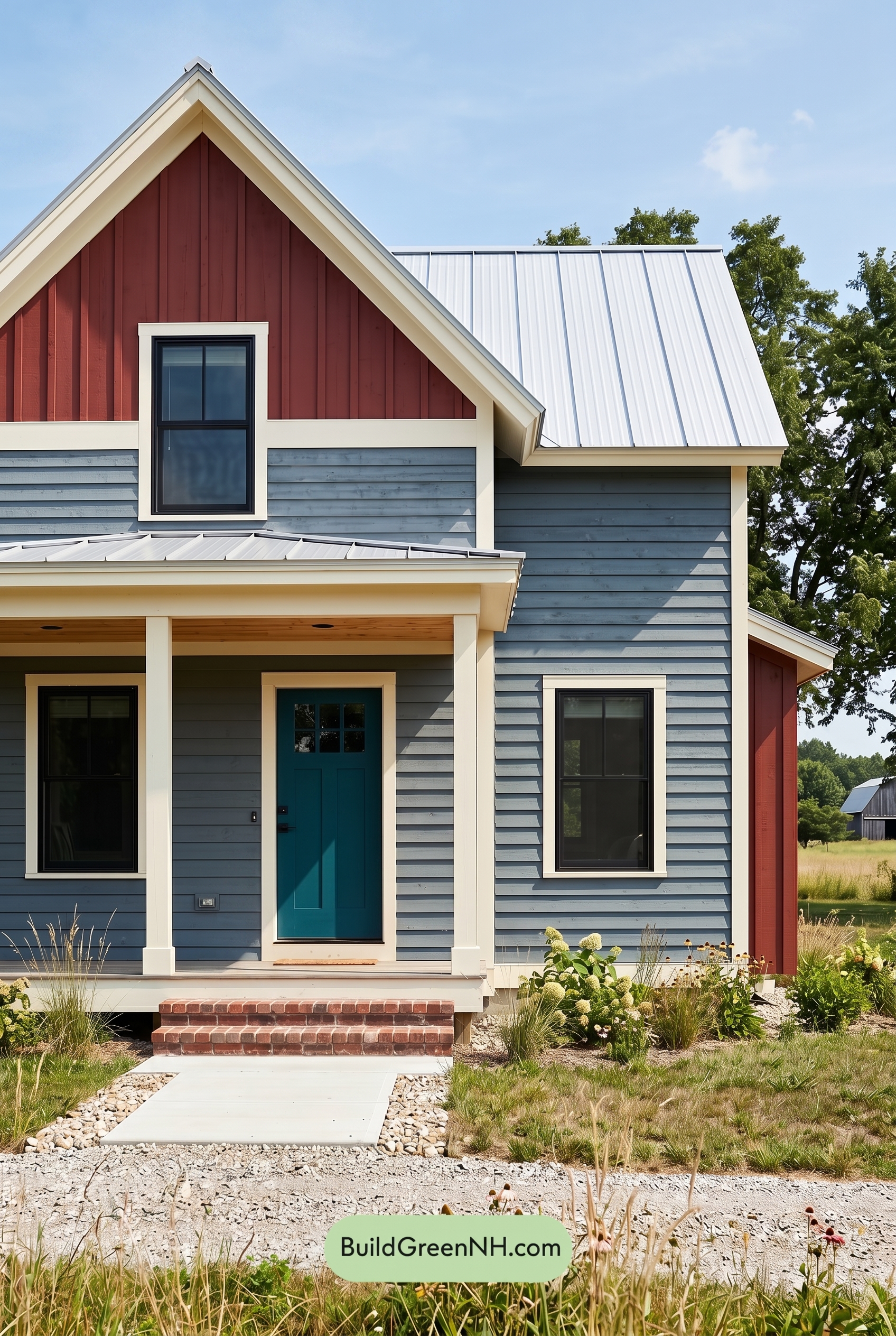

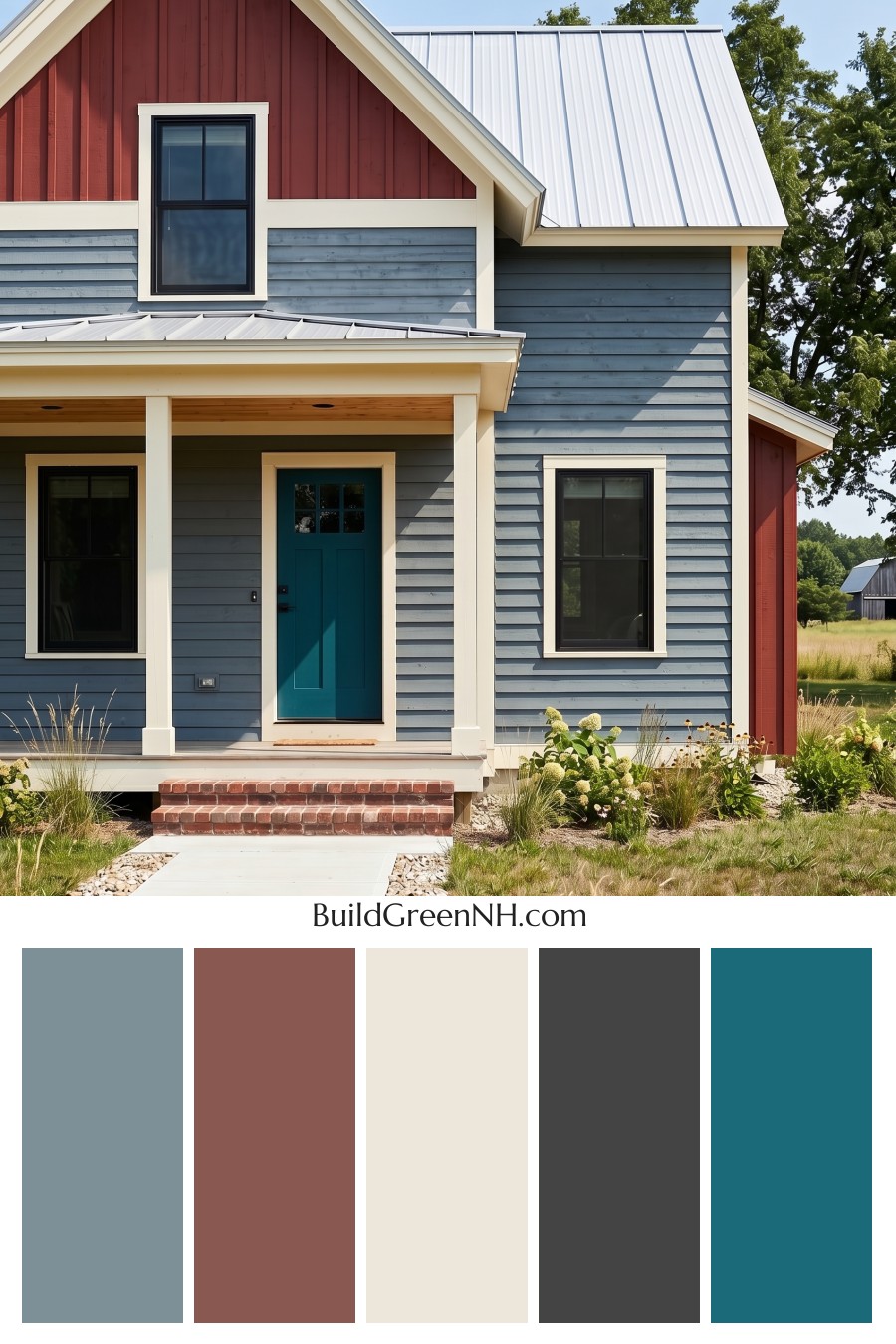
This exterior shines because its muted blue siding, warm brown accents, and crisp white details create a fresh farmhouse look with real depth and personality.
A Fresh Take on Farmhouse Color
The main siding carries the home with a soft blue-gray shade that feels calm, clean, and naturally welcoming. It gives the house a relaxed countryside mood without feeling too traditional, and the horizontal siding lets the color stretch beautifully across the front elevation.
This blue family shade is especially effective because it has a grounded, slightly weathered quality. It feels airy in the sunlight, yet still has enough depth to define the architecture and keep the exterior from looking flat.
Warm Brown Accents Add Character
The upper gable and side accent areas introduce a rich, warm brown shade with an earthy undertone. Used on the vertical siding, this accent color brings instant farmhouse charm and gives the home a stronger sense of structure.
That contrast between the cool blue siding and the warm brown accent is what makes the palette so engaging. The blue feels serene and modern, while the brown adds warmth, texture, and a slightly rustic note. Together, they keep the exterior balanced instead of leaning too cool or too heavy.
Crisp White Trim Frames Everything Beautifully
The trim, porch columns, fascia, and window surrounds are finished in a warm white shade that brightens the entire composition. This white family color acts like a clean frame around the siding and accents, highlighting the rooflines, windows, porch, and gable details.
The porch columns look especially polished in this light shade. They create a welcoming front entry and help tie the lower porch area to the upper trim and roof edges. Against the blue siding and brown gable, the white trim feels fresh, classic, and cheerful.
A Bold Blue Door Creates a Friendly Focal Point
The front door steps into a deeper, more saturated blue shade, giving the entry a confident pop of color while still staying connected to the main siding. Because it belongs to the same color family, the door feels intentional rather than random.
This is a smart accent choice. The stronger blue draws the eye right to the porch, making the entrance feel personal and inviting. It adds just enough energy to the otherwise calm palette.
Gray Window Frames and a Light Roof Keep It Modern
The window frames bring in a deep gray shade that adds definition and a subtle modern edge. This darker neutral works well with the muted blue siding, creating contrast without overpowering the softer farmhouse elements.
Above it all, the light metal roof sits in the white-to-light-gray family, reflecting brightness and reinforcing the crisp, clean look of the trim. Its pale tone keeps the home feeling open and sunlit, while the sleek finish adds a practical, contemporary touch.
Why the Palette Works So Well
This color scheme succeeds because it mixes cool, warm, light, and dark in just the right amounts. The soft blue siding provides calmness, the warm brown accents add depth, the white trim brings clarity, and the gray window frames sharpen the details.
The result is a home that feels friendly, fresh, and rooted in its setting. It has farmhouse warmth, modern contrast, and a playful front-door moment—all while staying beautifully cohesive from roofline to porch step.
Next, see how this color scheme looks under different lighting simulations throughout the day.
Overcast
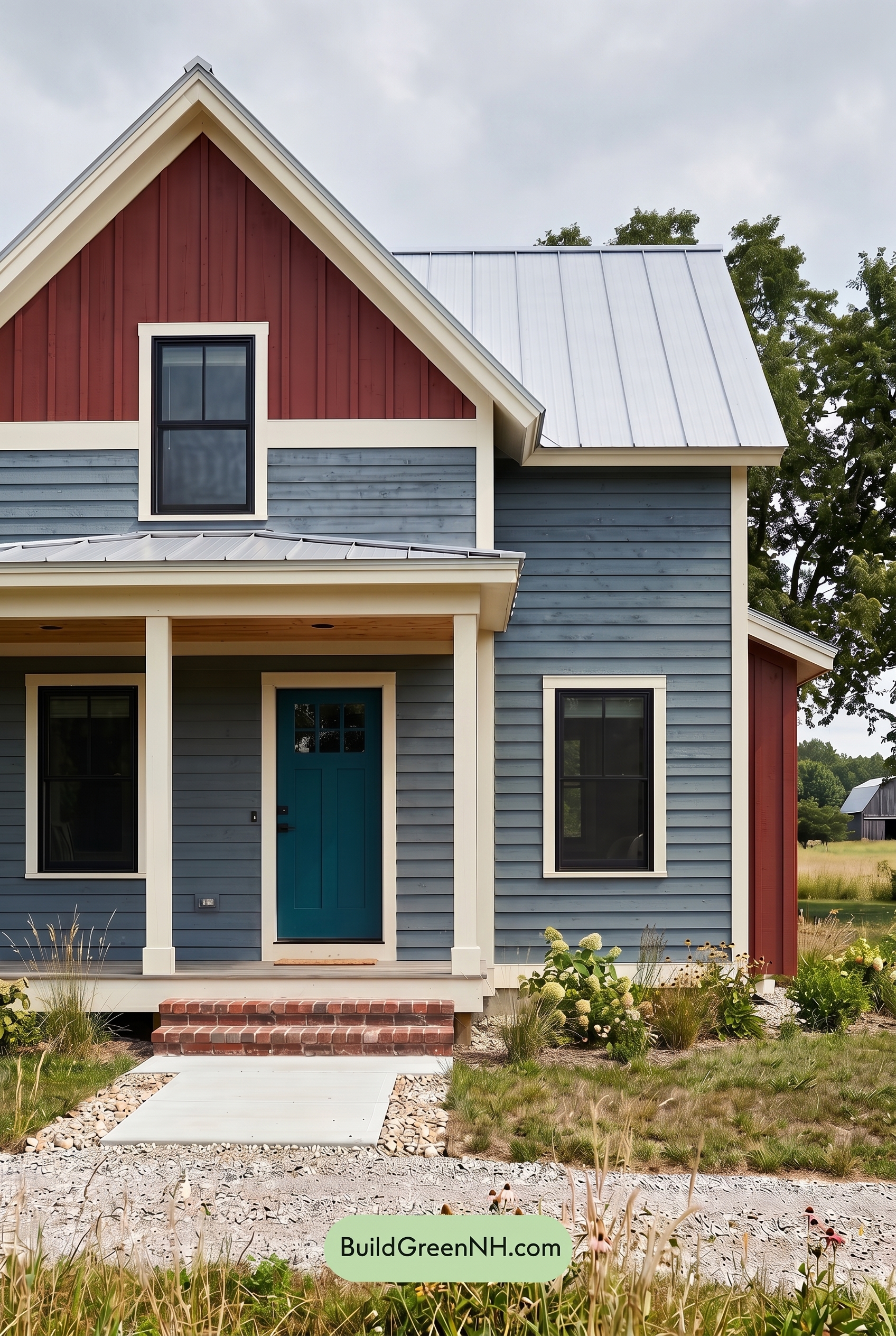
Under overcast light, the blue siding takes on a cooler, slightly grayer cast, with its saturation feeling more muted than it would in neutral daylight. The blue front door deepens rather than brightens, while the brown accent areas lose some warmth and read softer, earthier, and less sunlit.
The white trim and columns appear gentler and less crisp, with shadows becoming broad and diffused instead of sharp. Overall contrast softens across the exterior, giving the house a calm, cozy mood where the color families feel more blended and subdued.
Golden Hour
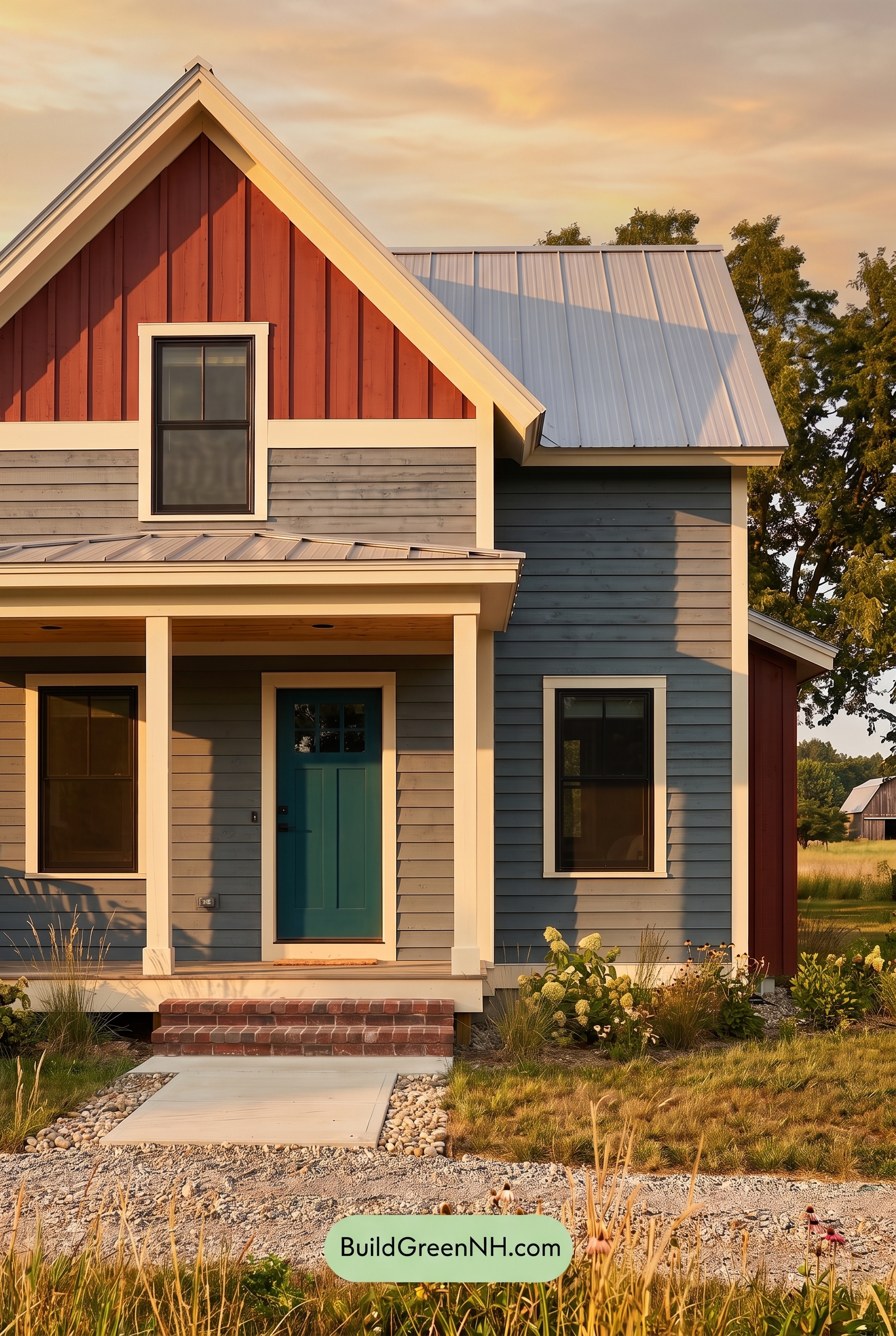
Golden Hour wraps the blue siding in a warmer cast than neutral daylight, making this shade feel softer, deeper, and a touch more saturated. The blue front door gains extra richness, while the warm brown accent areas glow with a sun-baked quality that feels more inviting than it would under a cooler, flatter midday light.
The white trim and columns shift from crisp to creamy, creating a gentle contrast against the shadowed blue walls. Long shadows add drama and depth, making the gray window frames read stronger and giving the whole exterior a cozy, relaxed mood with more warmth and dimension than neutral daylight would provide.
Shade
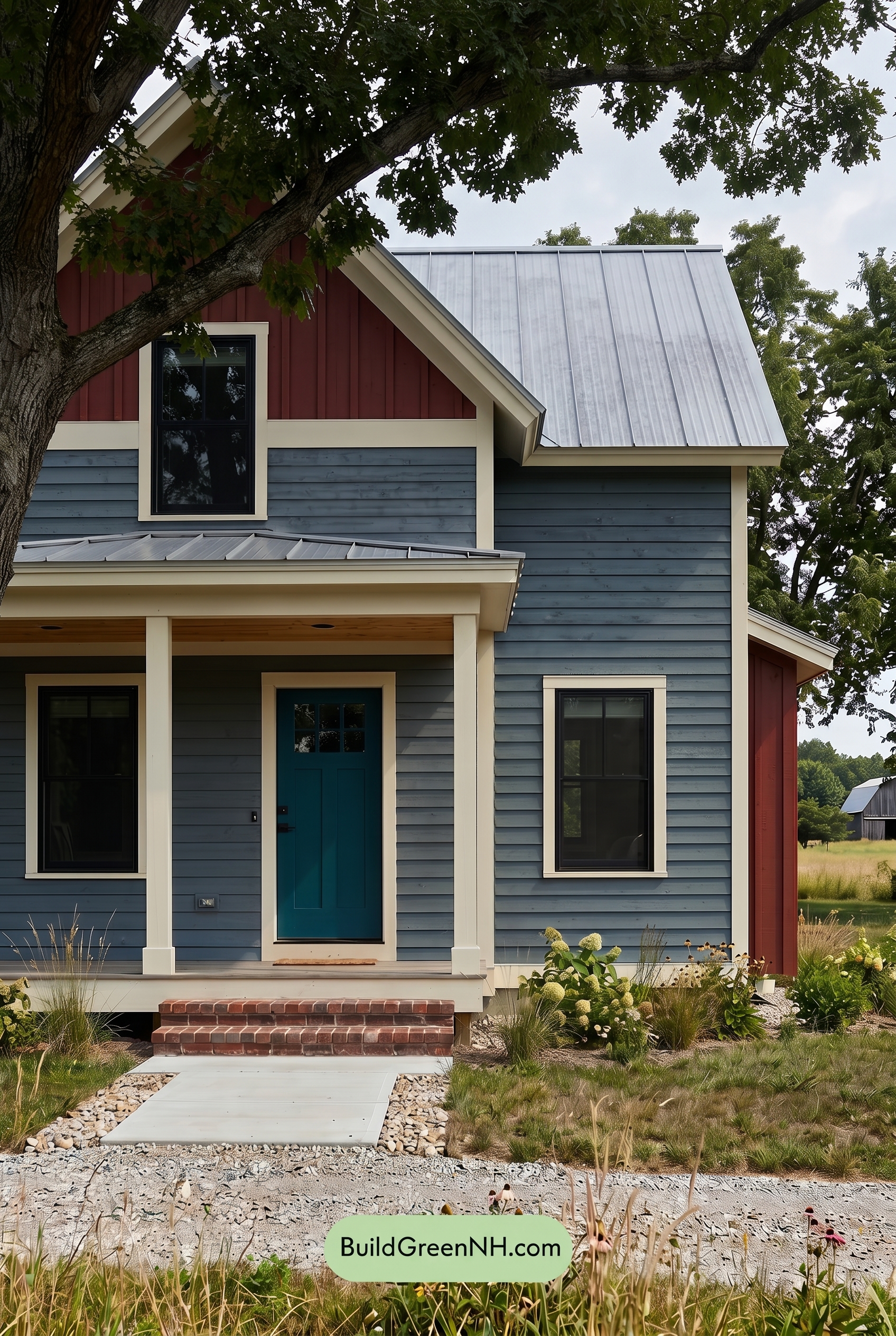
In shade, the blue family on the main walls takes on a cooler, deeper cast than it would in neutral daylight, with saturation feeling more subdued and shadowed. The blue shade on the front door appears richer and moodier, while the gray family around the windows blends more quietly into the overall palette.
The warm brown accent areas lose a bit of sunlit glow and feel more grounded, while the white family on the trim and columns softens instead of looking crisp-bright. Shadows under the rooflines increase contrast, giving the exterior a calmer, more sheltered mood with a slightly cooler, more refined feel.
Nighttime
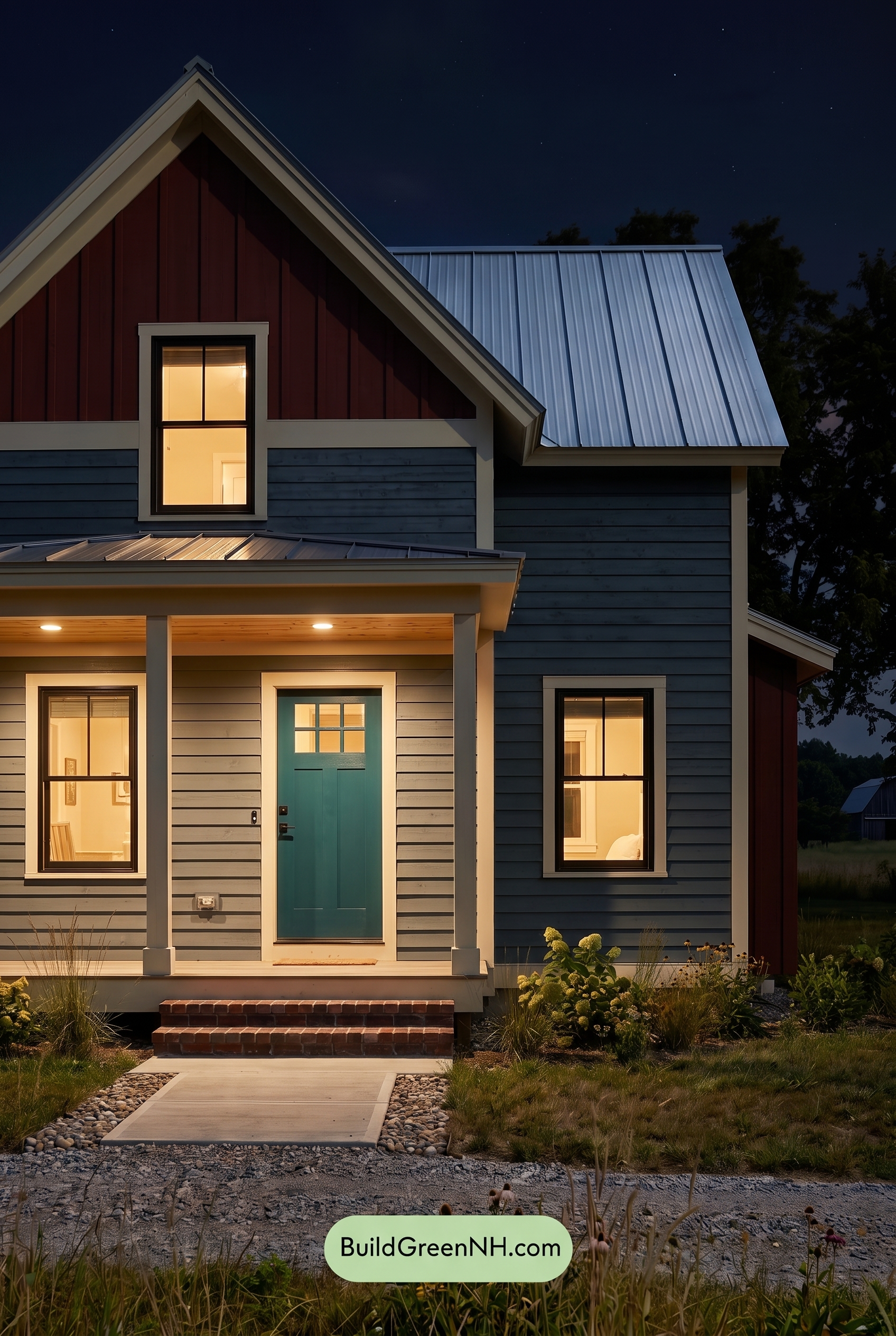
At night, this shade of blue on the siding deepens and feels cooler than it would in neutral daylight, with saturation slightly muted in the shadowed areas. The blue shade on the front door, touched by warm porch light, reads more vivid and welcoming, creating a lively focal point against the darker wall color.
The white trim and columns shift warmer under the exterior lighting, taking on a softer, creamier glow, while the gray window frames appear darker and more defined. The brown accent areas gain richness in the shadows, increasing contrast under the rooflines and giving the whole exterior a cozier, more dramatic mood than it has in daylight.
Pin these for later:
Want More?
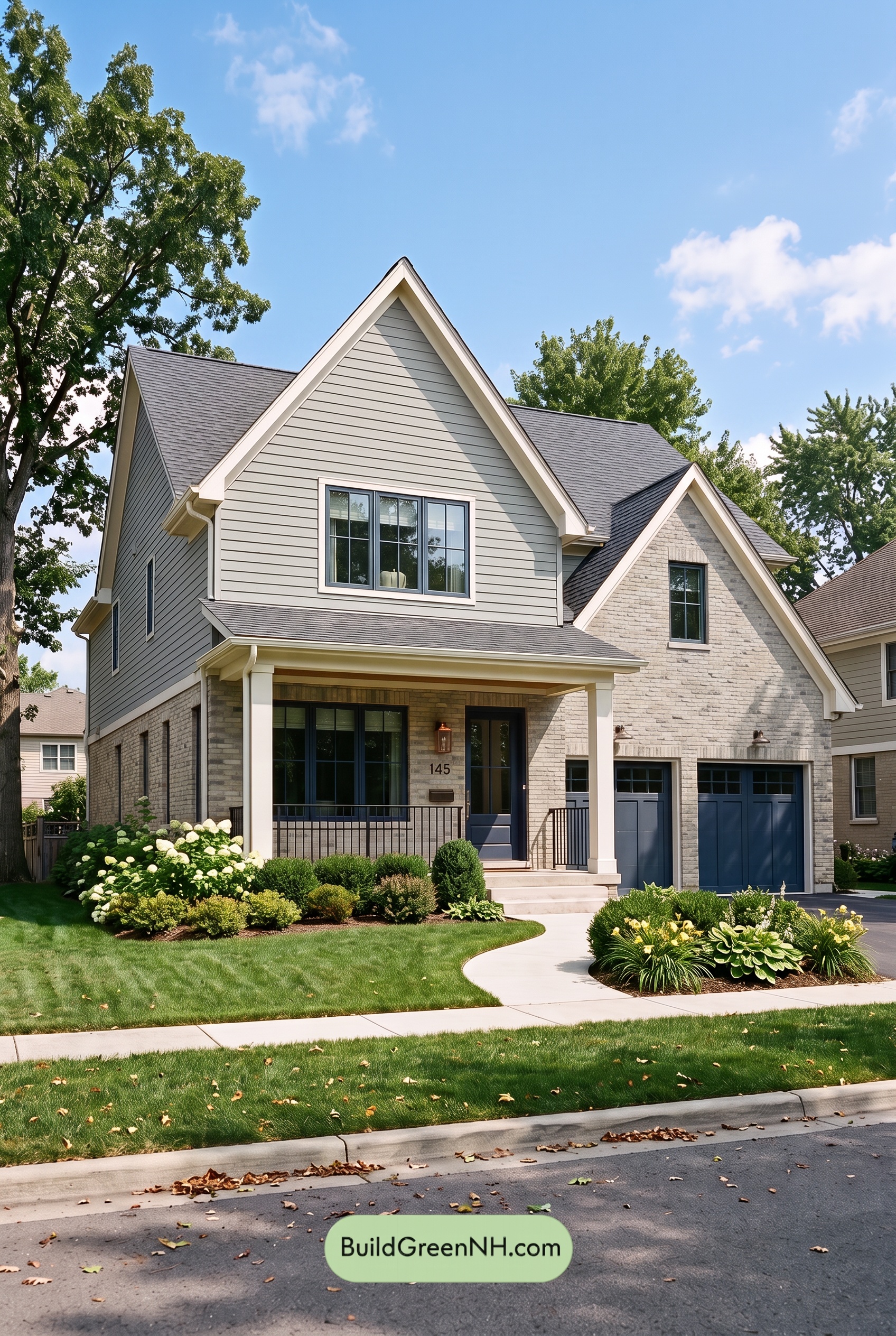 Yellow Brick House Exterior Color Scheme: Harbor Linen Crest
 Yellow Brick House Exterior Color Scheme: Bluebell Masonry Quiet
 Yellow Brick House Exterior Color Scheme: Porcelain Gable Drift
 Yellow Brick House Exterior Color Scheme: Verdant Hearthline
 Yellow Brick House Exterior Color Scheme: Mosslight Parlor
Table of Contents