Last updated on · ⓘ How we make our designs
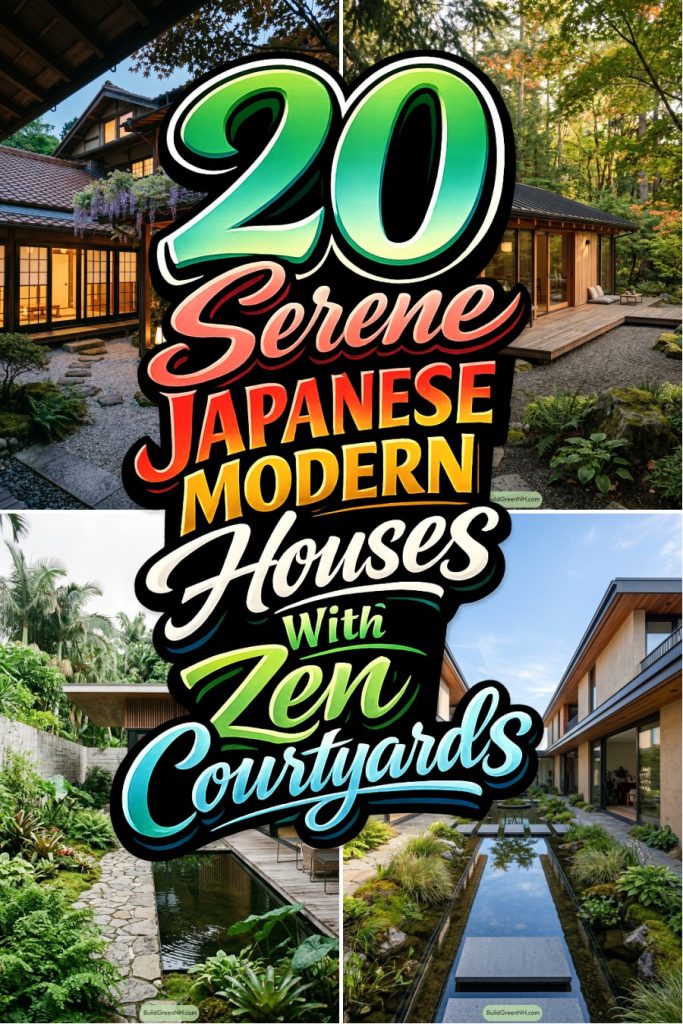
See how ponds, maples, moss, and gravel courts turn modern Japanese houses into calm, weather-smart homes with a living center.
We shaped these modern Japanese courtyard homes around the quiet bit in the middle, the pond, maple, gravel court, or moss patch that makes every room feel less boxed in. It is amazing what one tree can do, honestly, some of them are clearly overachievers.
Our cues came from Kyoto machiya, ryokan gardens, tsuboniwa pockets, tea paths, and old farm compounds, then we paired them with glass, concrete, cedar, shoji screens, and deep eaves. Pay attention to how the rooms wrap the garden, because the courtyard is not decoration, it is the home’s calm center.
As you look through the designs, notice the useful details too, like sheltered engawa walks, sliding panels, rain friendly roofs, ponds set low beside decks, and screens that give privacy without turning the house into a bunker. Pretty is nice, but pretty that handles weather is much better.
Lantern Courtyard Retreat
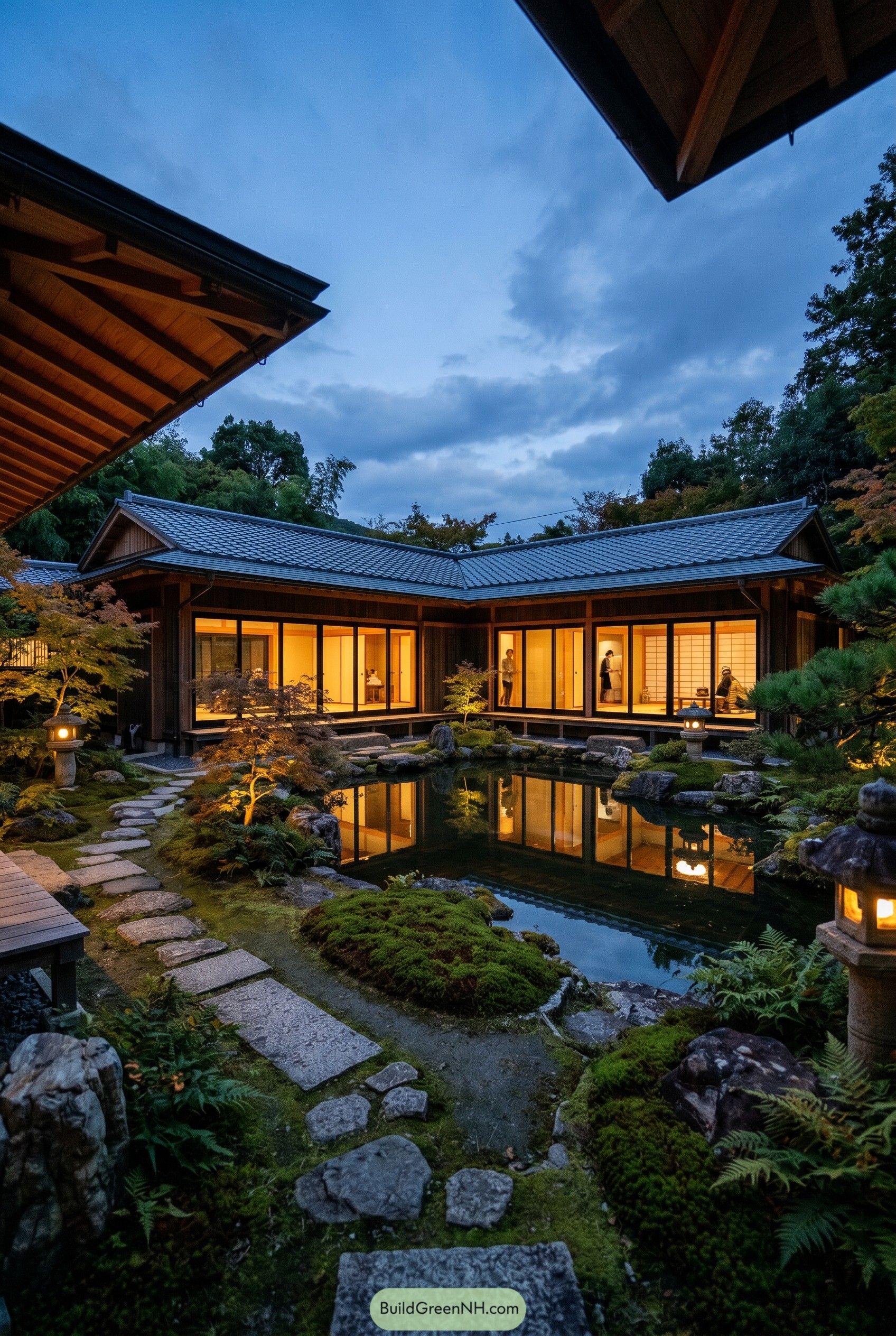
This courtyard home wraps its rooms around a pond garden, so every window gets a calm little scene instead of the neighbor’s fence. The design was inspired by Kyoto inn courtyards, where water, moss, stone, and rooflines make the house feel tucked away from the busy world.
Deep eaves protect the timber walkways and make rainy evenings feel pretty cozy, even if someone forgot the umbrella again. Sliding glass panels open the rooms toward the garden, while the tiled roof and lanterns keep the whole place grounded in Japanese tradition.
Moss Path Forest Pavilion
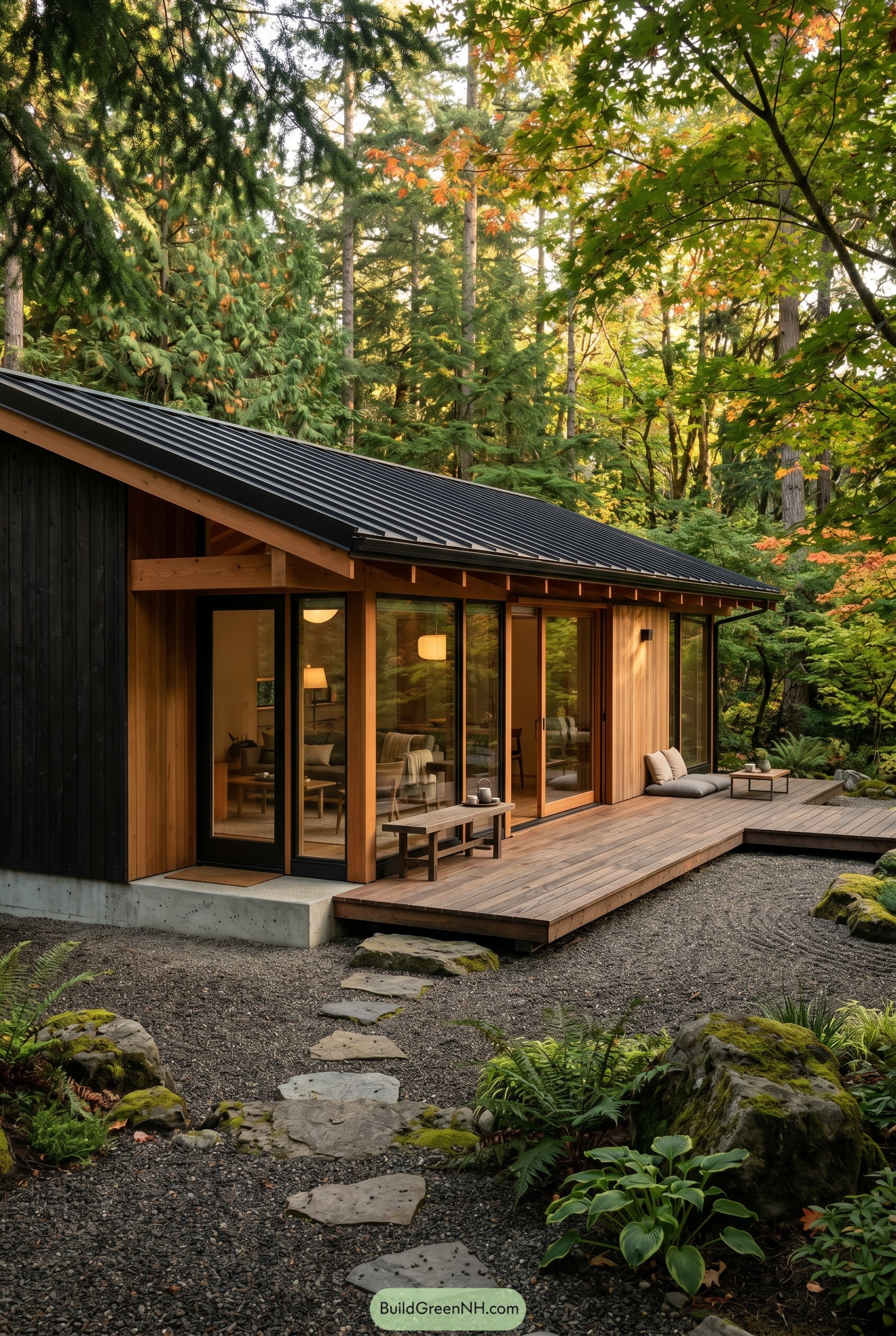


This design sits low under a crisp black roof, with warm timber framing that feels right at home among the maples and firs. The glass doors open to a broad deck, so the living area can spill into the garden without making a big fuss about it.
The gravel court, stepping stones, mossy rocks, and ferns borrow from Japanese tea garden ideas, calm but not too precious. We used the dark siding to let the cedar tones stand out, because sometimes a house needs a good jacket, same as the rest of us.
Skywell Maple House
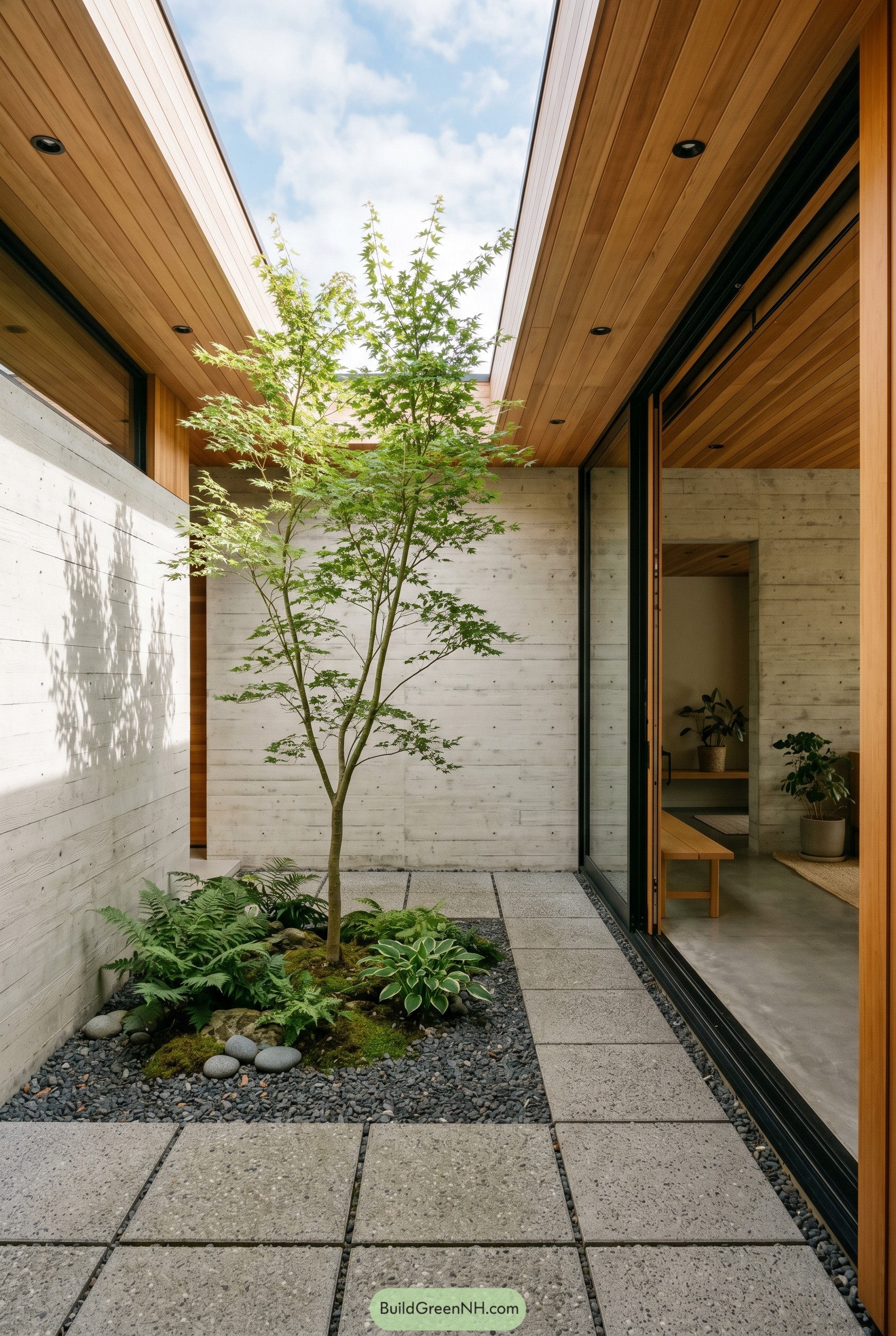
This courtyard pulls from tsuboniwa gardens, where one small tree can make a whole home feel calmer, which is pretty efficient for a tree. The pale board formed concrete wraps the garden closely, while warm cedar ceilings stretch overhead and make the open roof feel framed instead of exposed.
Large sliding glass doors let the living area borrow the greenery without turning the room into a greenhouse, thankfully. Stone pavers, black gravel, moss, and ferns keep the floor simple and easy to read, giving the maple a quiet stage right at the center.
Terraced Village Garden Court
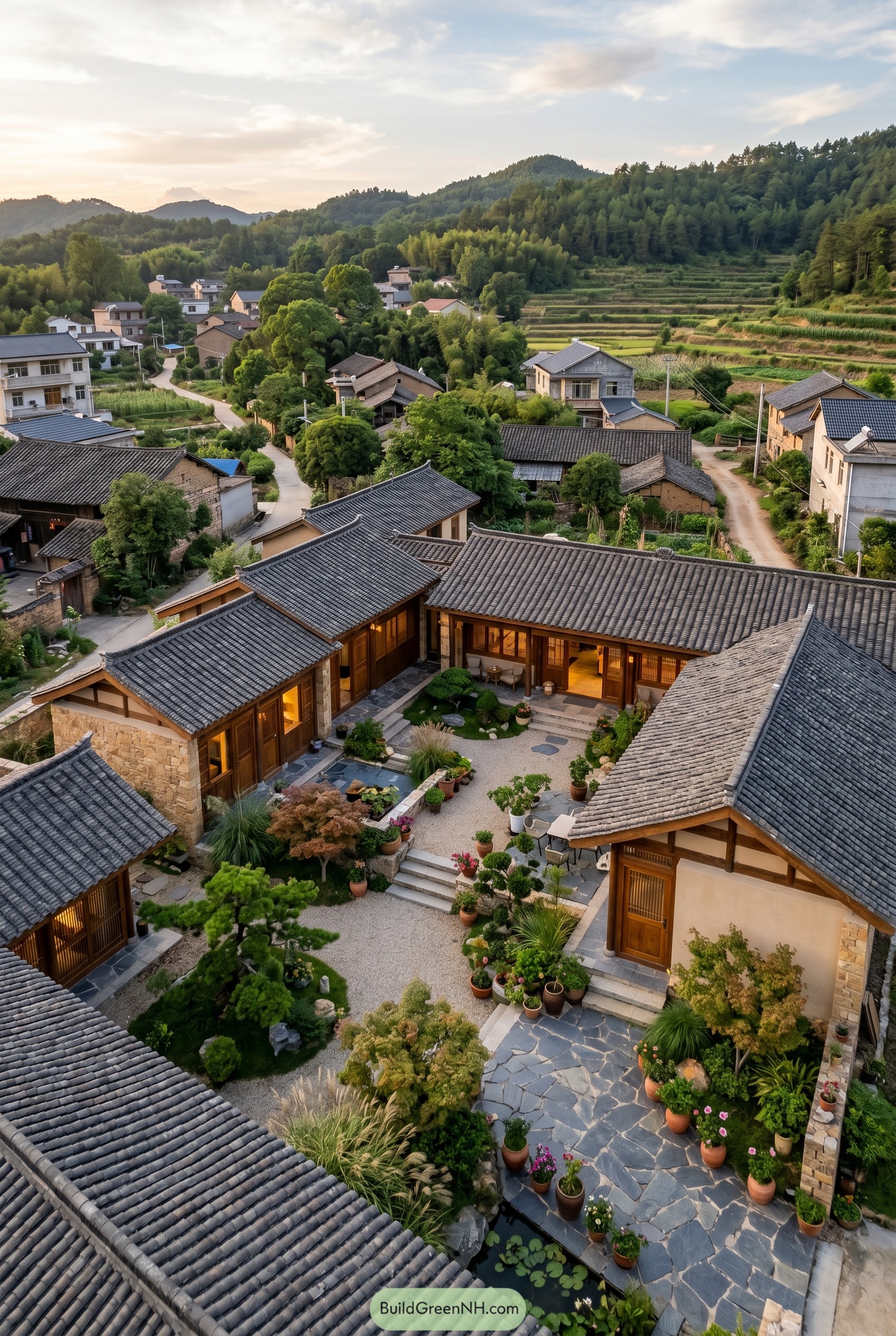
This courtyard home wraps its garden with low tiled roofs, timber screens, and stone paths that feel pulled from a quiet mountain village. The layout was inspired by old Japanese farm compounds, where daily life spills outside a little, but still keeps its slippers on.
The central court is planted in layers, with potted flowers, clipped shrubs, and a small pond giving each room something calm to face. Wide overhangs and sliding doors make the indoor spaces feel connected to the garden, which is handy when the plants start acting like part of the family.
Bamboo Void Glass House
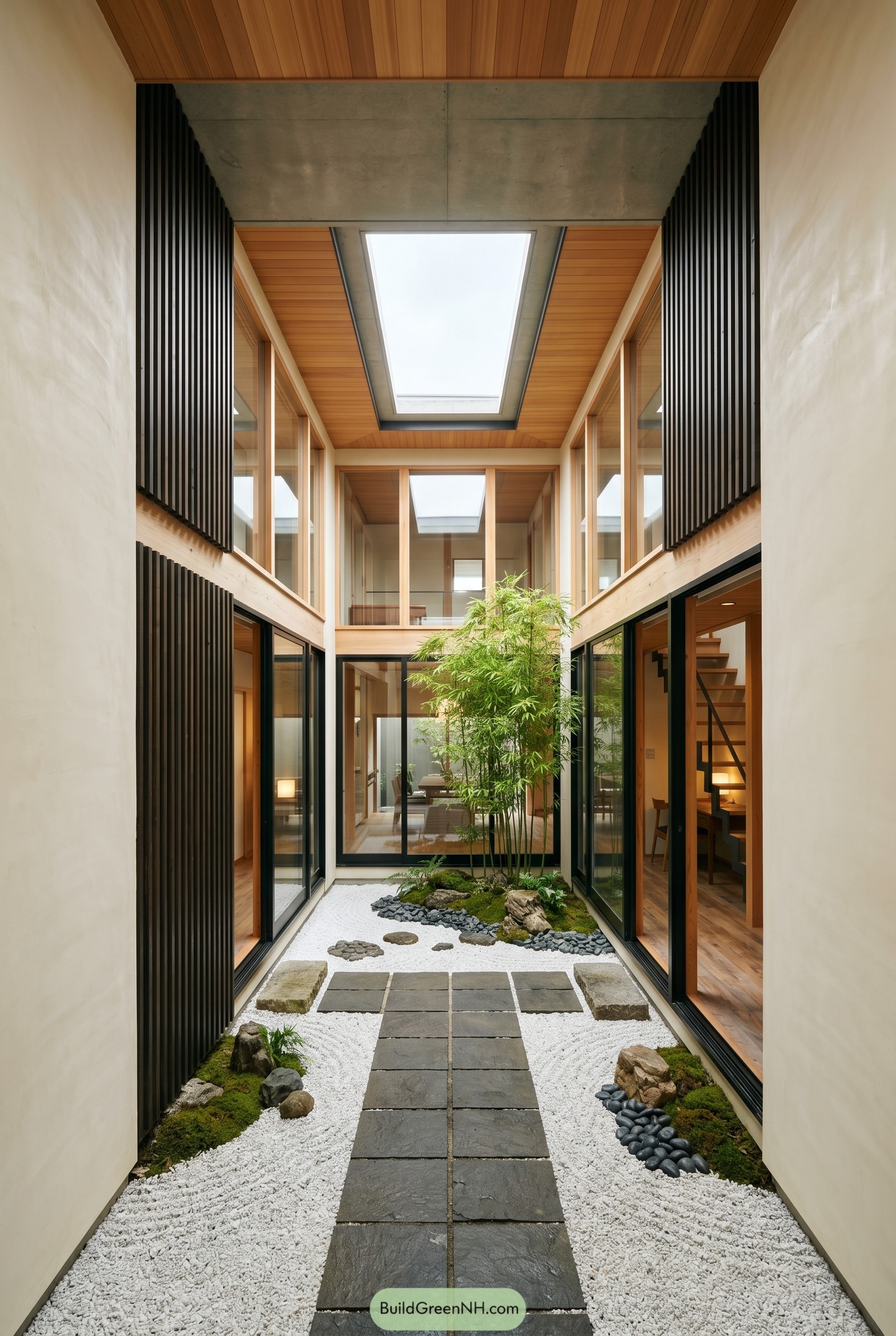
This courtyard pulls a quiet garden into the center of the house, with raked white gravel, dark stepping stones, moss, rocks, and a slim bamboo cluster that feels very sure of itself. Its inspiration comes from tsubo niwa, the pocket gardens of Japanese townhouses, where a small outdoor room can reset the whole home, and yes, the gravel probably looks better groomed than most of us on Monday.
Glass walls keep the surrounding rooms connected to the garden, while black vertical slats and warm wood ceilings give the space a calm, tucked in feeling. The open roof and upper windows bring in sky views, so the courtyard becomes more than decoration, it’s the house taking a deep breath.
Ember Eaves Water Court
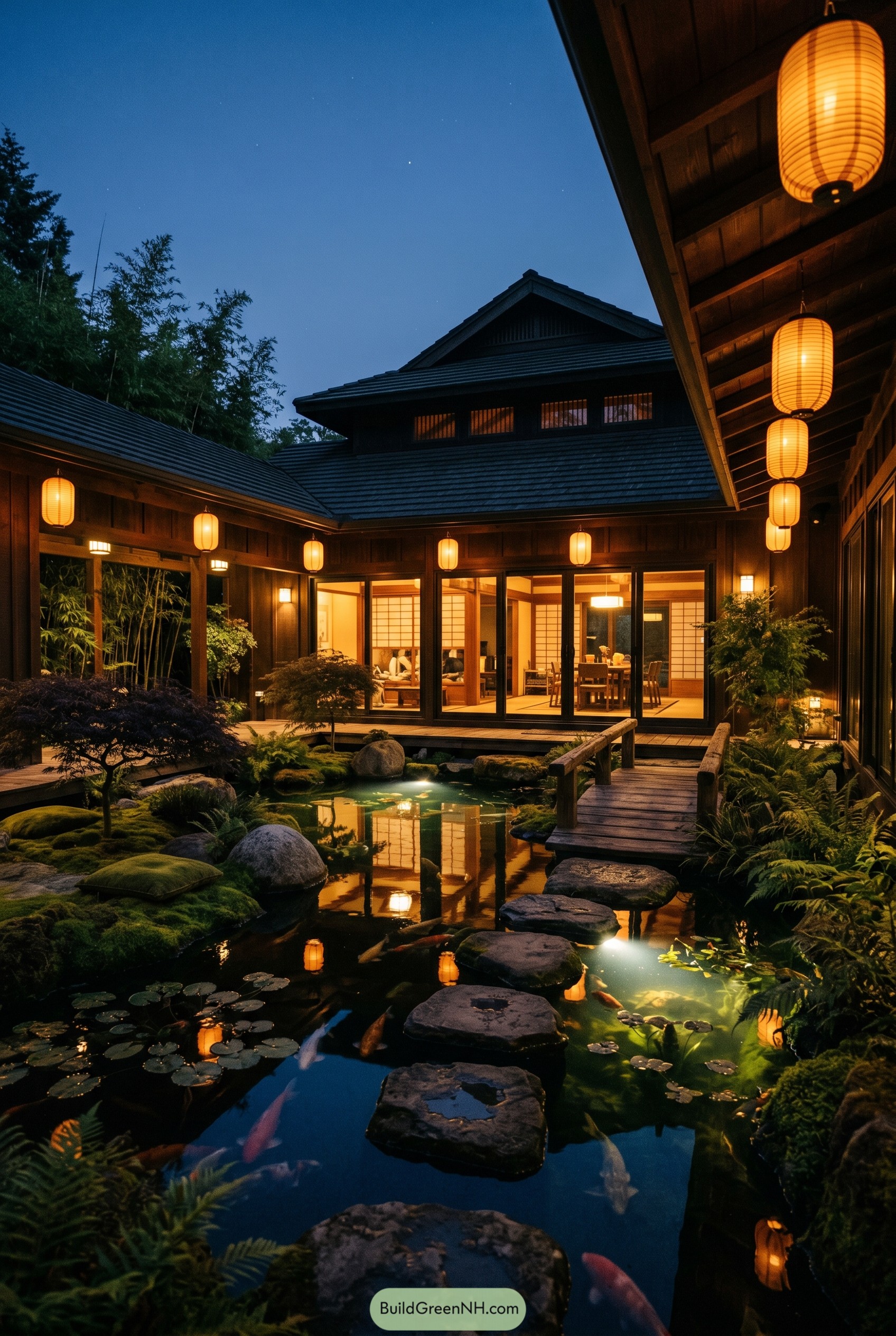
Warm paper lanterns tuck under deep timber eaves, wrapping the courtyard in a soft amber glow while the rooms open wide to the koi pond. The idea came from old ryokan gardens, where dinner, water, and a slow walk outside all feel like part of the same plan.
The stepping stones, low bridge, moss mounds, and planted edges make the pond feel natural, but it is quietly very planned. Sliding glass panels keep the rooms connected to the garden, so even staying inside feels like cheating at being outdoors.
Sakura Veranda Shoji Home
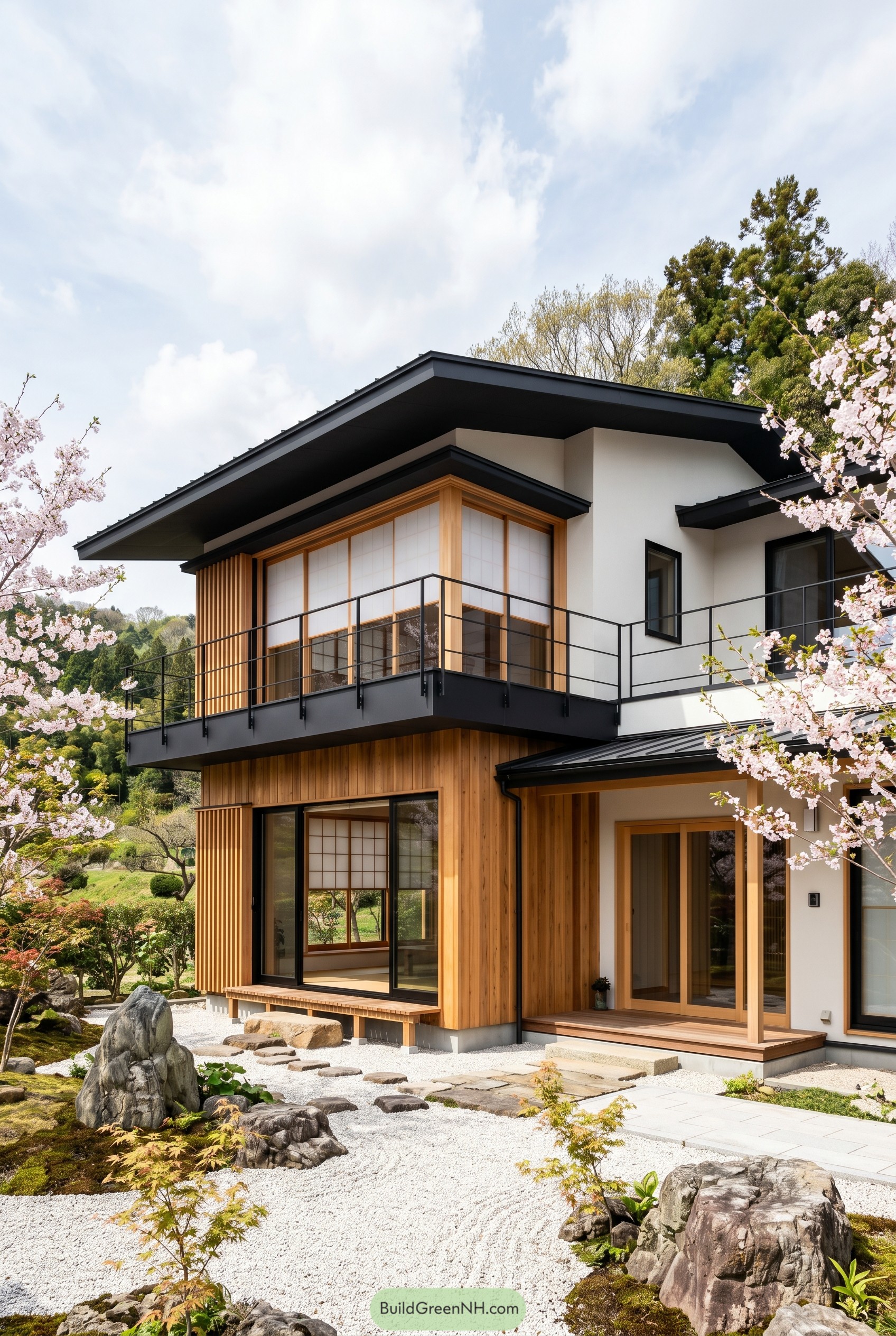
Black overhanging roofs cap the white walls and warm cedar cladding, giving this home a calm profile in the garden. The shoji inspired screens soften the upper balcony and keep the courtyard feeling private without making it feel like a fortress, thankfully.
We took cues from spring temple gardens, with white gravel, stepping stones, boulders, and cherry branches wrapping the entry. Slim railings and generous roof overhangs make the veranda useful in rain or sun, so the rooms can open out without every cushion becoming a weather experiment.
Pebble Bath Maple Pocket
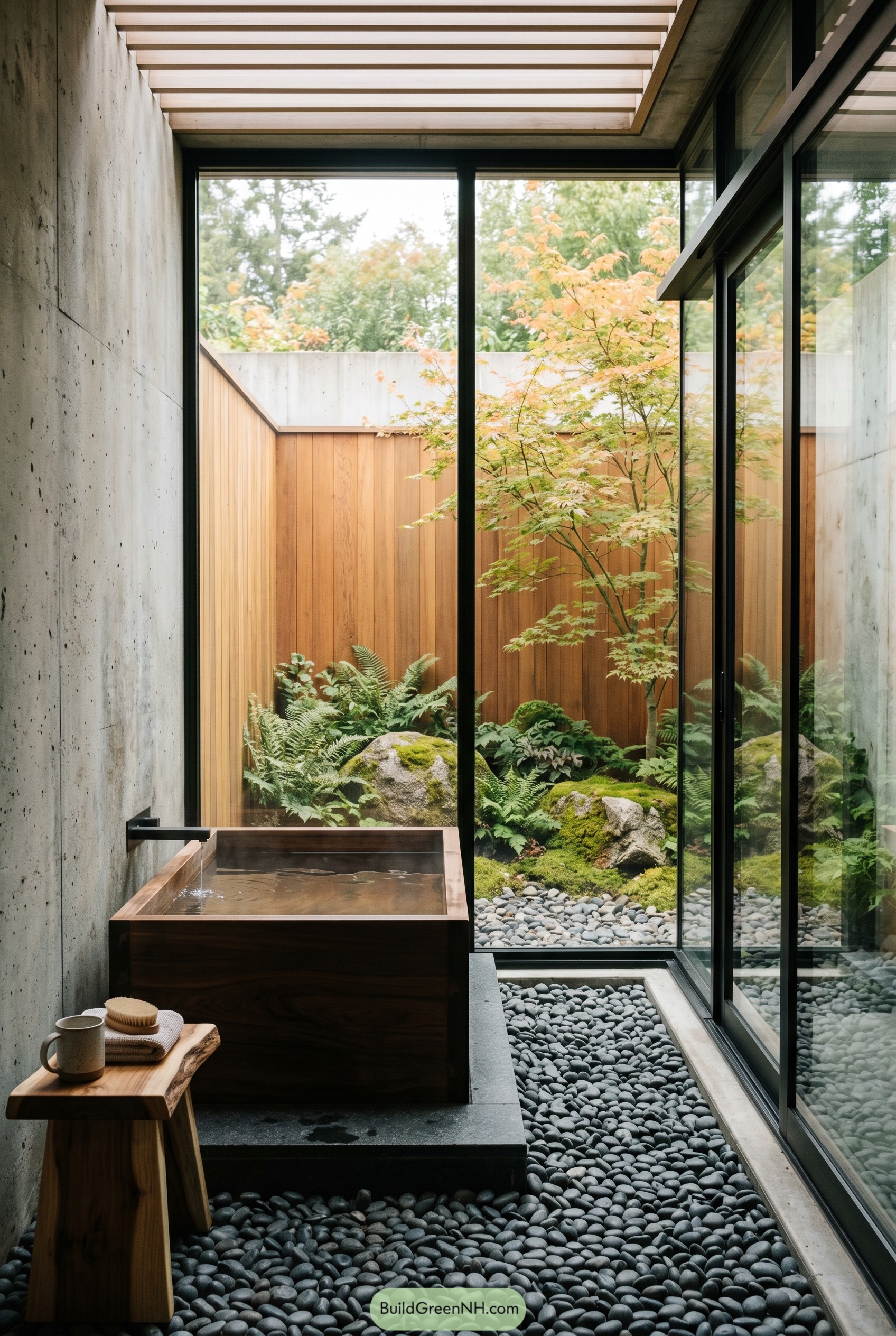
A deep timber soaking tub sits against board formed concrete, with black river pebbles underfoot and glass pulled tight around the garden. We took cues from small onsen inns, where the best luxury is not a gold faucet, it is a fern behaving like it owns the place.
The courtyard is boxed in with warm vertical timber so the bath feels private without feeling sealed off, and the slender maple gives the room a soft seasonal clock. Sliding glass keeps steam, planting, and water close together, which matters because a bathing space should calm you down before the towel negotiations begin.
Stone Trail Engawa Haven
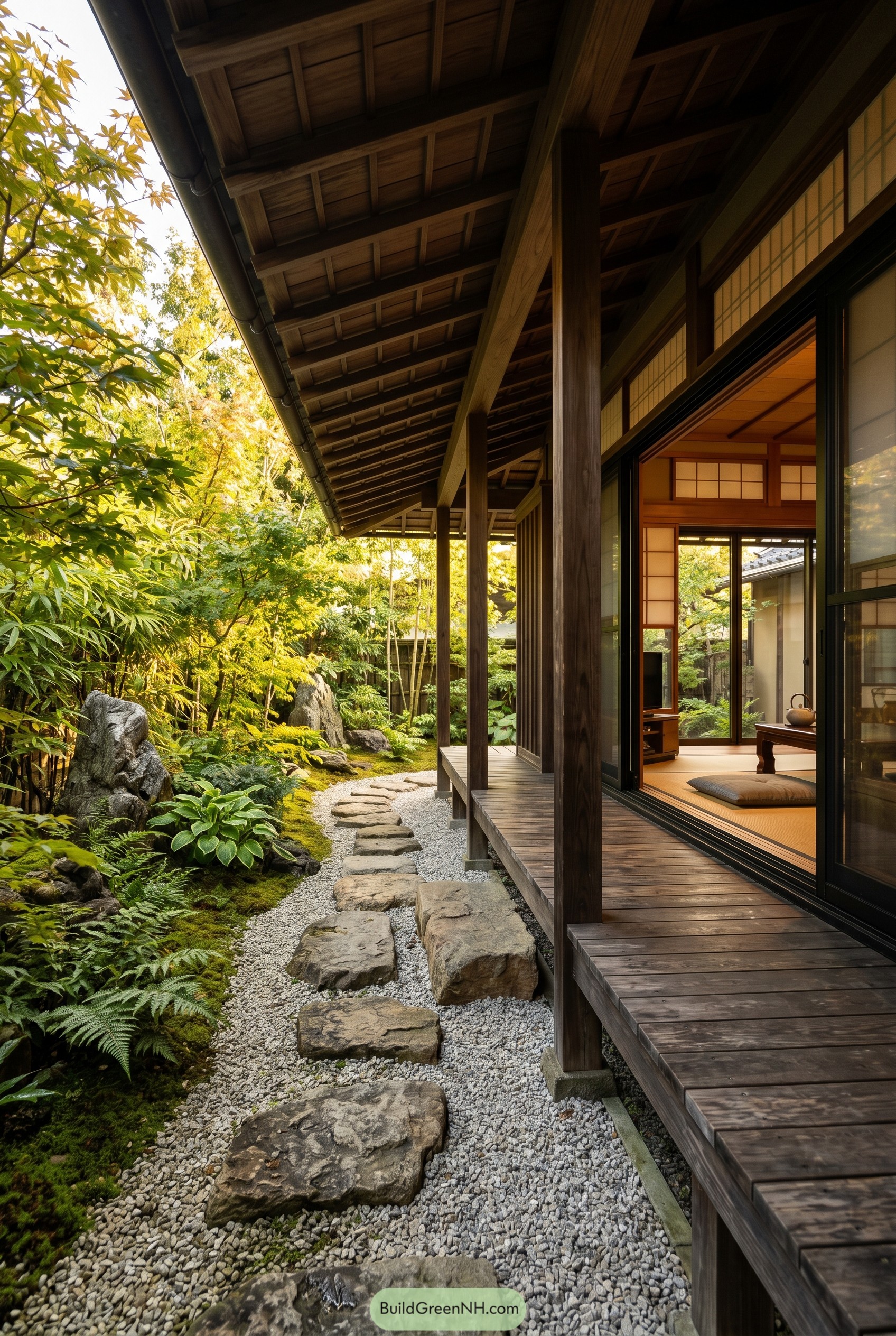
This design wraps a deep timber engawa around a quiet garden, with sliding glass and shoji screens opening the tatami room to moss, ferns, and a stepping stone path. It takes its cue from old Kyoto machiya homes, where the courtyard is not decoration, it is the house’s best excuse to slow down for tea.
The broad eaves shelter the walkway and keep rain off the thresholds, which matters when your garden likes to splash a little. Dark posts, pale gravel, and rough garden stones give the space a calm balance, so the home feels tucked into nature without pretending it grew there overnight.
Canopy Atrium Cedar Walk
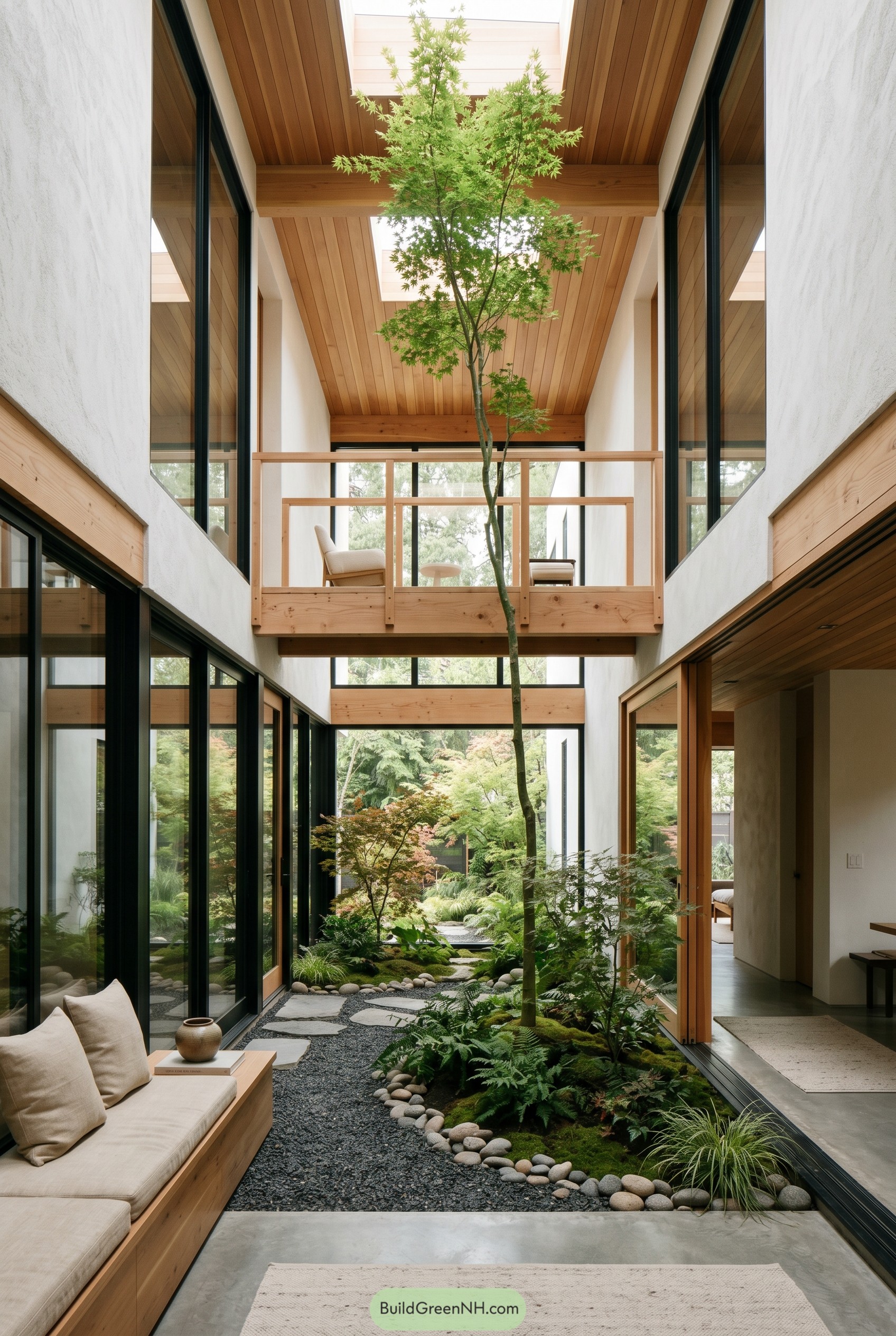
A slender maple climbs through the central atrium, giving the house a garden heart instead of just another hallway. We shaped it around the feel of a quiet tsubo niwa, but stretched upward, because sometimes a tree deserves the good seat.
The black framed glass keeps the rooms visually connected while still making the courtyard feel calm and tucked away. Warm timber ceilings, a simple bridge, river stones, moss, and ferns all soften the tall space, so it feels peaceful without getting too precious about itself.
Rain Veil Tsuboniwa Residence
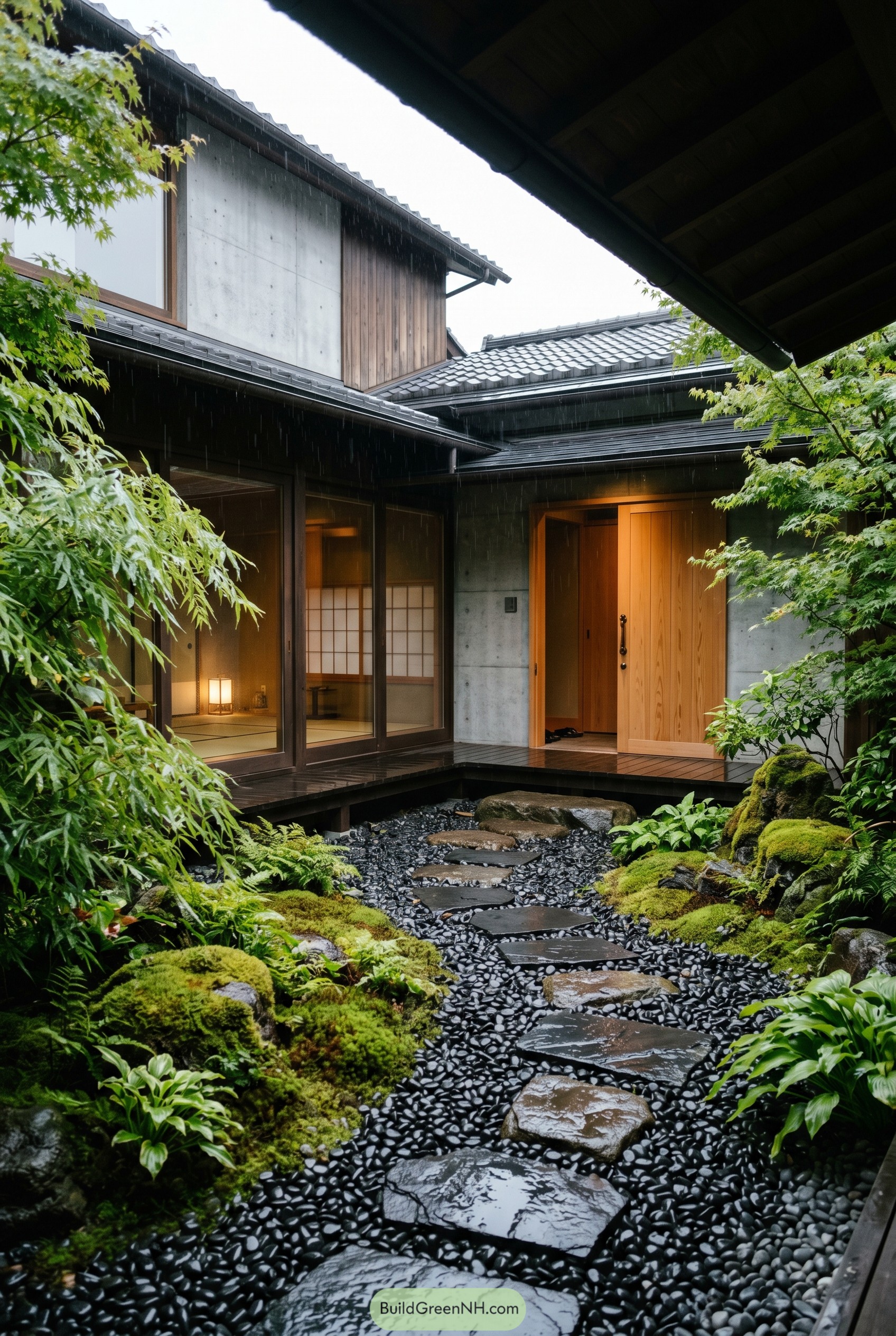
This courtyard house folds around a wet tsuboniwa garden, with slick black pebbles and stepping stones guiding you from entry to veranda. It was inspired by old Kyoto lanes, where a small pocket of green can make the whole home feel like it took a deep breath.
Deep eaves catch the rain, concrete walls keep the courtyard calm, and warm timber at the doorway makes the arrival feel gentle, not fancy. The moss, maples, and raised deck soften the modern lines, and yes, the rain is basically part of the furniture here.
Copper Leaf Inner Garden
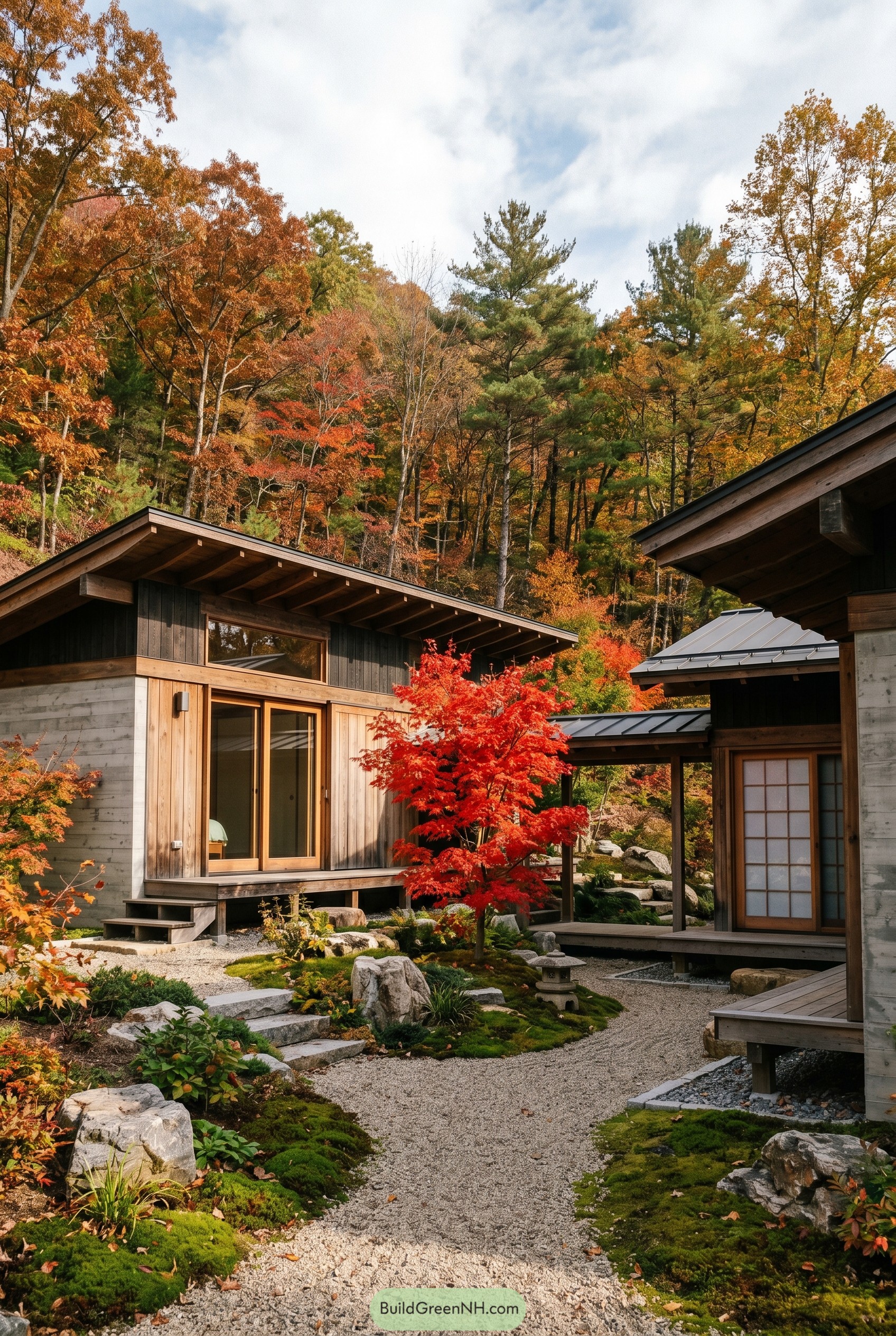
This courtyard house borrows its mood from the wooded slope behind it, with low timber roofs that sit quietly under the autumn canopy. The buildings wrap the gravel garden instead of swallowing it, so the red maple gets the best seat in the house, naturally.
Charred cladding, warm cedar, board formed concrete, and shoji panels keep the palette calm while still giving each wing its own little personality. Moss beds, stepping stones, and deep eaves make the courtyard useful in real weather, because pretty gardens should not faint at the first drizzle.
Fern Pool Slat Sanctuary
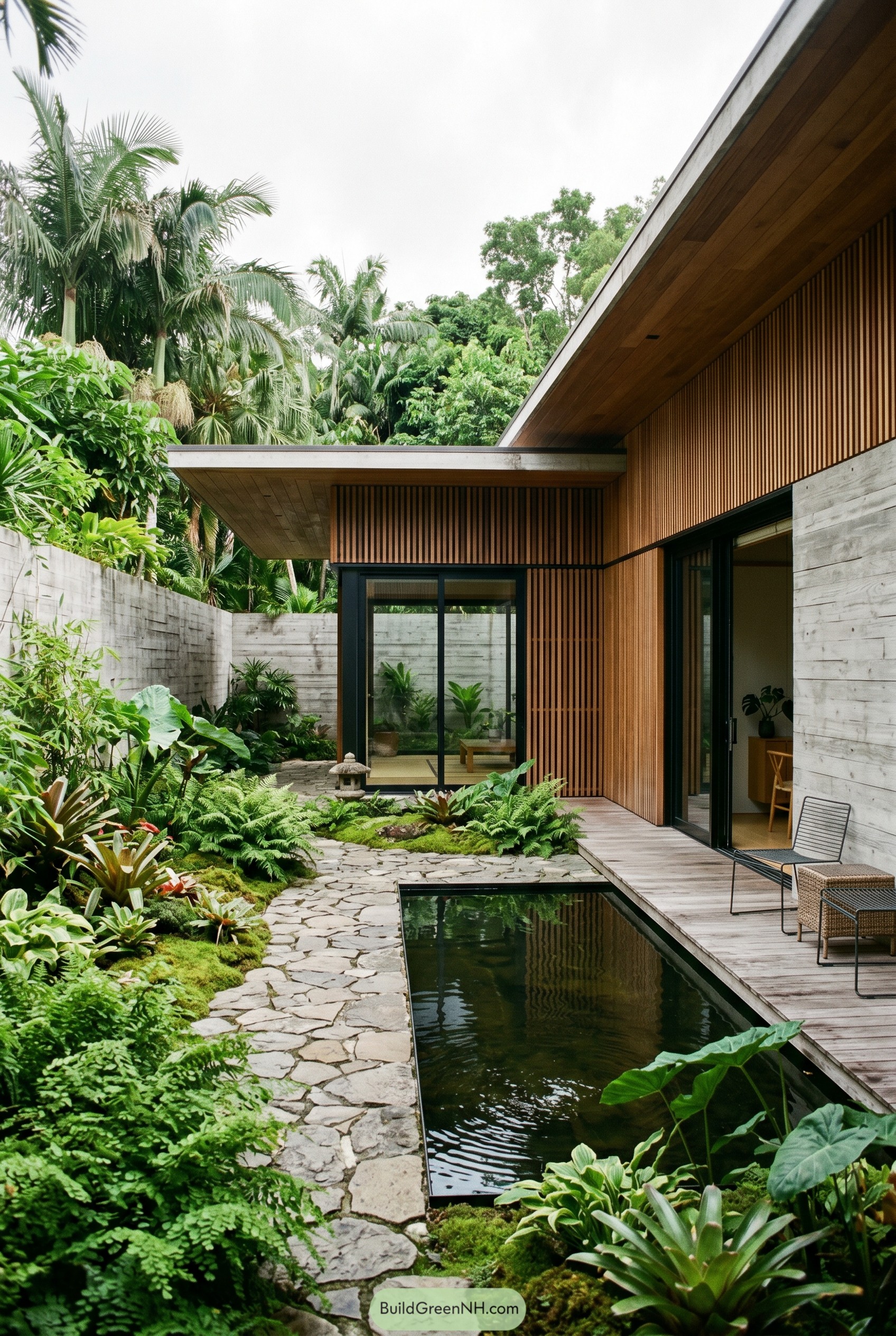
This courtyard home borrows from Japanese garden thinking and a lush jungle edge, so the pond, moss, and palms feel tucked in rather than staged. The timber slat screen softens the concrete walls and gives privacy without making the place feel like a very polite bunker.
A stone path winds through the planting to the glass rooms, with the water set low beside the deck for a calm pause before you step inside. Deep roof overhangs and sliding doors keep the rooms connected to the garden, which matters because the courtyard is not decoration, it is the best seat in the house.
Kuro Gable Gravel House
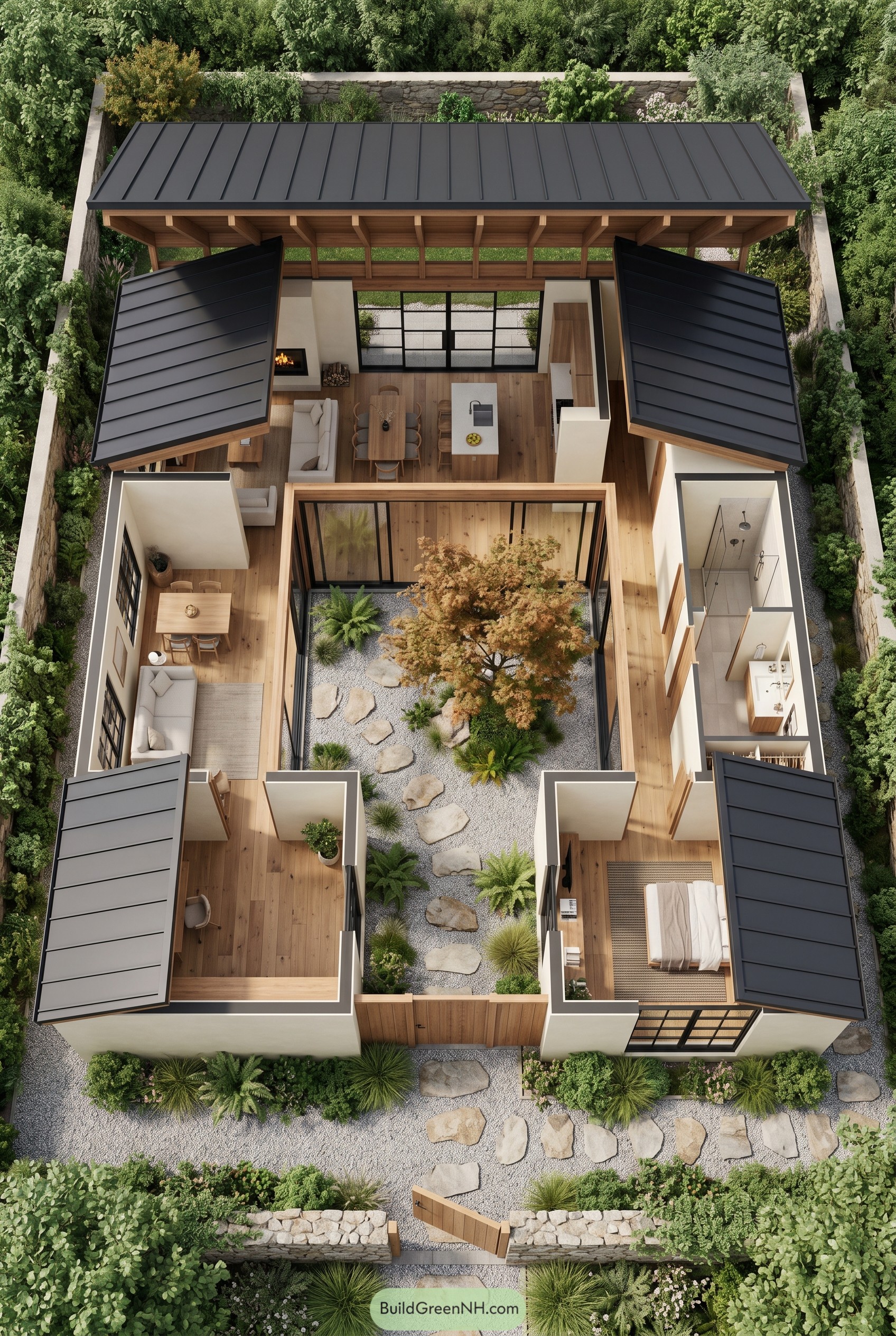
A ring of rooms wraps a gravel courtyard planted with a small tree, ferns, and stepping stones that make the center feel calm without getting too precious. The black folded roofs and warm timber framing take cues from old Japanese compounds, then give them a cleaner modern jacket.
Large sliding glass panels keep the living spaces close to the garden, so breakfast, reading, and even doing dishes get a better view than they probably deserve. The pale walls, wood floors, and sheltered walkways help each room feel connected but still private, which is the whole magic of a good courtyard plan.
Wisteria Supper Tatami Lodge
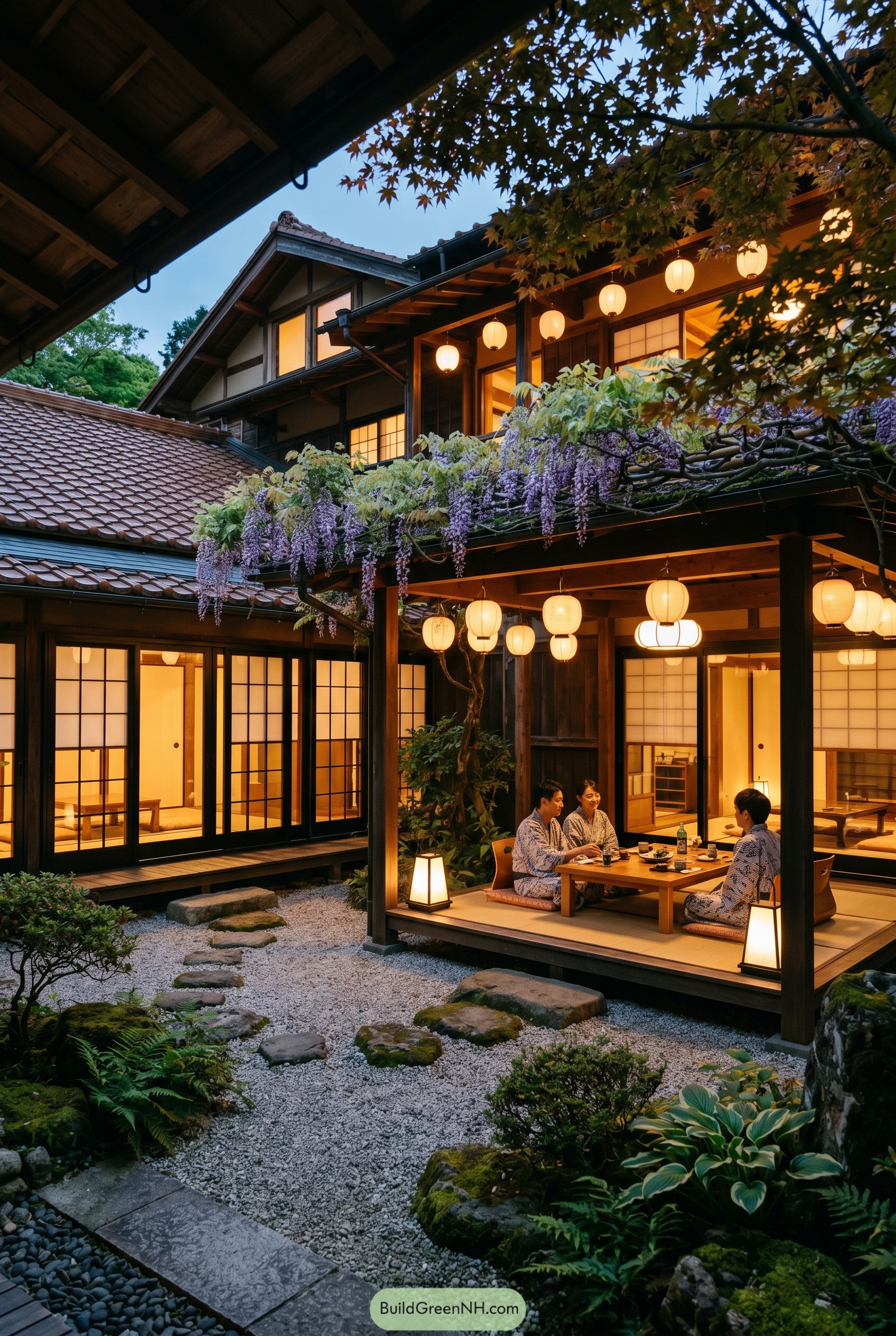
This courtyard home gathers the rooms around a gravel garden, with shoji panels sliding open to make dinner feel half inside and half under the maples. We took cues from old ryokan inns, then tightened the plan so the garden becomes the center of daily life, not some fancy thing you only admire from a chair.
The wisteria pergola softens the upper veranda, while paper lanterns hang low enough to make the evening feel relaxed, almost like the house is hosting and doing a pretty decent job of it. Stepping stones, mossy rocks, and deep eaves keep the space calm in rain and summer heat, which matters because a courtyard should be useful, not just photogenic.
Cloud Gravel Tea Lounge
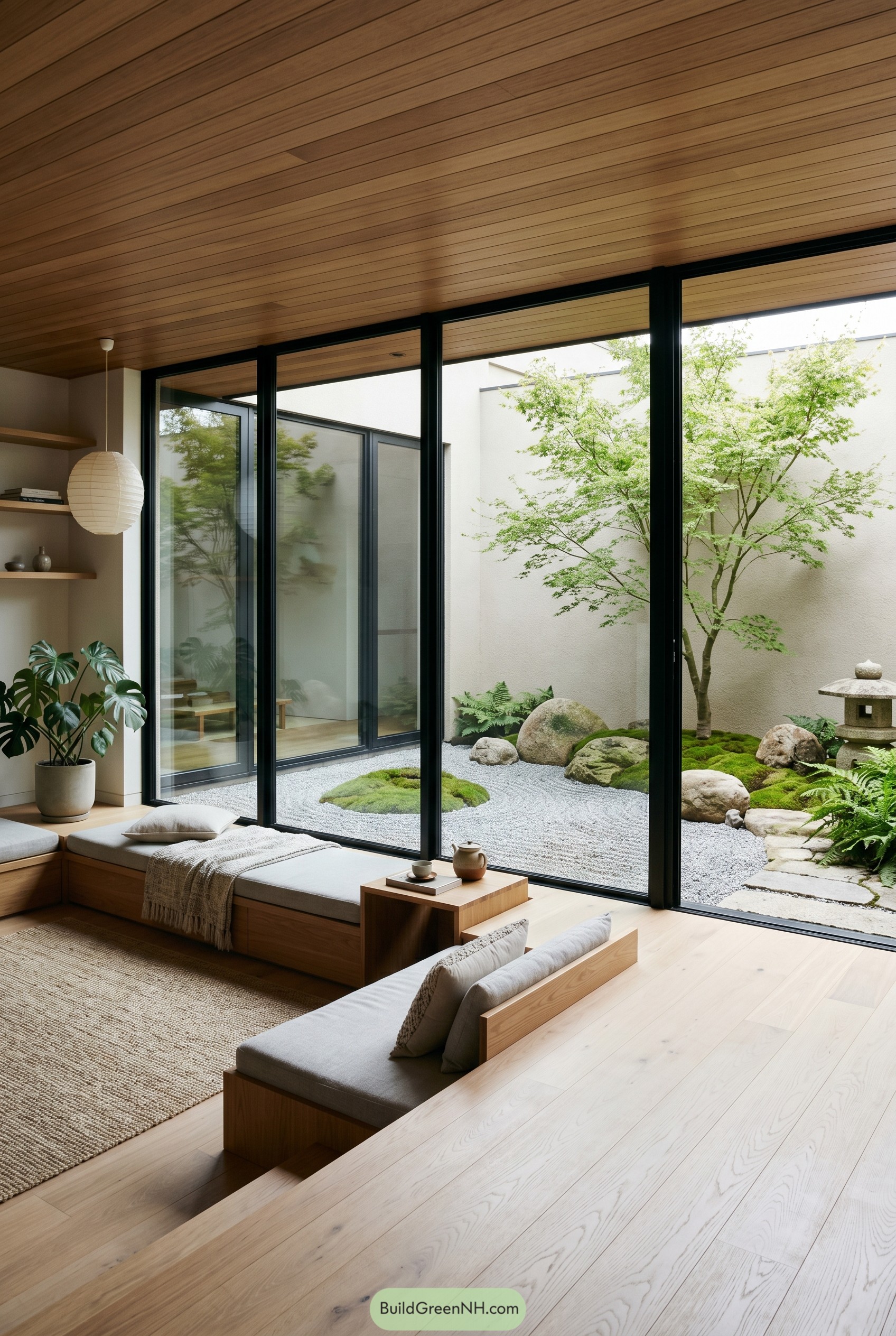
This courtyard room was shaped around a small garden that feels calm without getting too precious, because nobody needs a museum for a maple tree. The black framed glass keeps the view wide, while the warm timber ceiling and low built in seating make the inside feel tucked in and easy.
The garden borrows from tsuboniwa ideas, with raked gravel, mossy mounds, rounded stones, and a quiet stone lantern placed like it just wandered in. Those details matter because they give the room a peaceful center, so even a cup of tea gets a better seat than usual.
Quiet Gate Shakkei Walk
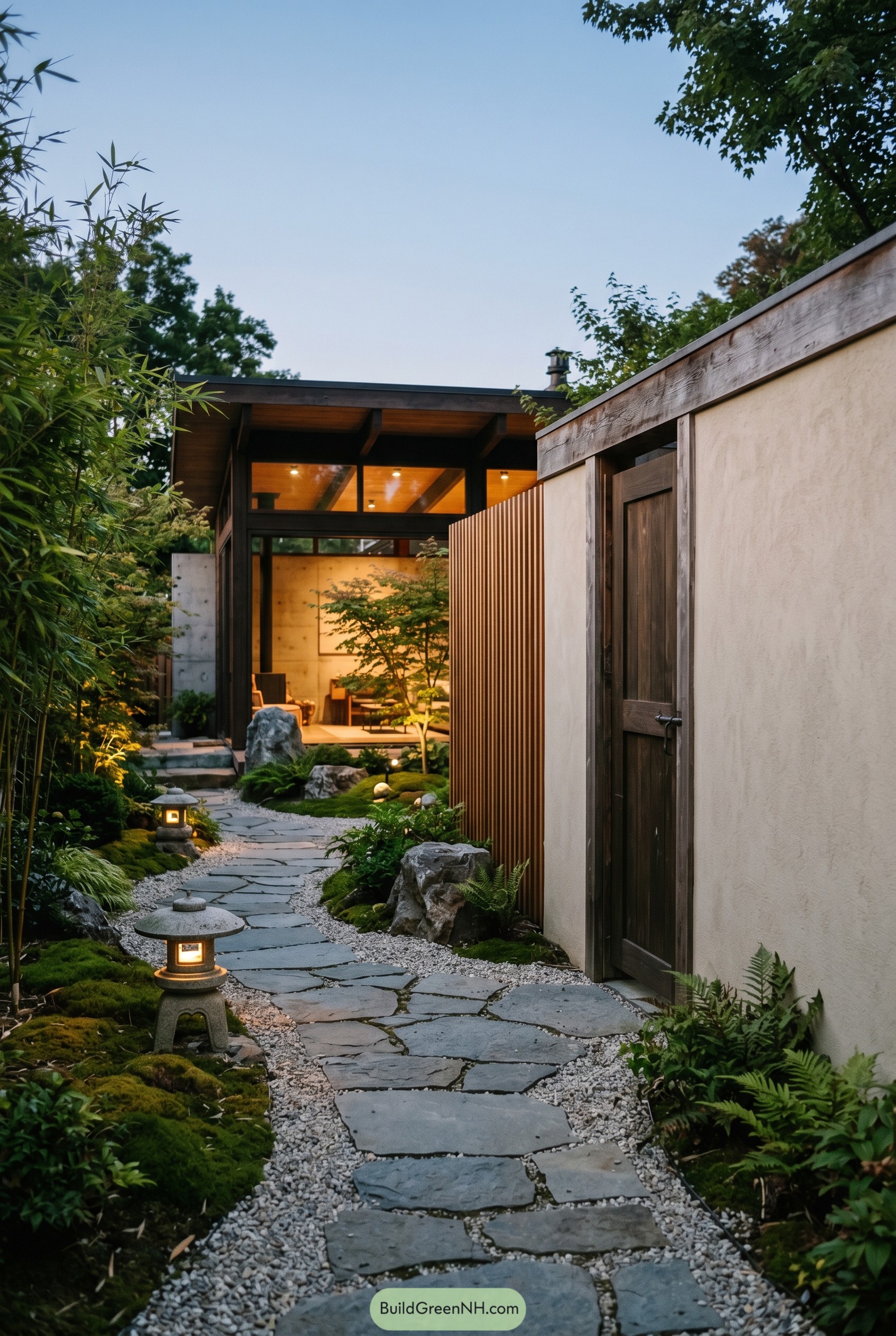
A narrow stone path slips between bamboo, moss, and a plaster garden wall before opening toward the warm timber rooms beyond. We shaped it around the old idea of roji, that calm tea garden approach where you slow down, even if your phone is buzzing like a tiny boss.
The uneven slate pavers sit in pale gravel so every step feels considered, while stone lanterns and low planting keep the courtyard tucked away from the street. Vertical wood slats, deep eaves, and dark framed glass give the home privacy without making it feel sealed off.
Reflecting Channel Twin Eaves
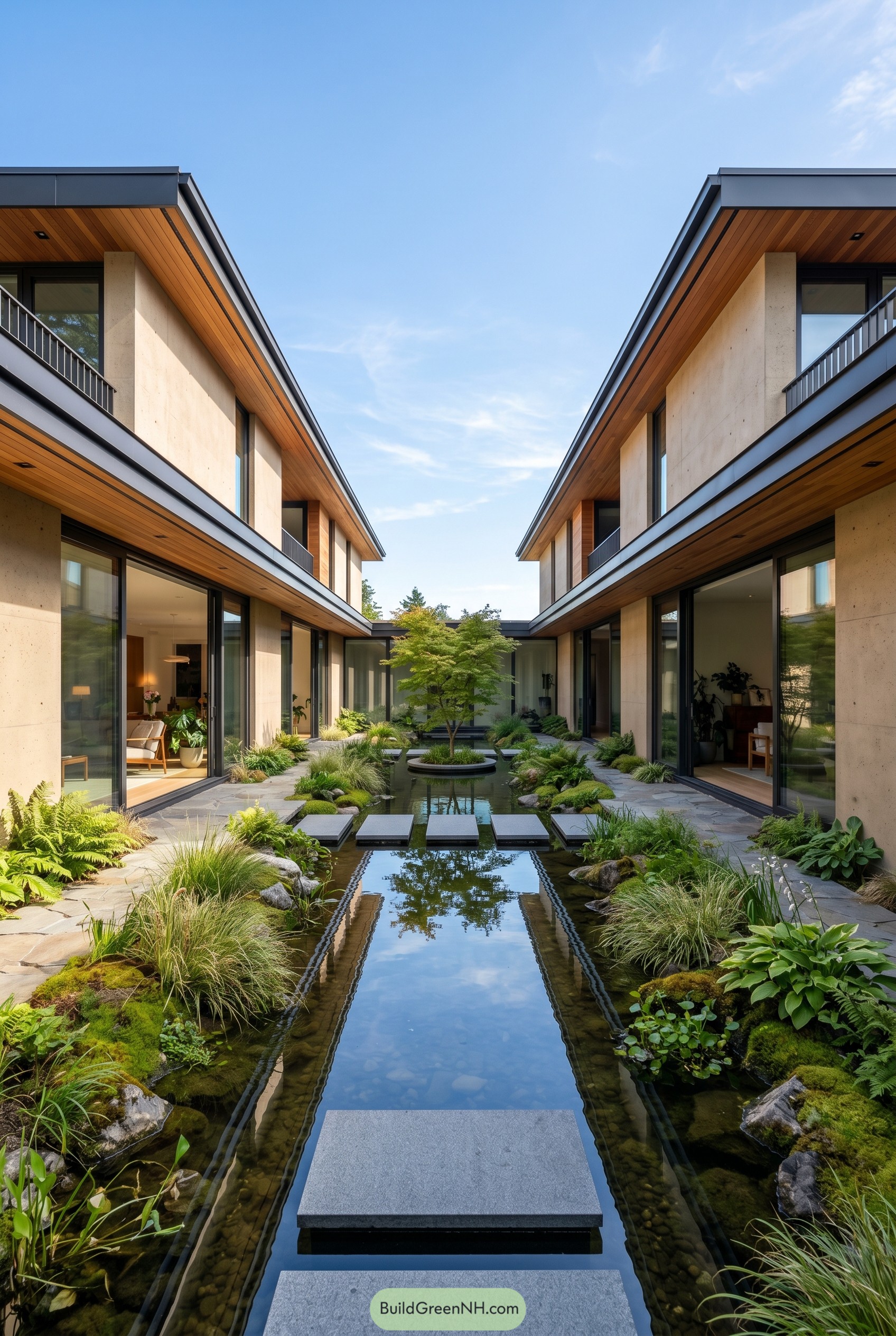
Two long wings wrap a narrow water courtyard, giving every room a calm view back into the garden. The idea came from Japanese stroll gardens, where the path slows you down before you even notice it, sneaky but nice.
Warm timber soffits, pale stone walls, and wide glass doors keep the courtyard feeling open without losing privacy. Floating stone pads cross the pond, while grasses, mossy rocks, and the small tree soften the straight lines so the place feels lived in, not staged for a very serious tea ceremony.
Raftered Woodland Karesansui Home
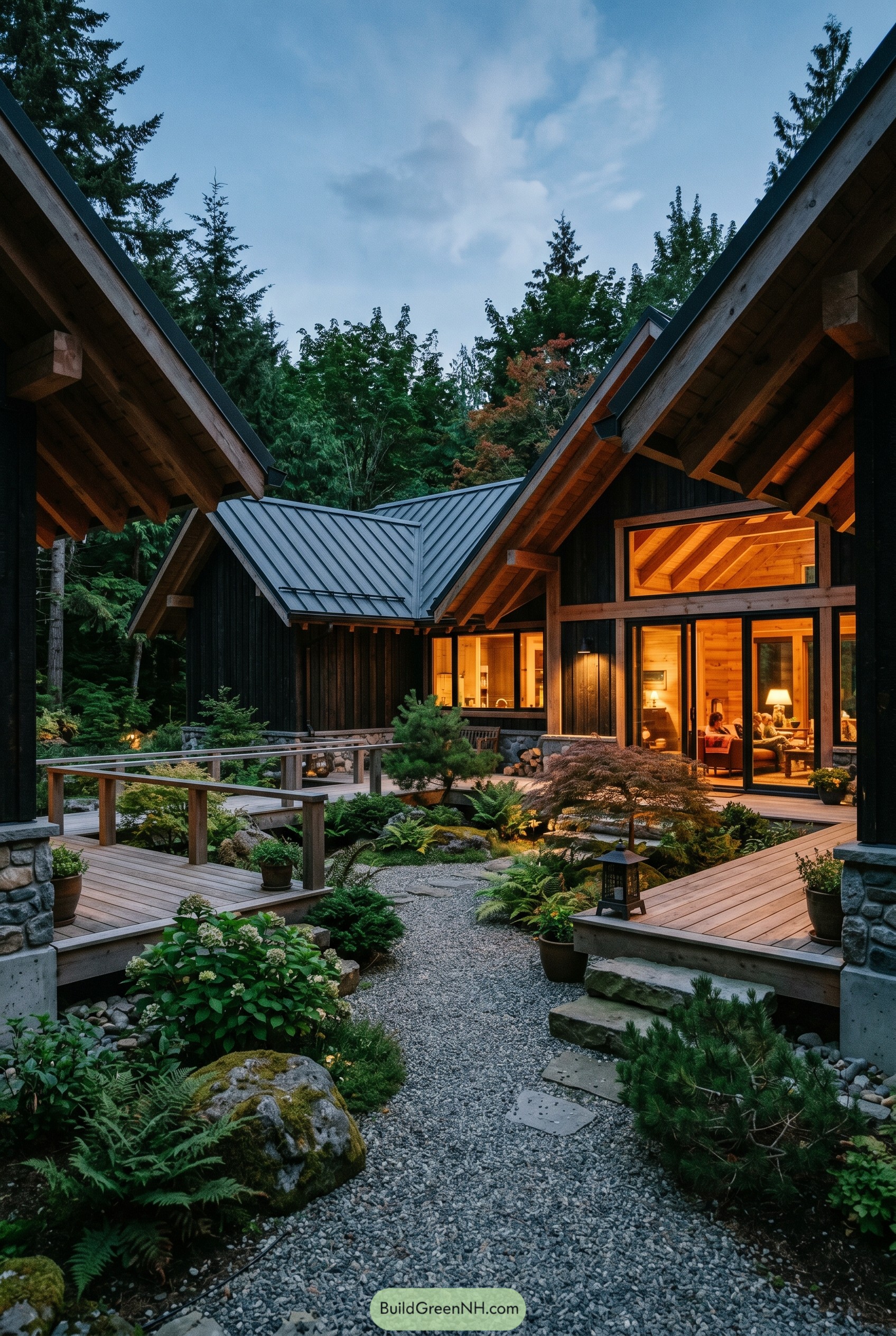
The steep timber gables gather around a gravel courtyard, giving the home a sheltered center without closing it off from the trees. We drew from mountain ryokan and small karesansui gardens, then gave it bigger windows because nobody complains about seeing more forest.
Black vertical siding keeps the outside calm, while the warm wood soffits and deep overhangs make the decks feel tucked in and useful even when the weather gets moody. The stone path, low planting, and raised walkways slow the entry down a bit, in a good way, so arriving home feels less like parking and more like exhaling.
Hillside Dew Pond Villa
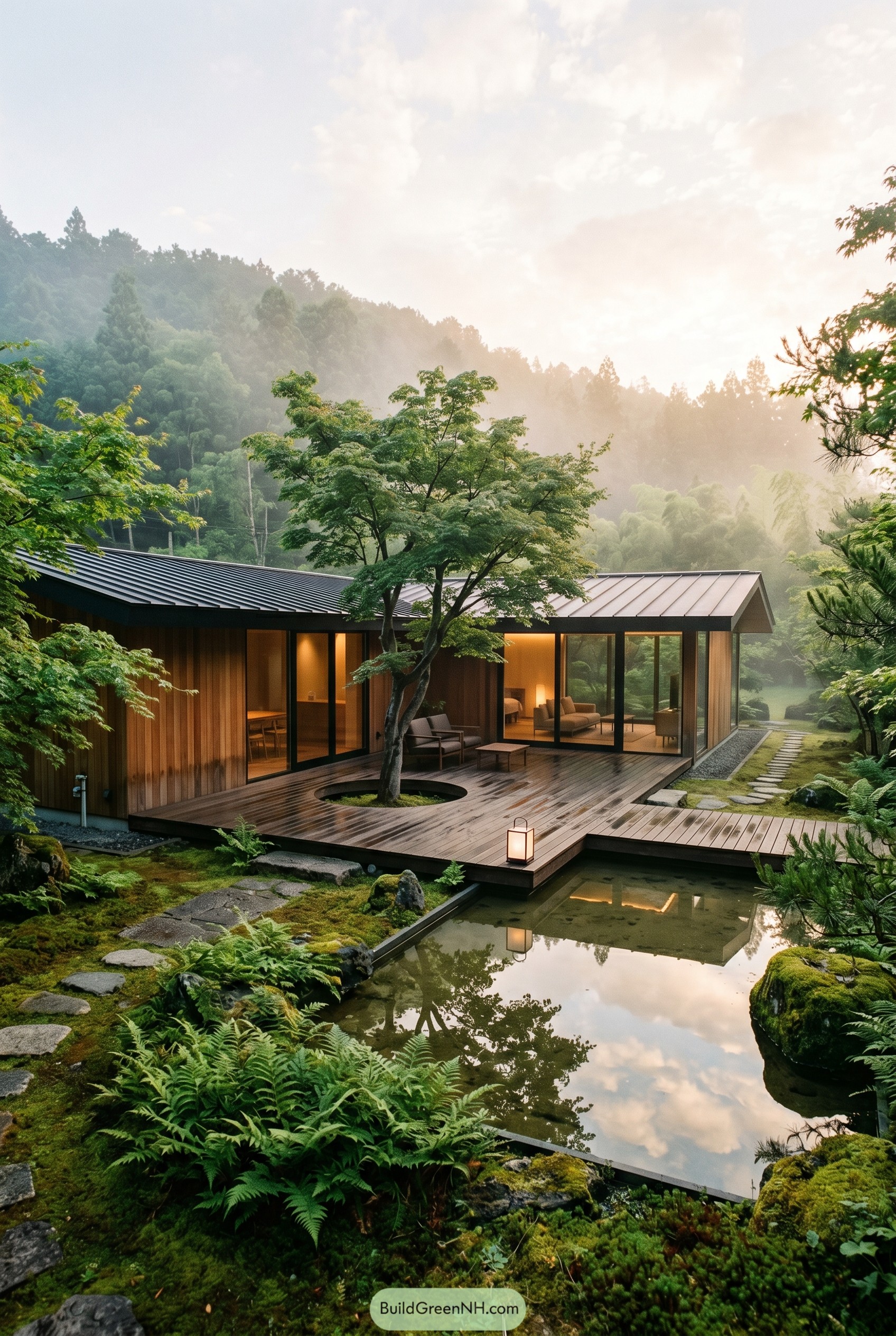
The low roof lines tuck the house into the wooded slope, while warm timber walls and broad glass panels keep the rooms connected to the deck. At the center, a mature tree rises through a round cutout, which feels wonderfully simple and just a little cheeky, like the garden got first dibs.
We shaped the terrace to hover over the pond so the water cools the edge of the living spaces and mirrors the changing sky. Stone paths, mossy banks, and ferns soften the clean geometry, giving the home a calm mountain ryokan feel without making everyone whisper.
Pin this for later:
Want More?
 20 Luxury Patio Designs That Make Every Sunset Feel Like a Five Star Escape
 17 Timeless Old Money European Backyards That Make Every Guest Feel Like Royalty
 20 Dreamy Backyard Spas That Turn Every Evening Into a Getaway
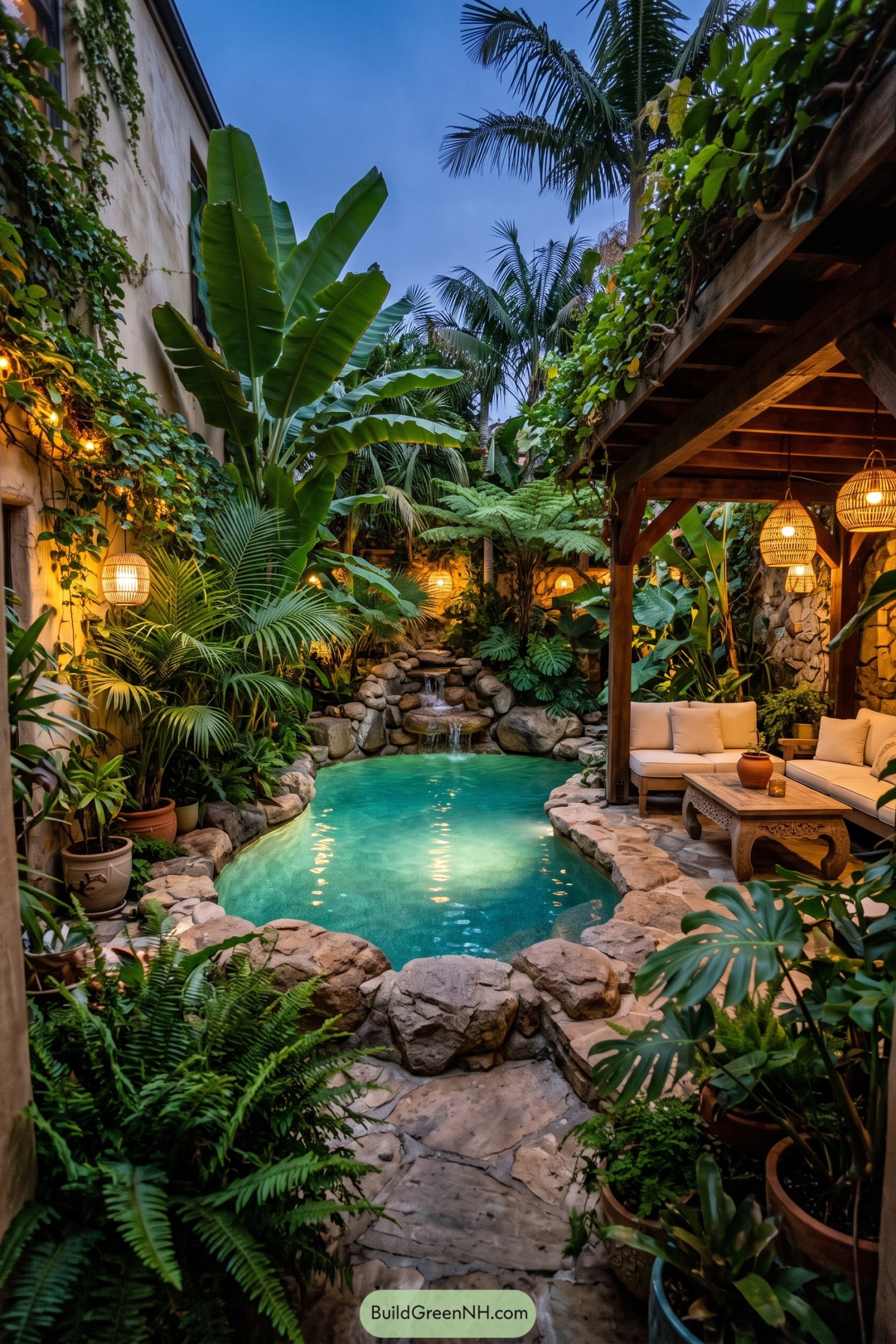 19 Enchanting Backyard Oasis Designs That Turn Moonlight Into Magic
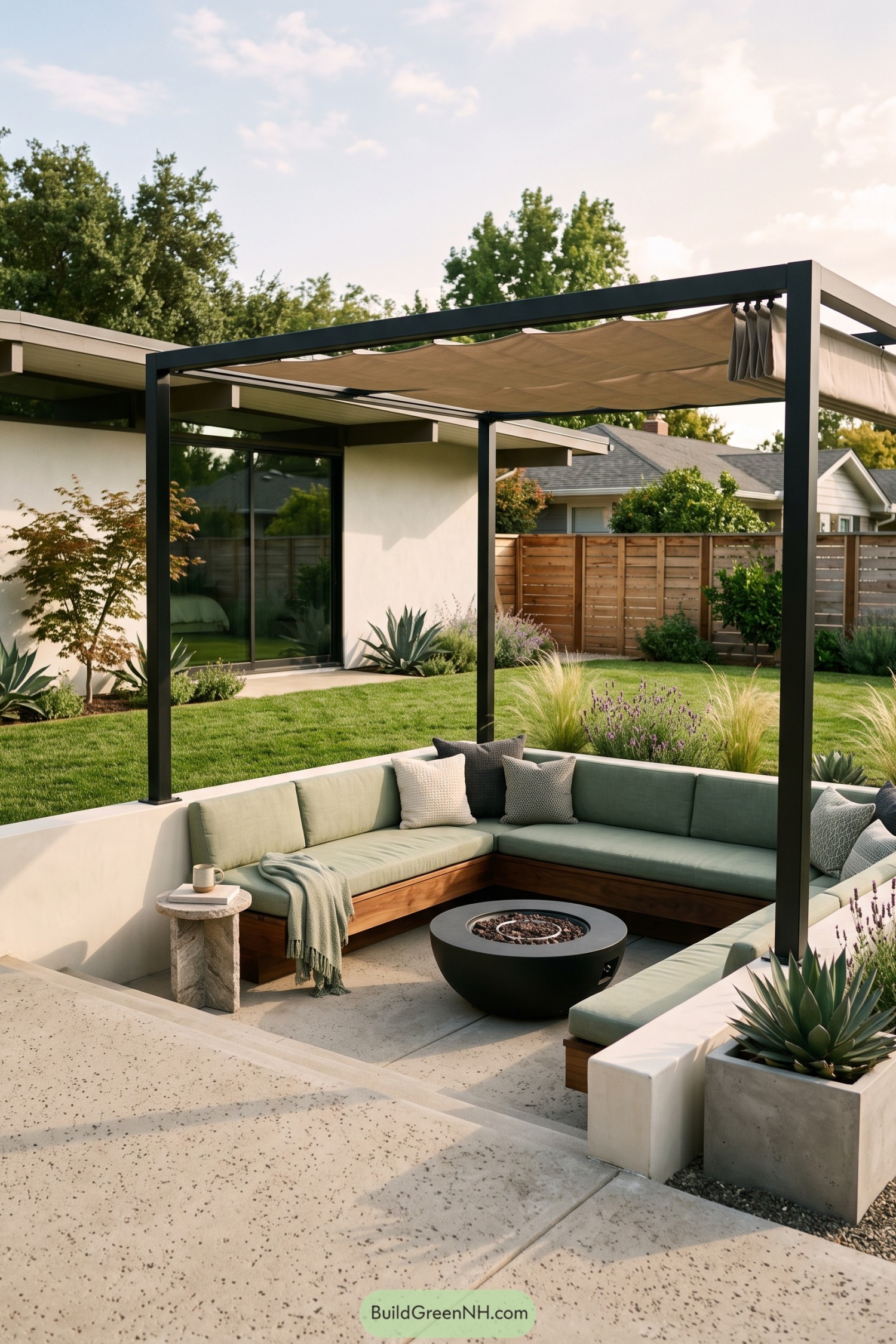 20 Modern Luxury Backyard Garden Designs That Turn Evenings Into Private Resort Escapes
Table of Contents