Last updated on
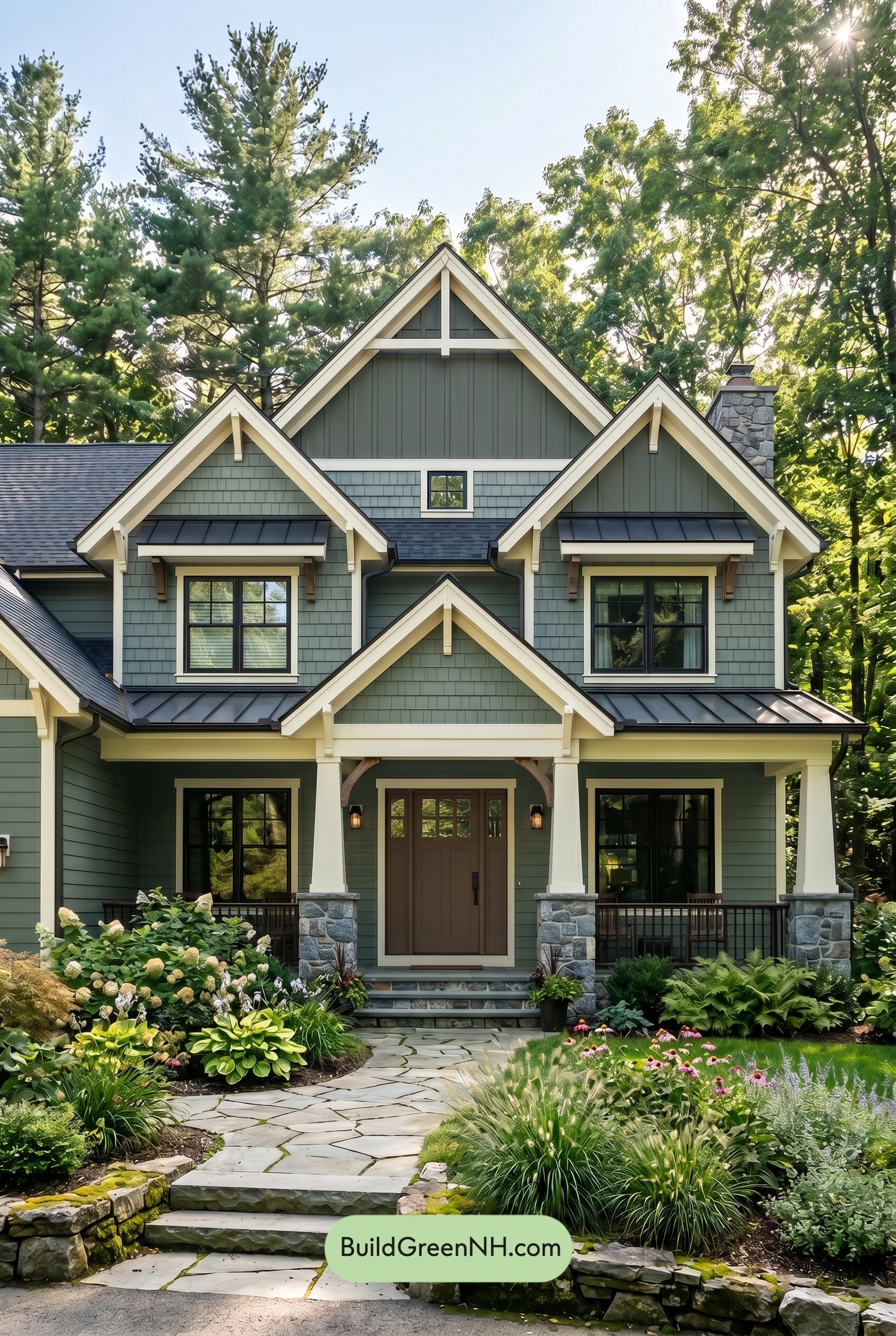

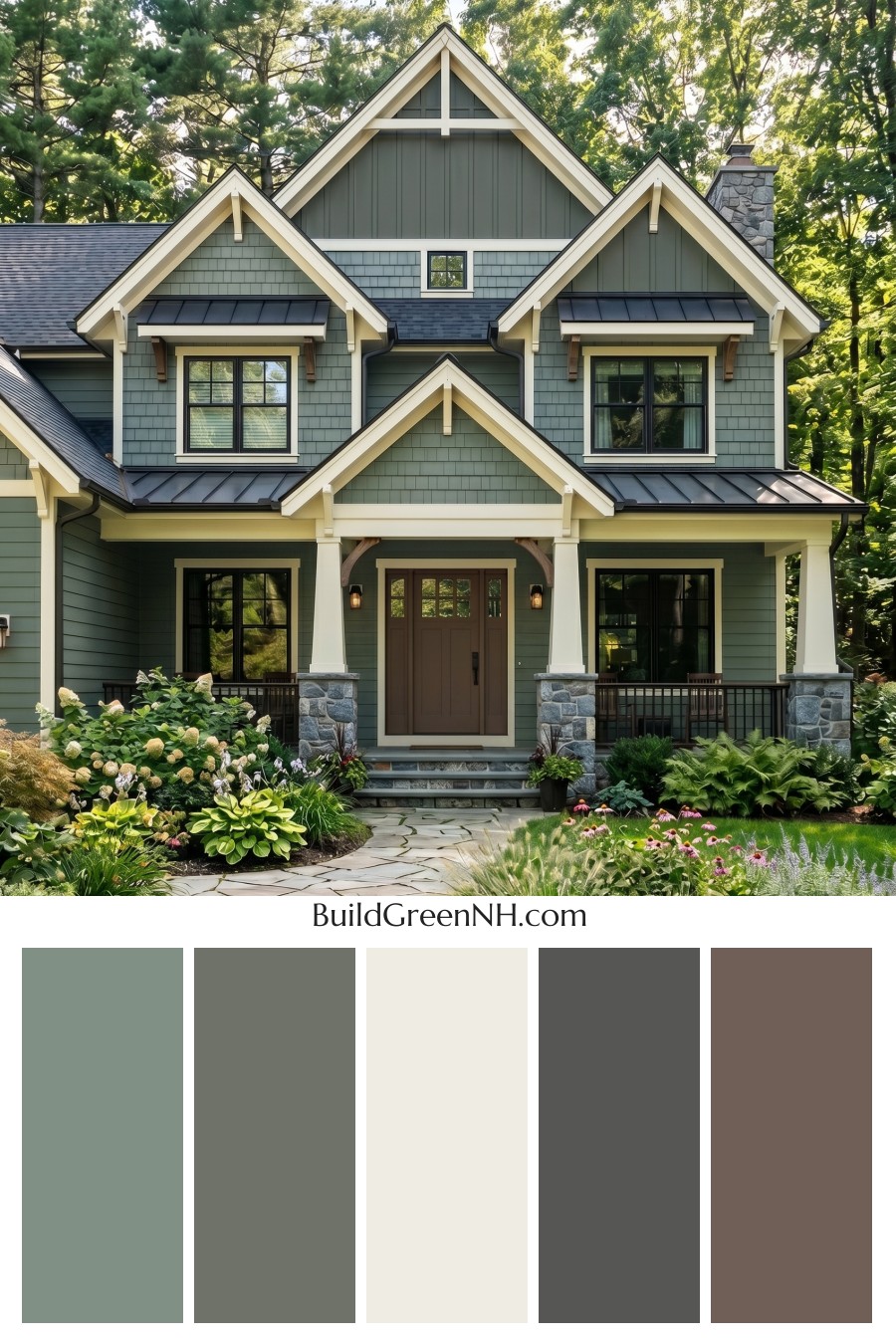
This layered gray exterior feels so inviting because crisp white trim, deep gray accents, and a warm brown door give the home both woodland calm and polished Craftsman character.
A Soft Gray Base with Natural Depth
The main siding is built around a muted medium gray that leans soft and earthy, making the house feel beautifully settled into its wooded surroundings. It is not a flat or cold gray; it has enough warmth and depth to feel relaxed, organic, and welcoming.
Across the lower walls and shingle-style sections, this gray shade creates a calm backdrop for the home’s strong architectural lines. The color works especially well with the layered gables, allowing the texture of the siding to stand out without making the exterior feel busy.
Darker Gray for Structure and Contrast
The upper gable areas introduce a deeper gray shade, giving the roofline more presence and visual weight. This darker tone helps define the peaks and adds a handsome, grounded quality to the exterior.
Dark gray window frames and railings continue that sense of structure. They sharpen the look of the windows, outline the porch, and add just enough contrast to keep the softer wall color from feeling too quiet.
Crisp White Trim That Brightens Everything
The white trim is one of the best parts of this color scheme. It wraps the gables, windows, fascia, columns, and porch details in a clean, bright outline that highlights the home’s craftsmanship.
Because the trim is a warm shade of white rather than a stark one, it pairs gently with the gray siding. It brings freshness and definition while still feeling appropriate for the natural, wooded setting.
A Warm Brown Door as the Welcoming Accent
The front door adds a rich brown accent that immediately warms up the palette. Against the surrounding gray and white, this earthy brown feels inviting and classic, giving the entryway a strong focal point.
Small wood-toned brackets near the porch and gable accents echo the warmth of the door. These touches help soften the cooler gray elements and make the whole exterior feel more layered and personal.
Roof, Stone, and Finishing Details
The roof uses deep charcoal gray tones that tie in beautifully with the darker window frames and railings. The metal porch roof sections add a sleek, tailored note, while the darker shingles keep the overall look grounded.
Stone columns and steps introduce a mix of cool gray shades, reinforcing the main color family while adding rugged texture. This makes the home feel connected to the landscape, especially alongside the surrounding greenery and natural garden paths.
Why the Palette Works So Well
This exterior succeeds because it balances softness with contrast. The medium gray siding feels calm and nature-inspired, the deeper gray accents add definition, the white trim brings brightness, and the brown door gives the whole palette warmth.
The result is a refined, welcoming home with a quiet Craftsman feel. It looks polished without being overly formal, cozy without being dark, and distinctive without relying on loud color. For a wooded setting, this gray, white, brown, and charcoal combination is beautifully timeless.
Next, see how this color scheme looks under different lighting simulations throughout the day.
Overcast
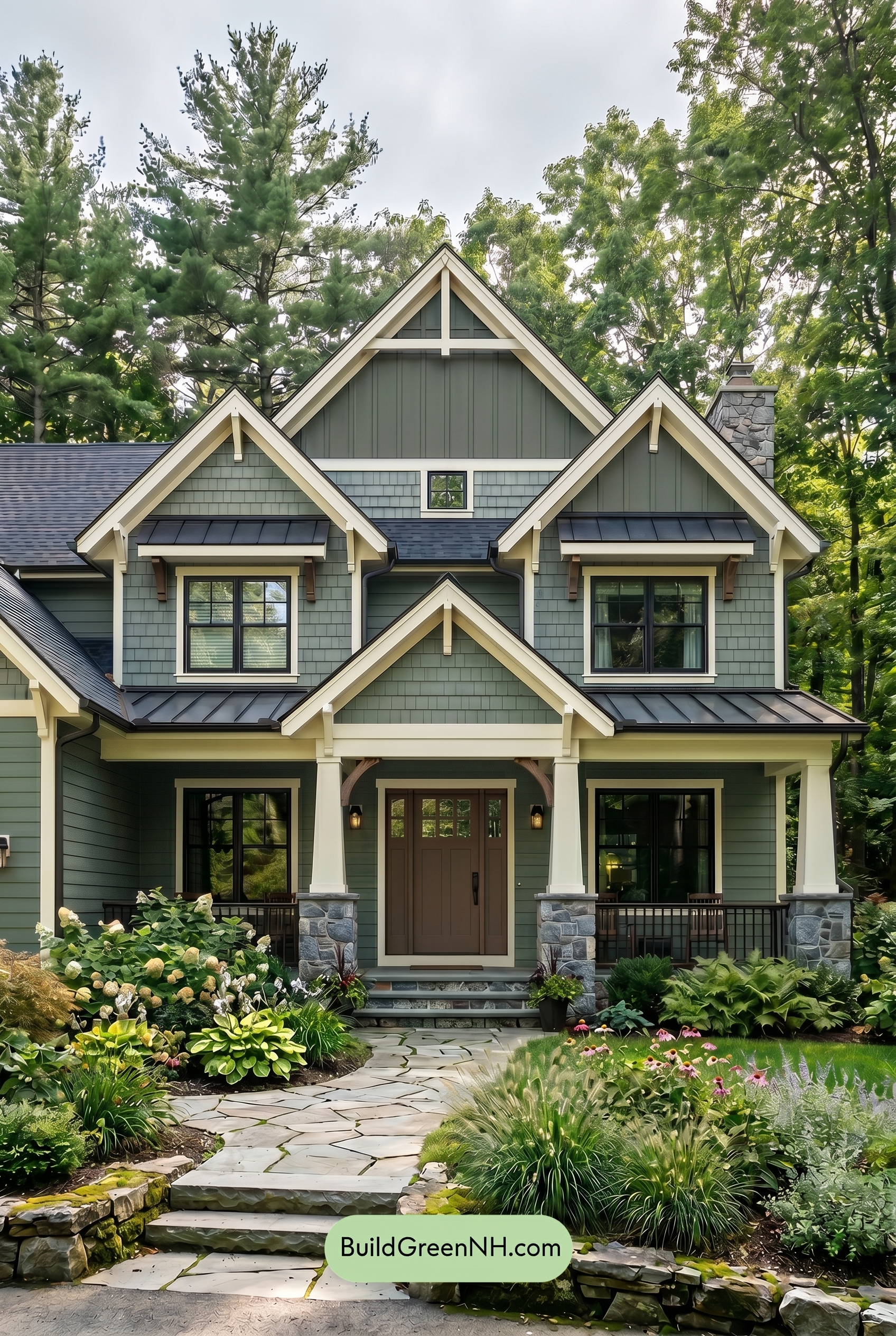
Under overcast light, the gray siding and upper gray accents appear cooler and slightly more muted than they would in neutral daylight. Saturation softens across the facade, so the white trim feels creamier and less bright, while the brown front door loses a bit of warmth and reads quieter.
With fewer sharp shadows, the rooflines, columns, railings, and window frames blend more gently into the overall palette. Contrast is lowered, giving the house a calmer, more tucked-in mood, with the gray shades feeling deeper and more atmospheric rather than crisp and sunlit.
Golden Hour
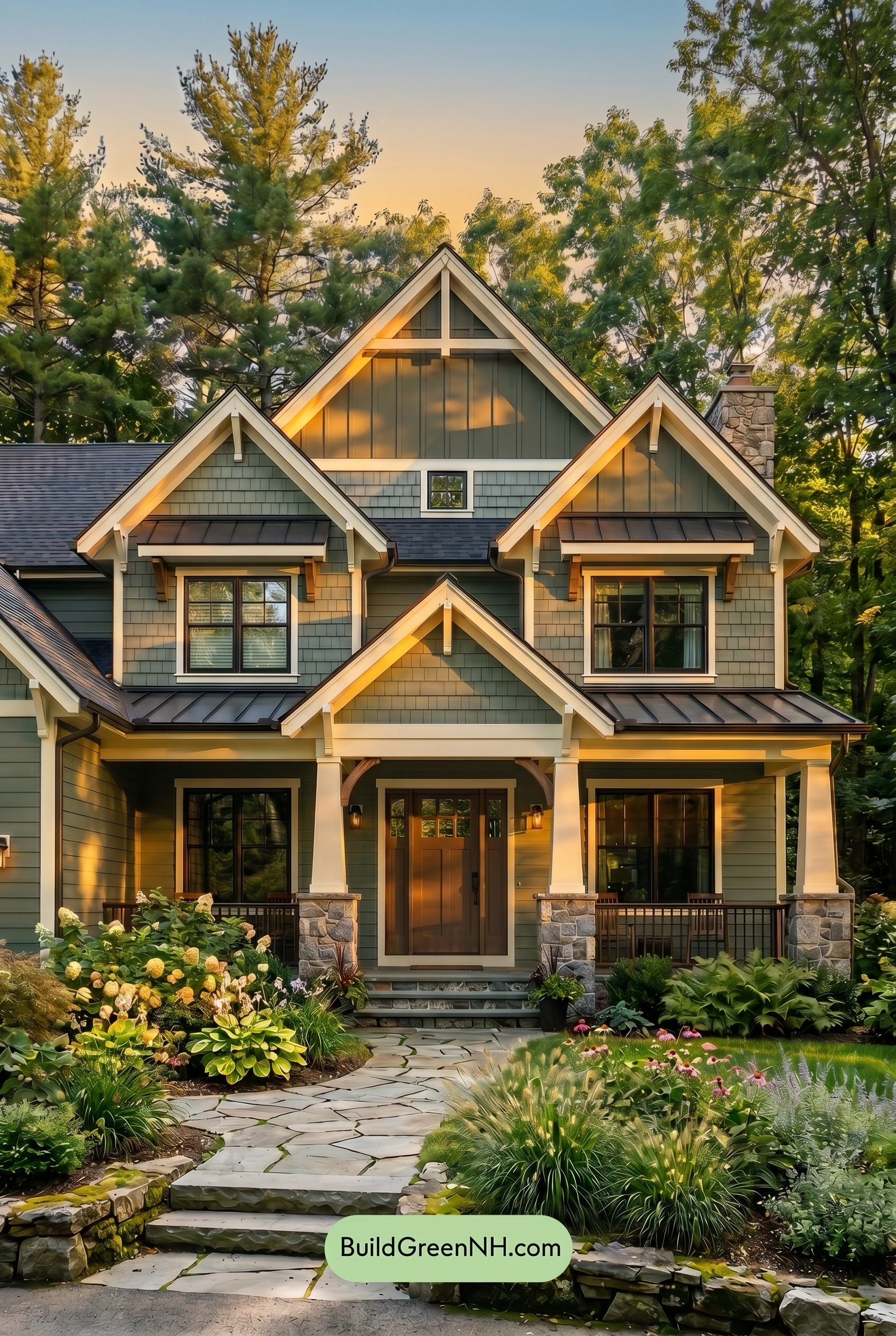
Golden Hour gives the gray siding a richer, warmer cast than it would have in neutral daylight, gently boosting saturation and pulling out subtle earthy undertones. The white trim and columns lose some of their crisp coolness, glowing creamier and softer where the low sun catches the edges.
Shadows grow longer and deeper, so the darker gray railings and window frames feel more dramatic against the warmed-up walls. The brown front door appears fuller and more inviting, while the overall contrast shifts from clean and balanced to cozy, layered, and warmly atmospheric.
Shade
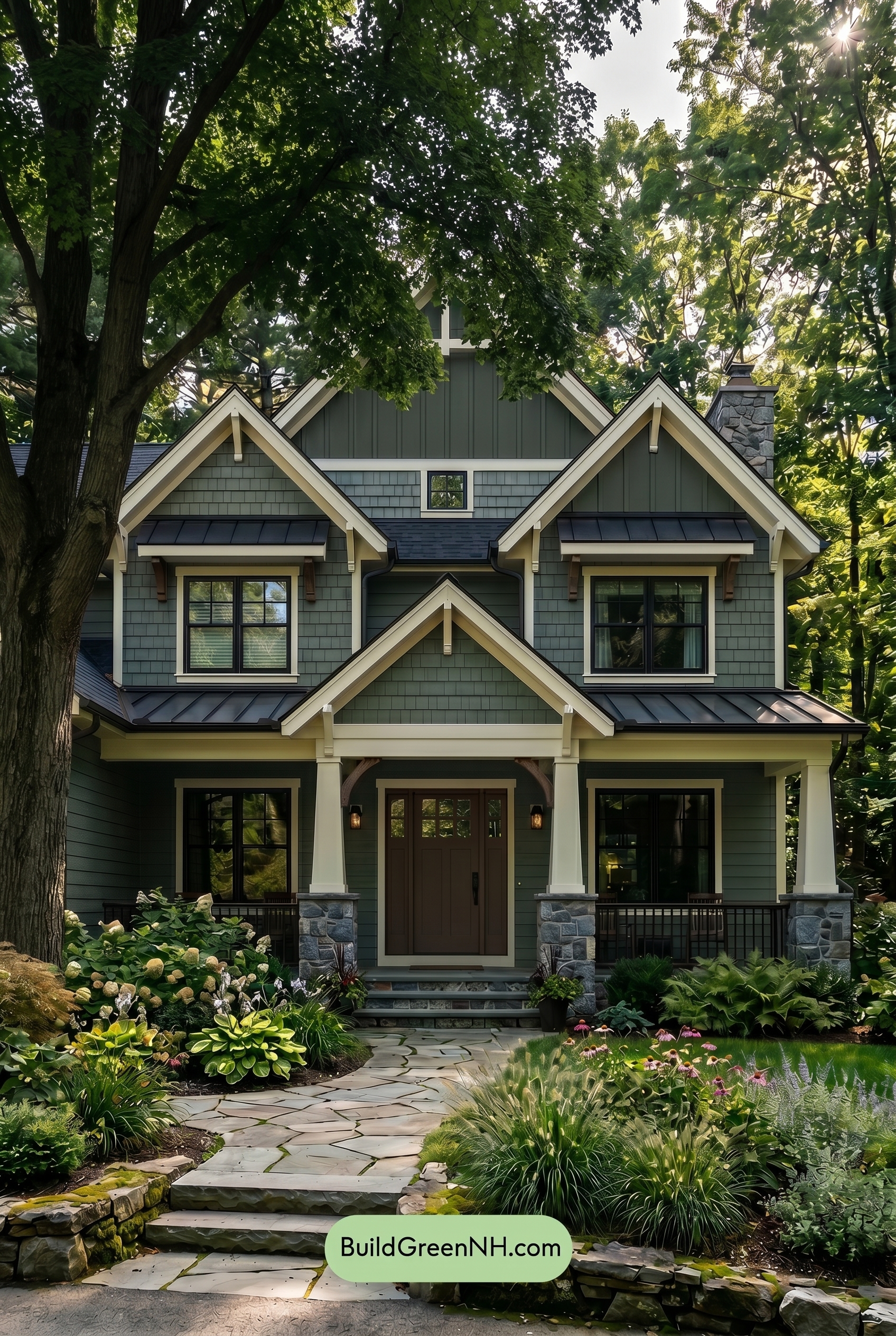
In shade, the gray family on the siding reads deeper and more saturated than it would in neutral daylight, with cooler shadows pulling the tones into a moodier range. The white family trim loses a bit of crisp brightness, feeling softer and warmer where reflected light gathers under the eaves.
The brown family front door gains richness in the shade, creating a grounded focal point against the darker gray shades. Overall contrast becomes more dramatic as shadows settle into the porch, giving the exterior a calm, tucked-away mood instead of the cleaner, brighter look it would have in even daylight.
Nighttime
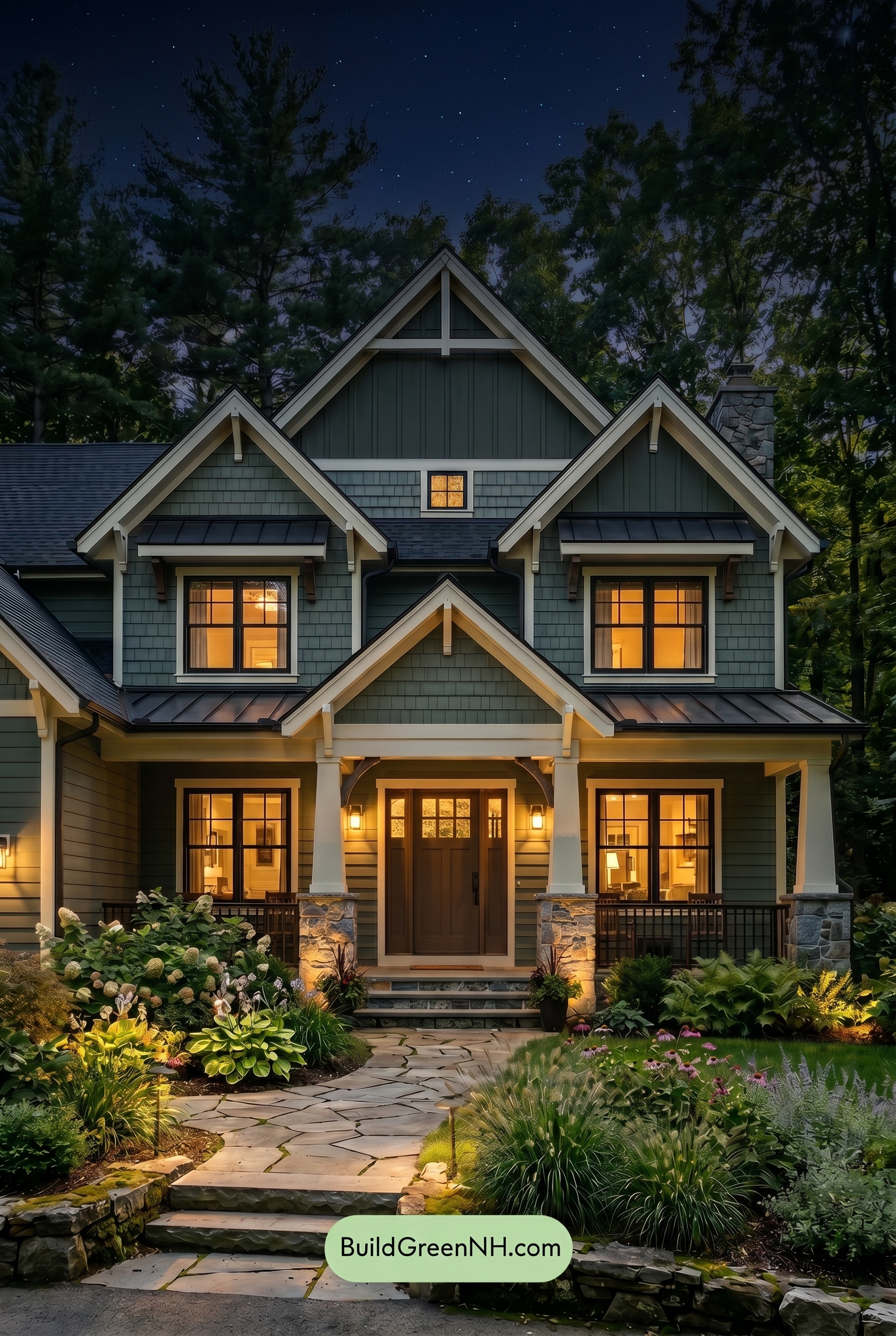
Under nighttime lighting, the gray shades on the walls look deeper and more saturated than they would in neutral daylight, shifting from a balanced exterior tone to a moodier, cooler presence. Shadows gather beneath the gables, porch roof, and railings, making the darker gray elements recede while the lighter trim and columns stand out with sharper contrast.
The warm glow from the windows and entry lights softens the white family into a creamier shade and brings extra richness to the brown front door. Compared to daylight, the overall palette feels less crisp and more atmospheric, with a cozy warmth at the entry balanced by dramatic, shadowed gray surfaces above.
Pin these for later
Want More?
 Blue House Front Door Color Scheme: Harbor Saffron
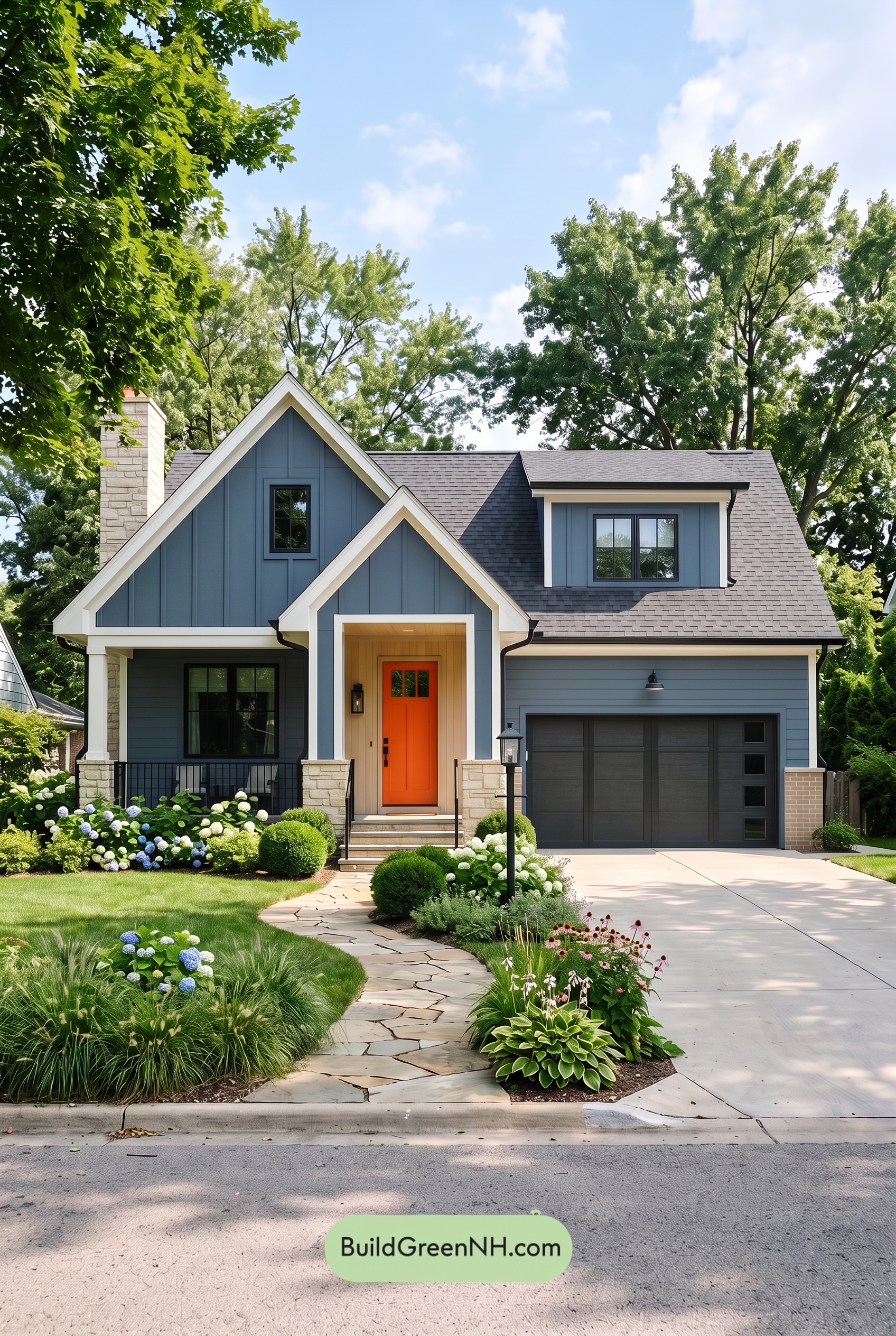 Blue House Front Door Color Scheme: Cobalt Persimmon
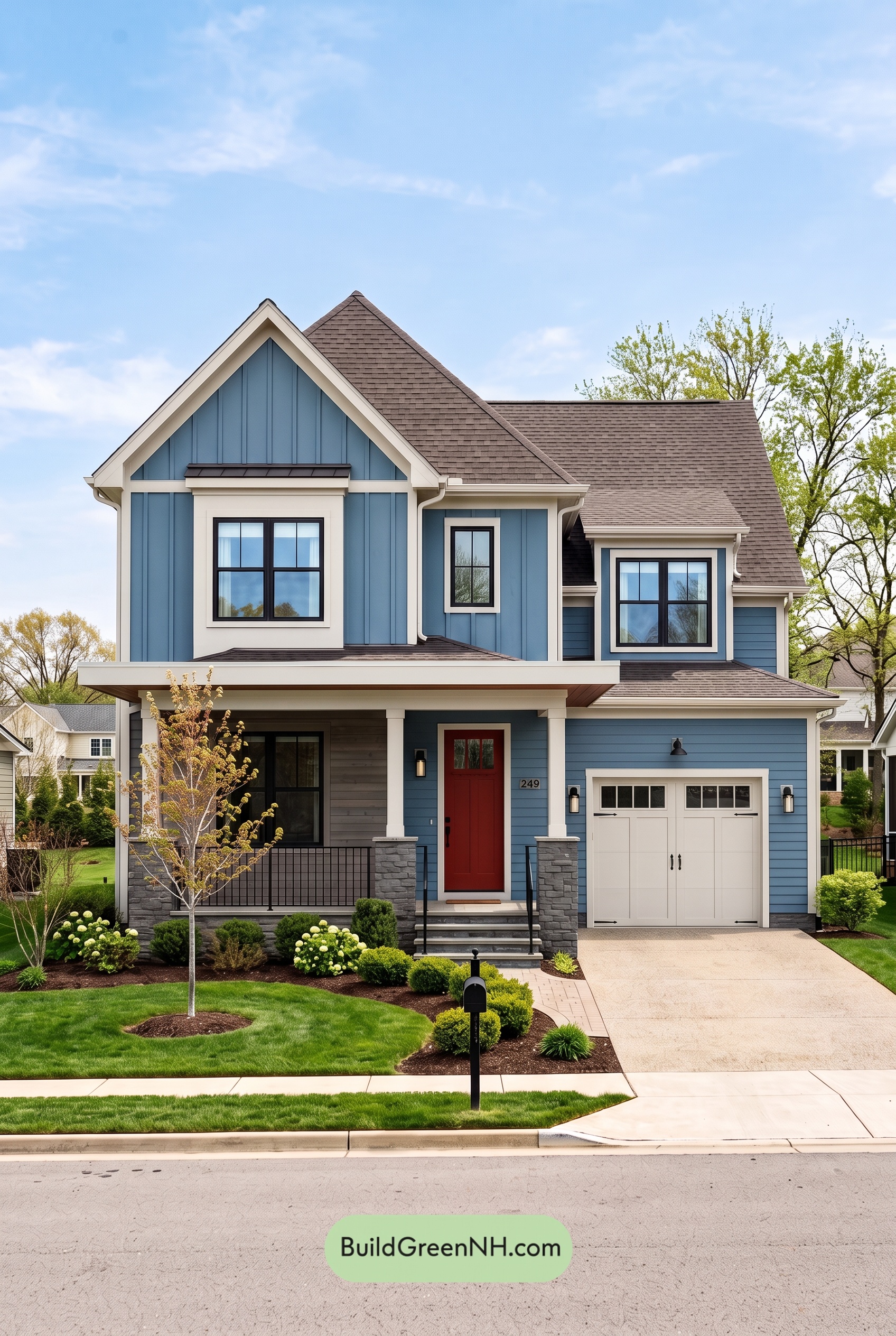 Blue House Front Door Color Scheme: Denim Poppy
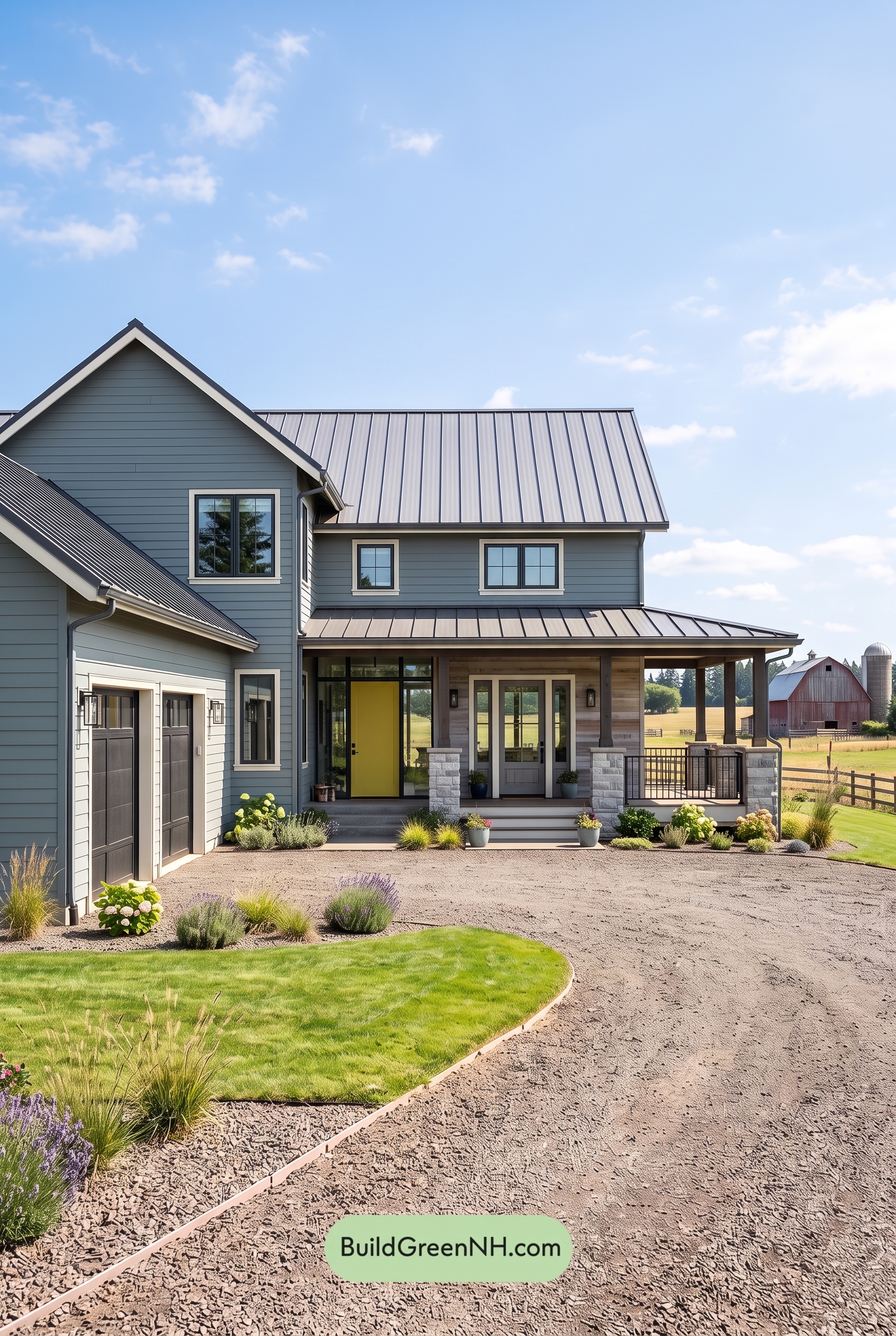 Blue House Front Door Color Scheme: Slate Citron
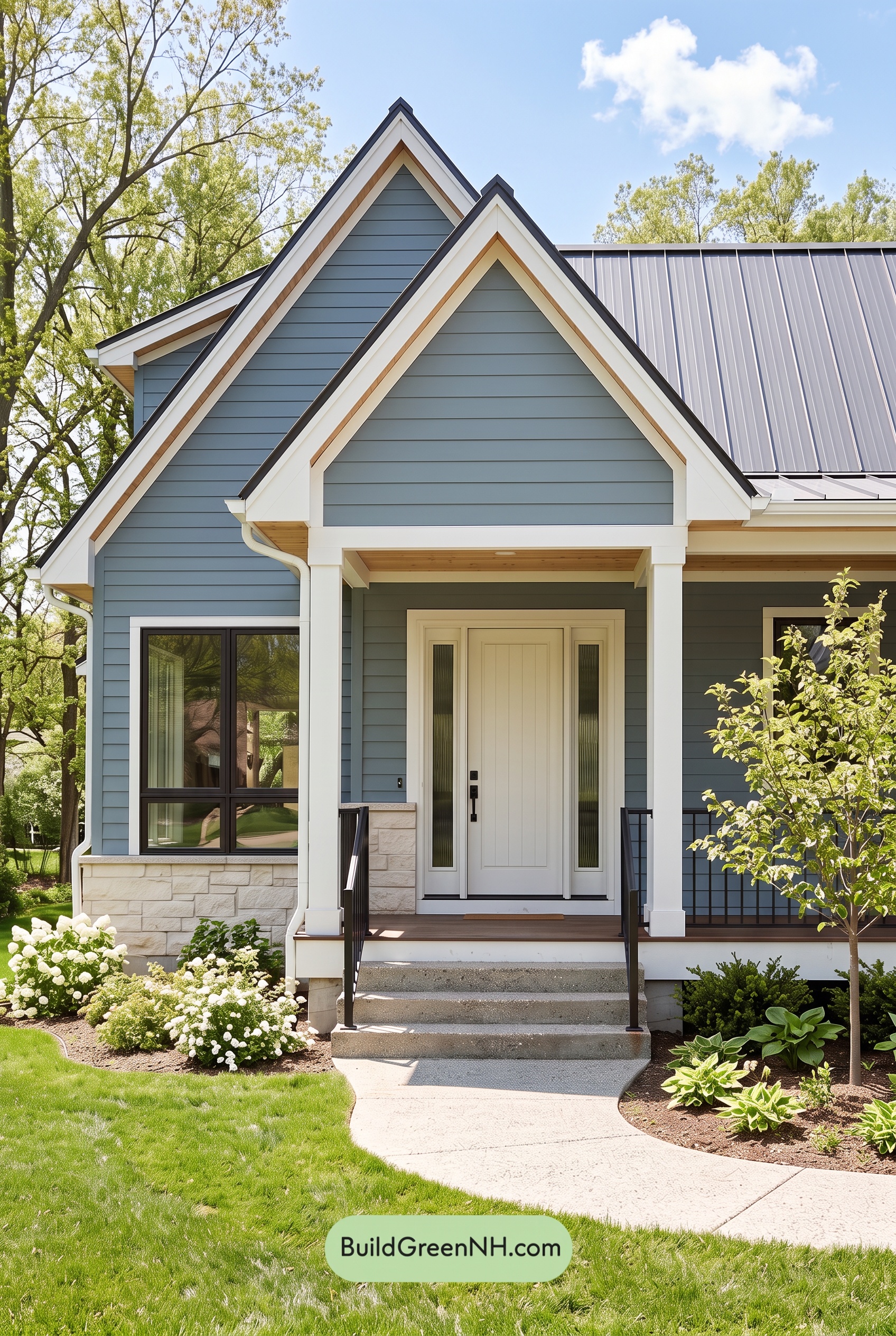 Blue House Front Door Color Scheme: Mist Blue Haven
Table of Contents