Last updated on
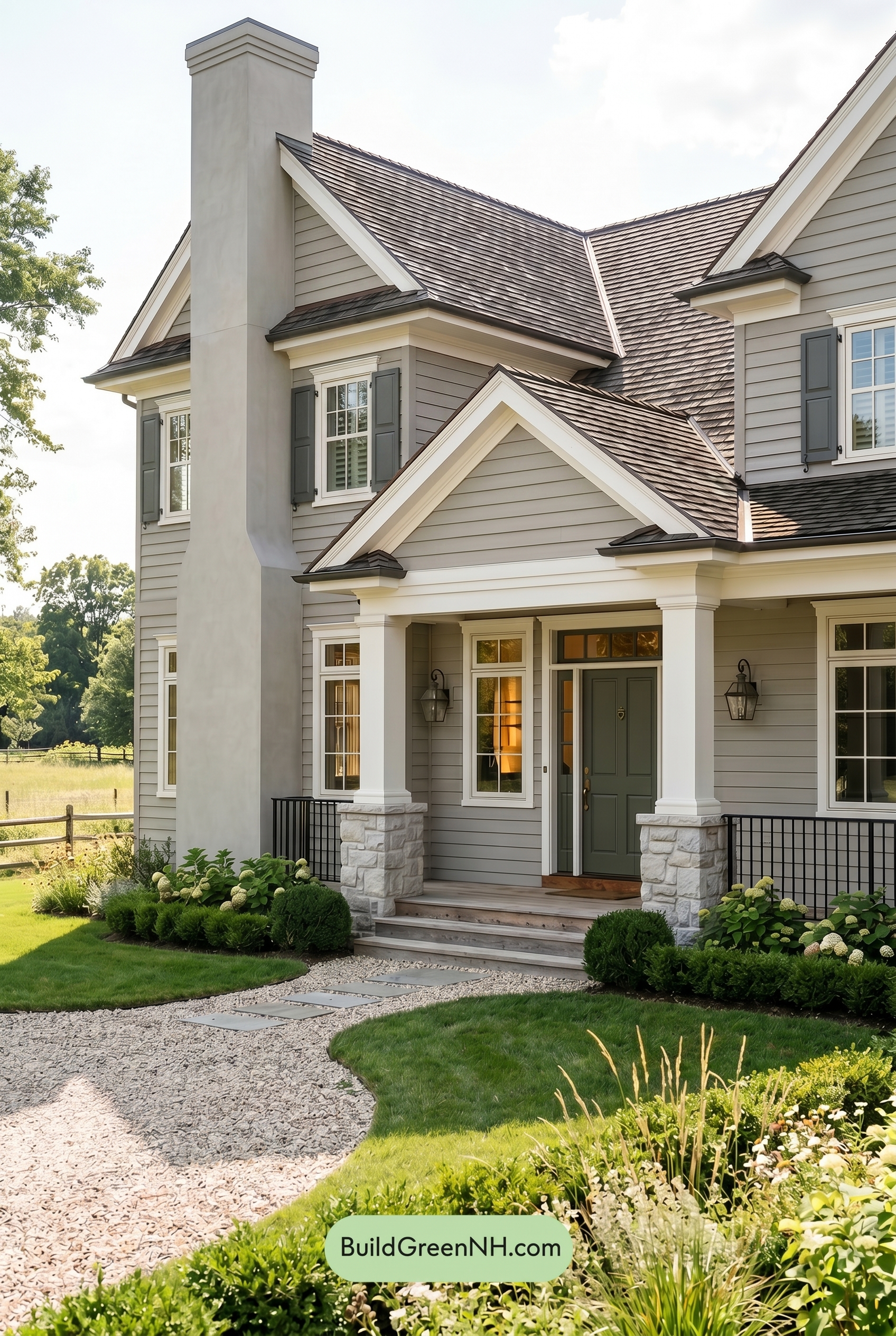

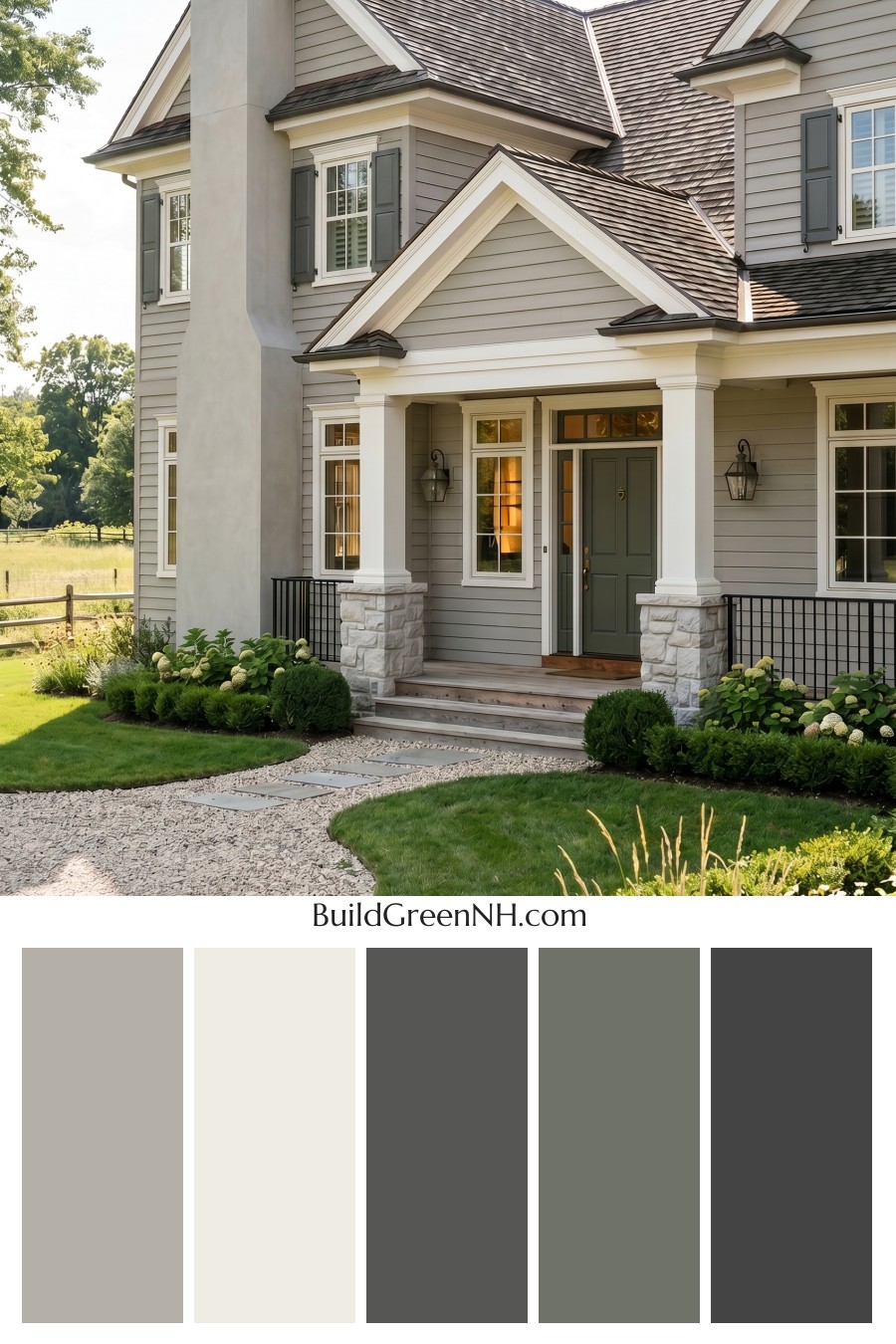
This layered gray-and-white exterior feels so polished because it balances soft, welcoming warmth with crisp architectural definition.
A Calm Gray Base
The main siding is dressed in a warm light gray shade that gives the home a refined, timeless presence. It has enough depth to show off the horizontal lines of the siding, but it stays soft and approachable rather than heavy.
This gray family choice works beautifully with the home’s traditional architecture. Across the gables, upper walls, and porch area, the shade creates a quiet backdrop that lets the trim, shutters, and rooflines stand out with ease.
Crisp White Trim for Definition
The white trim is one of the strongest parts of this exterior palette. It frames the rooflines, windows, columns, and porch details with a clean, bright edge, giving the whole house a fresh and well-finished look.
White window frames and white columns add a classic feel without making the design seem too formal. Against the warm gray siding, these lighter details feel crisp, balanced, and inviting.
Deeper Gray Accents Add Character
The shutters bring in a deeper gray shade that adds contrast around the windows. This darker gray keeps the palette cohesive while giving the façade more rhythm and dimension.
The front door continues the gray story with a rich, muted shade that feels grounded and elegant. It is subtle, but it still creates a clear focal point at the entry. The gray railings echo that depth, tying the porch area back into the rest of the exterior.
A Dark Roof Grounds the Palette
The roof introduces a deep charcoal-leaning shade that anchors the lighter gray siding and white trim. Its darker tone adds structure to the upper portions of the house, especially around the layered gables and broad roof planes.
Because the roof sits within the same cool, neutral family, it feels connected rather than contrasting too sharply. The result is a smooth transition from roof to siding to trim.
The Overall Mood
This exterior feels calm, tailored, and quietly luxurious. The gray shades bring sophistication, while the white details brighten the home and highlight its architectural features.
Nothing feels overdone. Instead, the palette relies on subtle contrast, clean repetition, and soft neutral layering. It is a perfect example of how a restrained color scheme can still feel rich, welcoming, and full of curb appeal.
Next, see how this color scheme looks under different lighting simulations throughout the day.
Overcast
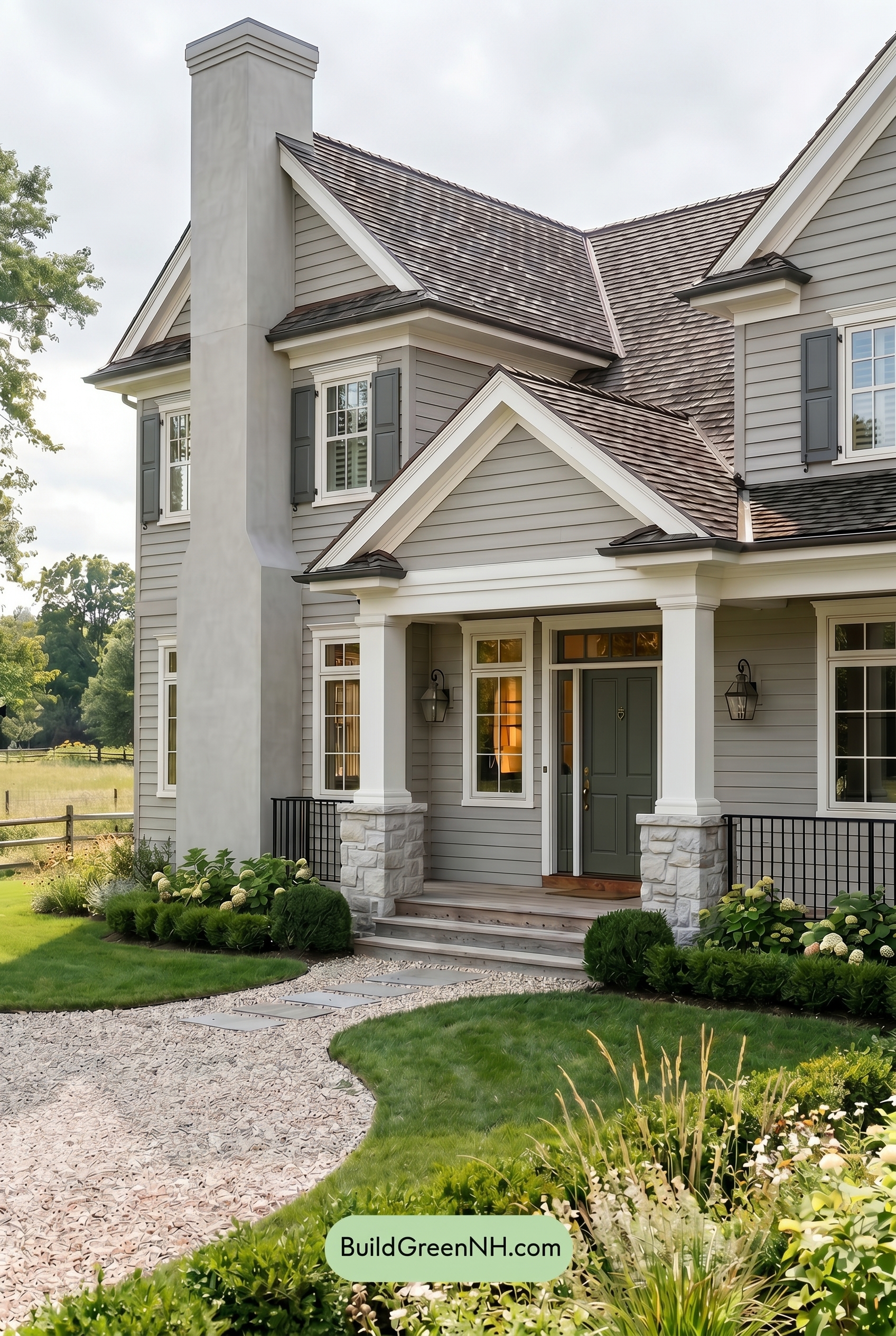
Under overcast lighting, the gray family on the siding, shutters, door, and railings appears softer and slightly cooler than it would in neutral daylight. Saturation is gently muted, so the darker gray shades feel more velvety and grounded, while any subtle warmth in the main wall recedes.
The white family on the trim, windows, and columns loses some of its crisp brightness, creating a lower-contrast look against the gray siding. Shadows become broader and less defined, giving the exterior a calm, even, and quietly elegant mood rather than the sharper, brighter character seen in neutral daylight.
Golden Hour
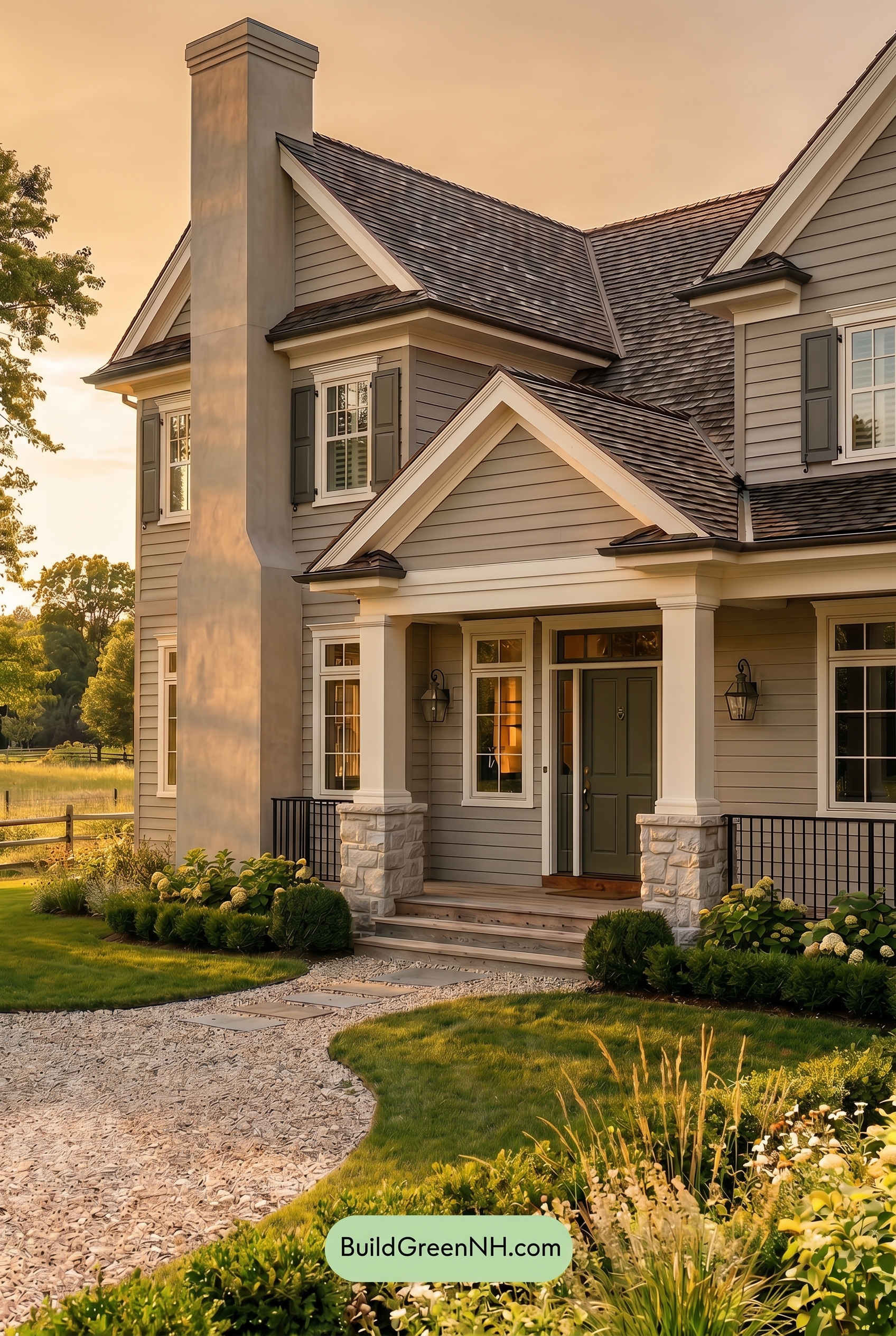
In neutral daylight, the gray siding reads cleaner and cooler, with the white trim feeling crisp and bright. During Golden Hour, that same gray family warms up and appears more saturated, shifting softer and slightly earthier, while the white shades take on a creamy glow instead of a sharp, neutral brightness.
The low sun stretches shadows under the rooflines, shutters, door, and railings, making the deeper gray shades feel richer and more dimensional. Contrast becomes warmer and moodier, giving the exterior a cozy, welcoming character that feels gentler and more romantic than it would in flat daylight.
Shade
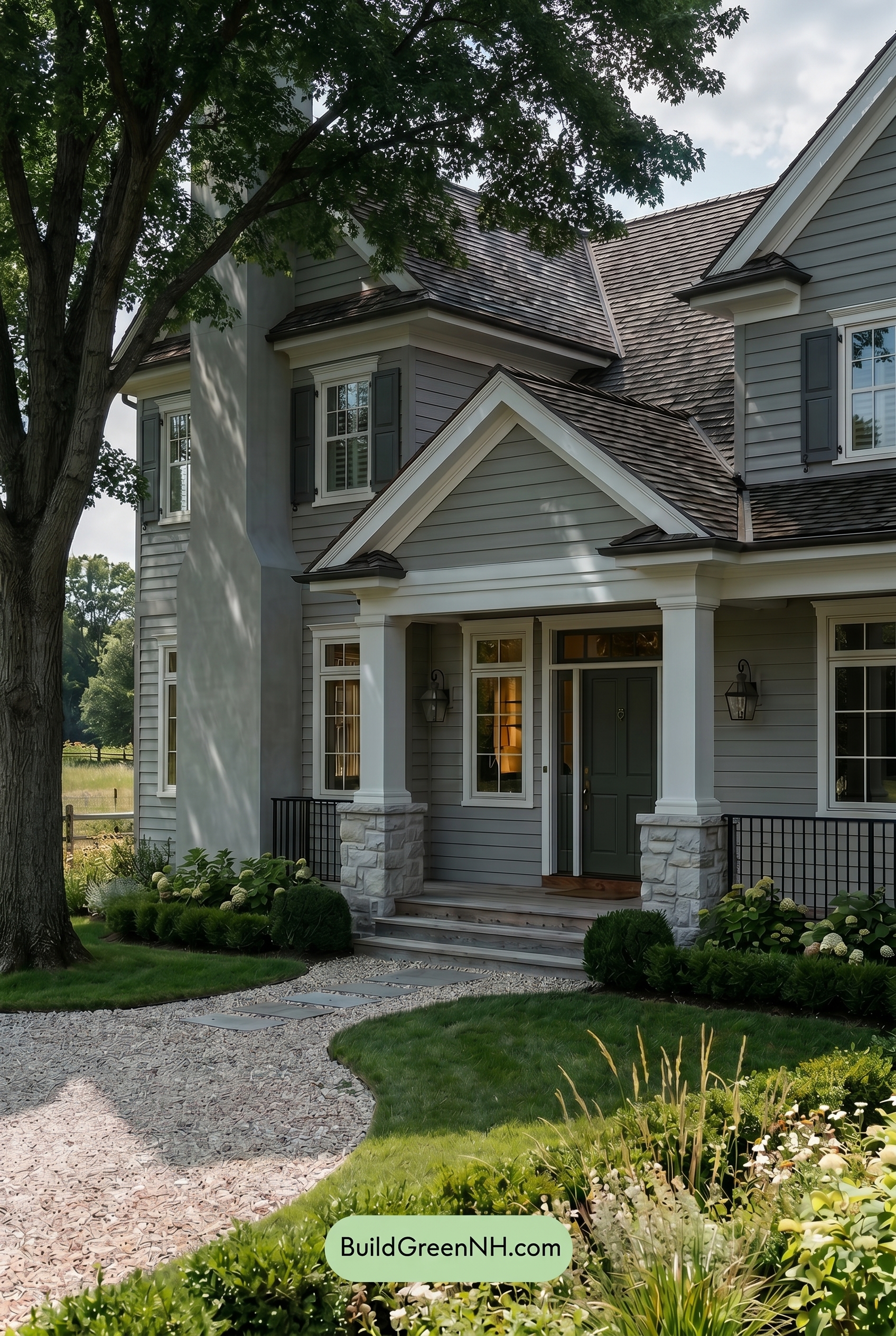
In shade, the gray family on the siding looks cooler and more saturated than it would in neutral daylight, giving the exterior a quieter, more layered look. The deeper gray shades on the shutters, door, and railings gain weight as shadows settle in, creating stronger contrast against the white family trim.
The white shades feel less bright and a bit softer under the tree cover, with gentle shadows adding warmth in some areas and a cooler cast in others. Overall, the mood shifts from crisp and open in neutral daylight to calm, refined, and slightly dramatic in shade.
Nighttime
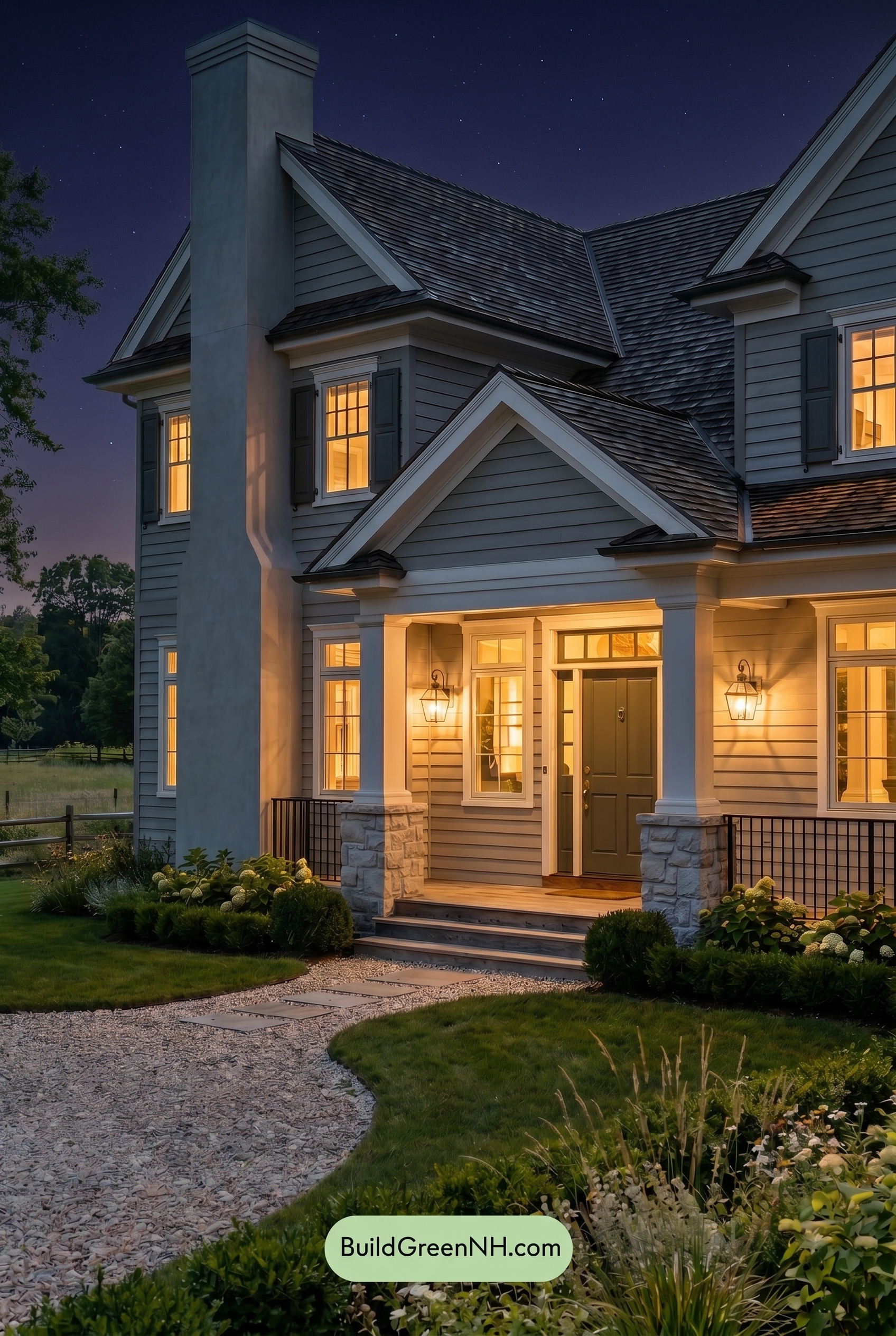
At nighttime, the gray family on the siding and shutters appears deeper and more saturated than it would in neutral daylight, with cool shadows giving the exterior a richer, quieter presence. The white family on the trim, windows, and columns shifts between crisp highlights and soft warm glows where the porch and interior lighting touch it.
This contrast creates a moodier, more dimensional look: shadowed areas feel refined and subdued, while the warm light adds an inviting softness around the entry. Compared to daylight’s even clarity, the home feels cozier, more dramatic, and warmly welcoming after dark.
Pin these for later
Want More?
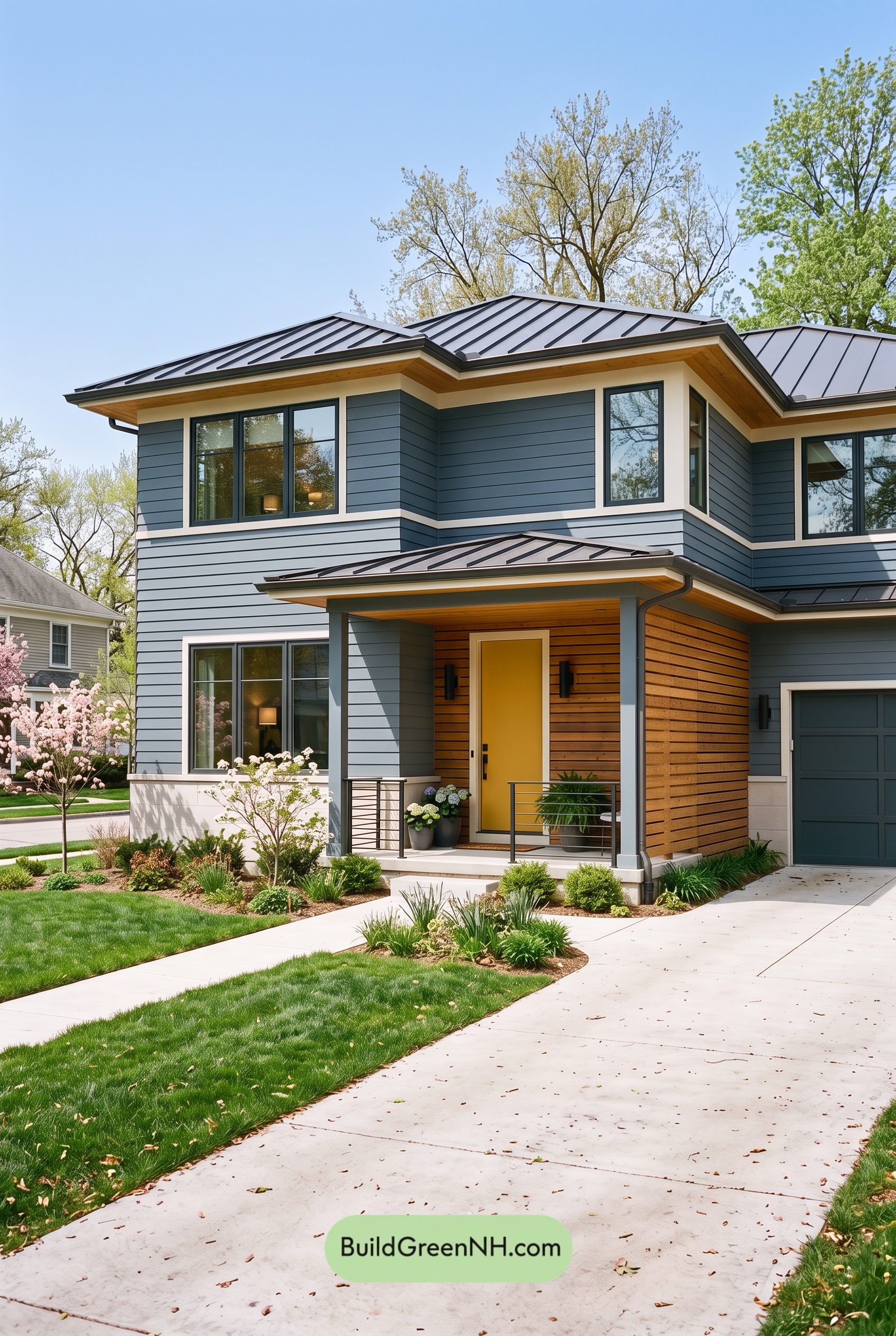 Blue House Front Door Color Scheme: Harbor Saffron
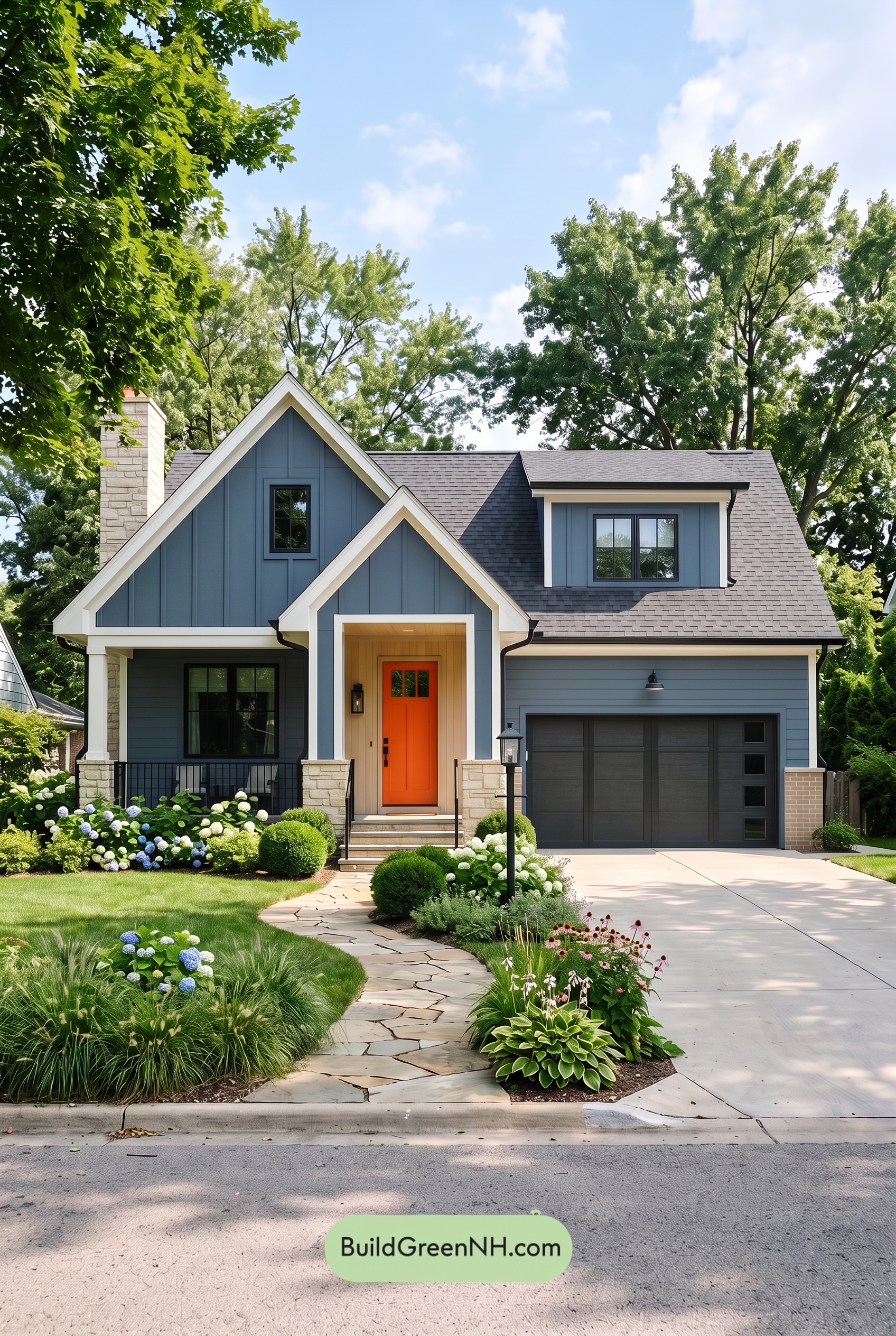 Blue House Front Door Color Scheme: Cobalt Persimmon
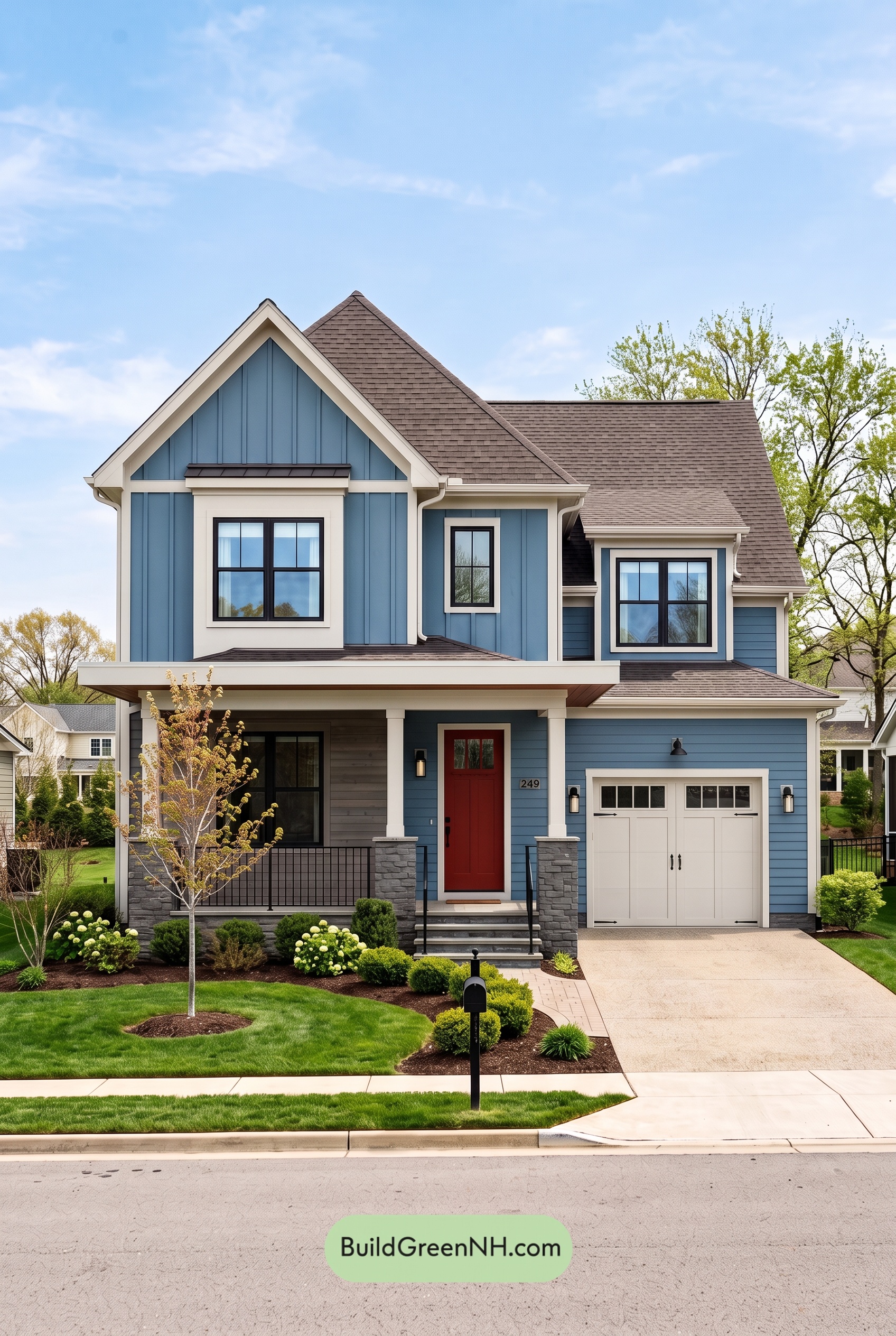 Blue House Front Door Color Scheme: Denim Poppy
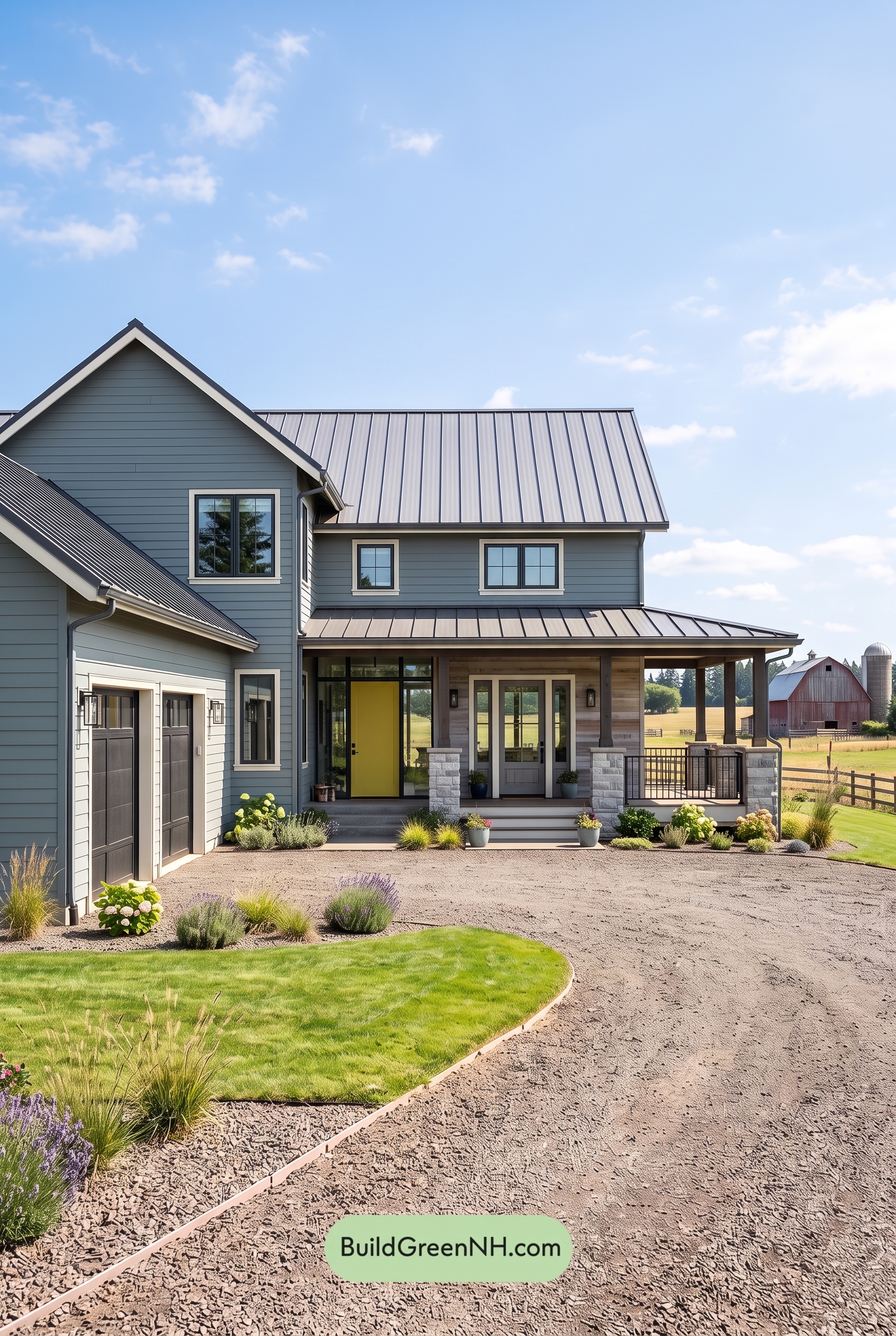 Blue House Front Door Color Scheme: Slate Citron
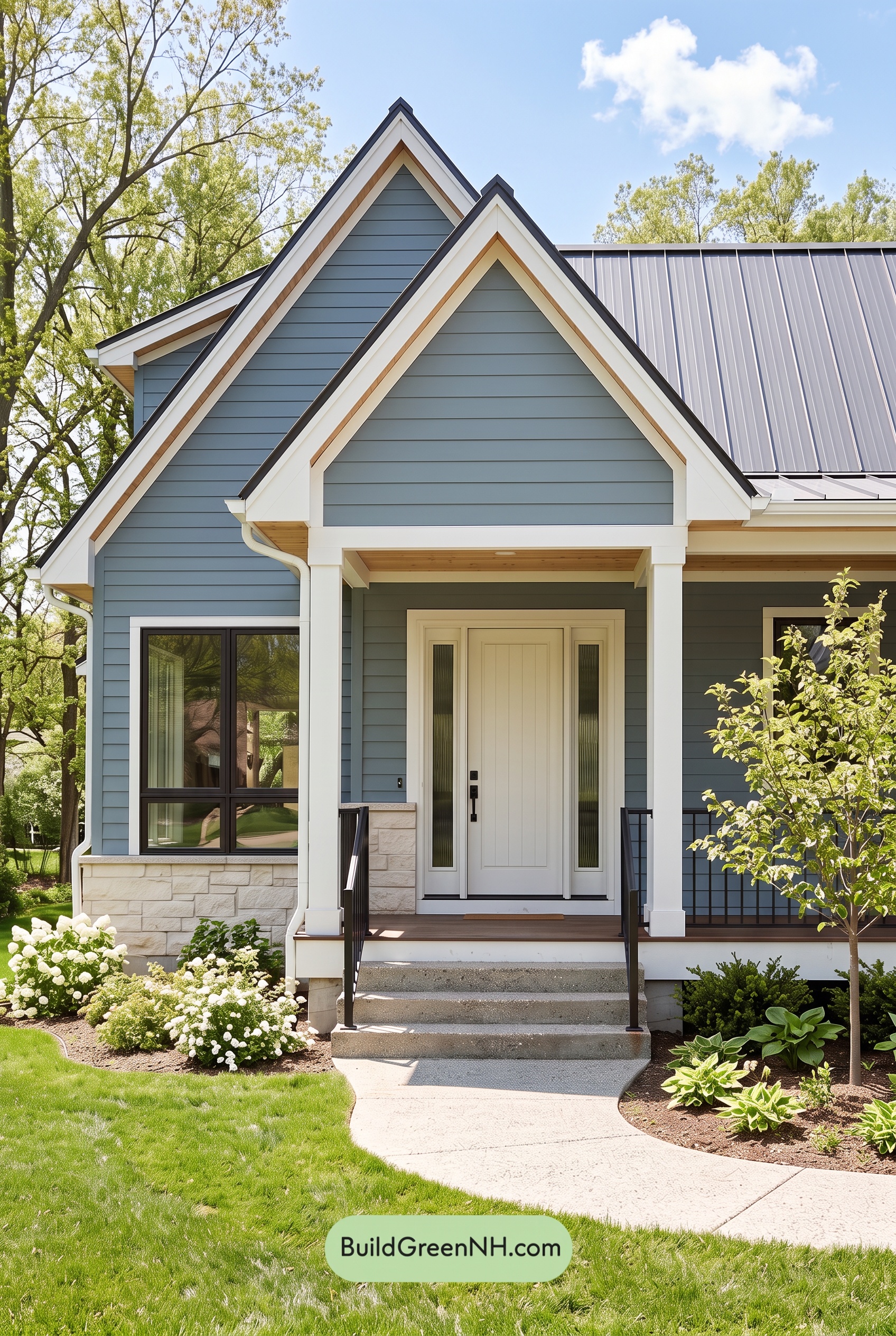 Blue House Front Door Color Scheme: Mist Blue Haven
Table of Contents