Last updated on
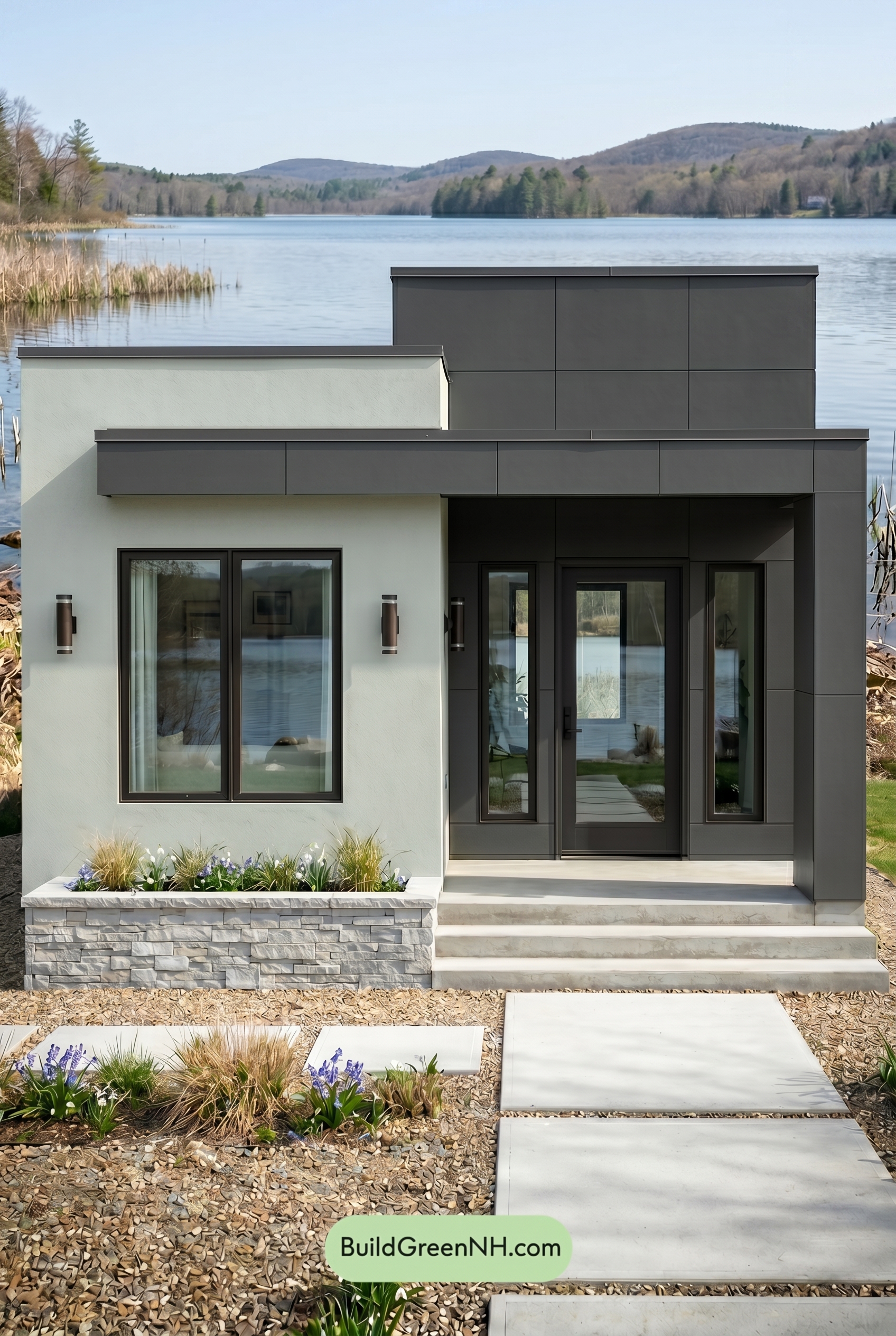

This layered gray exterior feels sleek, serene, and perfectly at home beside the water because every shade adds depth without disrupting the calm modern lines.
A Modern Gray Palette With Quiet Drama
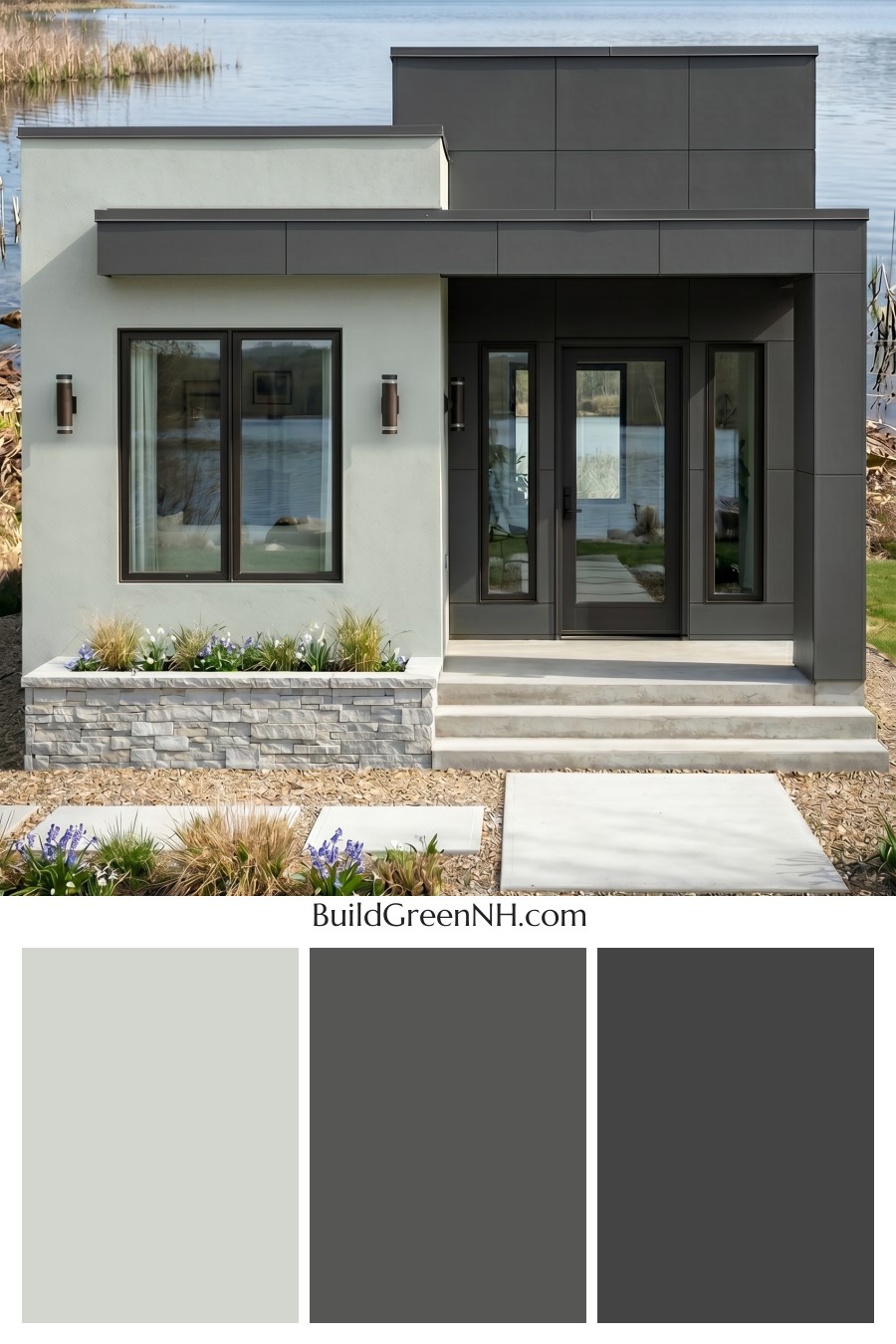
The house uses a refined gray-family scheme that feels crisp, architectural, and beautifully restrained. Instead of relying on bold contrast from many colors, the design builds interest through shifts in depth: pale gray on the main wall, deep charcoal gray on the upper volumes, and darker gray details around the windows, door, trim, and roofline.
How the Colors Are Used
The main wall is finished in a very light gray shade that keeps the lower portion of the home feeling fresh and open. It reflects natural light nicely, which is especially effective in a lakeside setting where the sky and water already bring a soft, airy quality to the view.
Above and around the entry, deeper gray paneling adds a bold modern edge. These darker gray sections create strong horizontal and vertical lines, emphasizing the home’s clean geometry. The upper wall carries the same dark gray family, giving the structure a grounded, contemporary presence without feeling heavy.
The trim, fascia, and roof edges are also kept in dark gray shades, which creates a seamless frame around the home. This is a smart choice for a modern exterior because it lets the architecture feel intentional and uncluttered. The roofline becomes a sleek outline rather than a separate feature competing for attention.
Windows, Door, and Entry Accents
The window frames use a deep gray shade that pairs beautifully with the glass. Against the pale gray wall, they feel sharp and graphic; against the darker gray paneling, they blend in for a more streamlined look. This balance keeps the exterior from feeling too busy.
The front door continues the deep gray palette, making the entry feel sophisticated and integrated. Because the door includes glass, the darker gray frame does not feel closed off. Instead, it adds definition while still allowing the entry to feel welcoming and connected to the landscape beyond.
Why the Palette Works So Well
This scheme succeeds because it uses contrast thoughtfully. The light gray wall softens the overall look, while the charcoal gray sections bring structure and depth. Together, they create a calm but confident exterior that feels modern without being cold.
The surrounding stone, concrete steps, and natural landscaping also support the palette. Their pale gray and earthy neutral tones echo the home’s color family, helping the entire front approach feel cohesive. Nothing feels random. Every shade has a role.
The Overall Mood
The mood is quiet, polished, and contemporary. This is not a loud exterior, but it has plenty of presence. The layered gray shades give the home a refined lakeside feel, allowing the architecture, reflections, and natural setting to shine.
For anyone drawn to modern design, this is a great example of how an all-gray exterior can still feel warm, dimensional, and inviting when the shades are balanced with care.
Next, see how this color scheme looks under different lighting simulations throughout the day.
Overcast
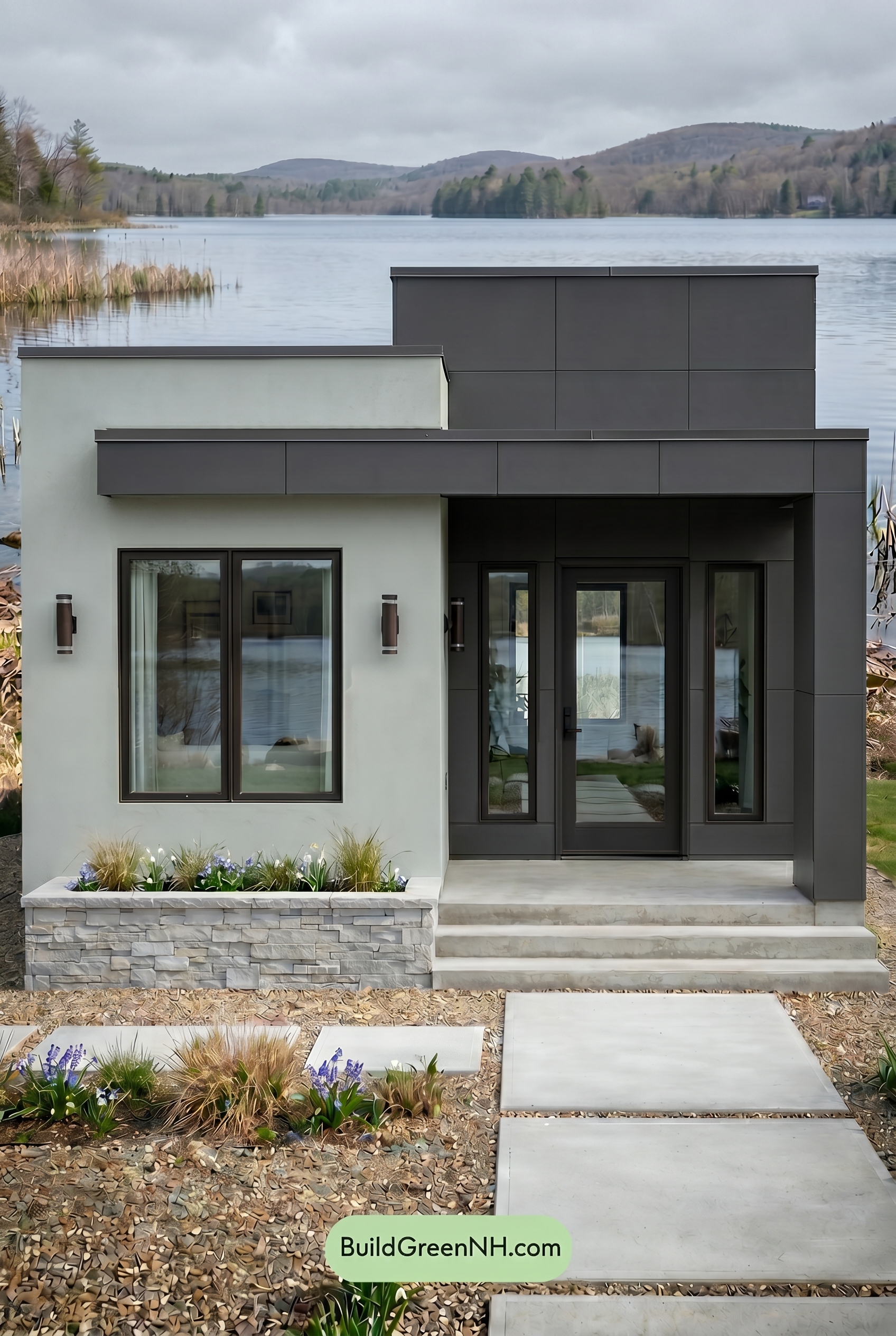
Under overcast light, the gray family on this exterior feels cooler, quieter, and a touch less saturated than it would in neutral daylight. The pale gray wall reads softer and more muted, while the deeper gray panels, trim, window frames, and front door take on a denser, more grounded look without bright highlights warming them up.
Shadows become broad and gentle rather than sharp, so the contrast between the light and dark gray shades feels smoother and more architectural. Compared to neutral daylight, the overall mood shifts from crisp and clean to calm, refined, and slightly dramatic.
Golden Hour
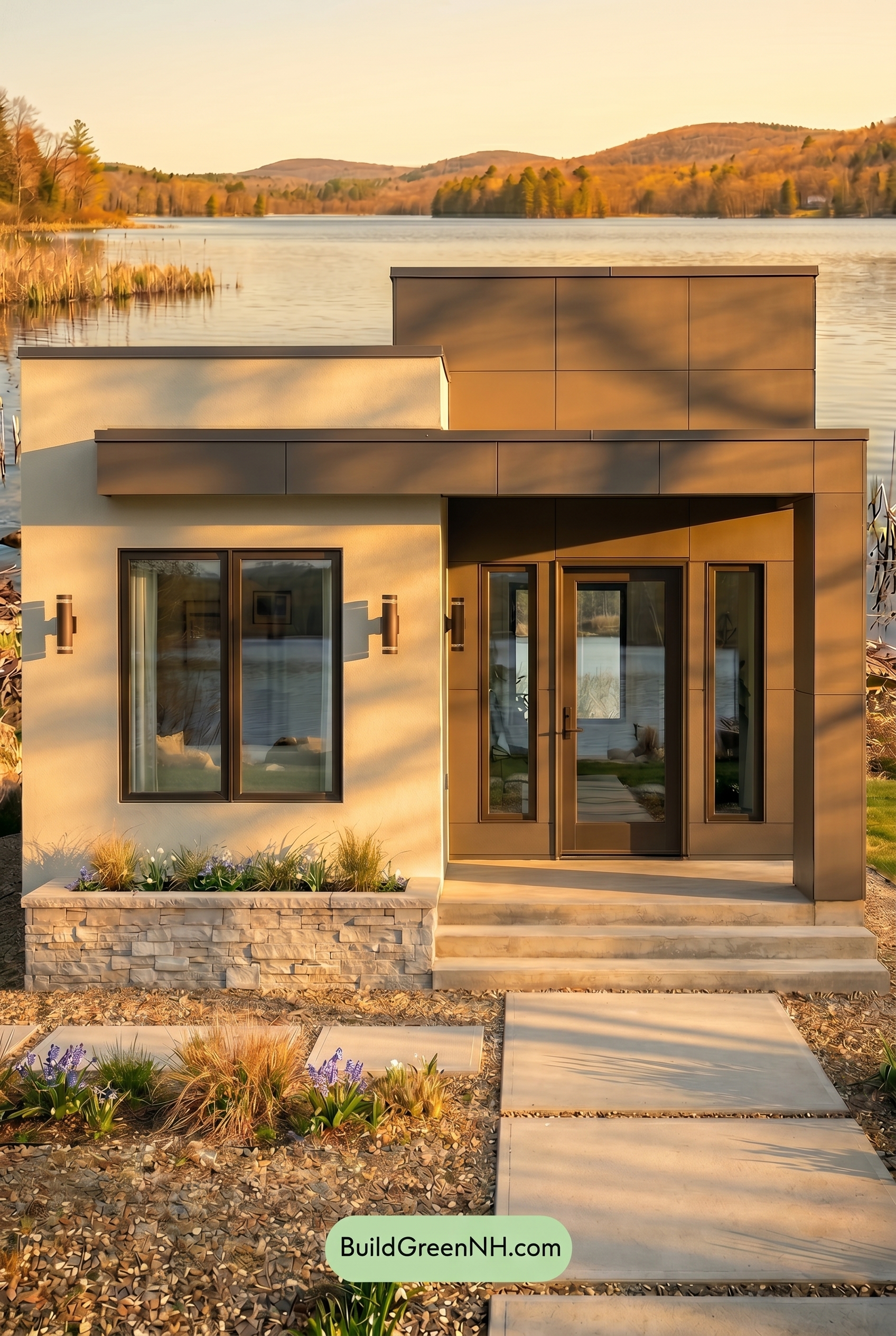
Under Golden Hour, the gray family on this exterior shifts warmer and more saturated than it would in neutral daylight. The lighter gray walls pick up a soft golden cast, making them feel creamier and more inviting, while the deeper gray panels read richer, almost taupe-like, with a gentle glow across the flat modern surfaces.
The low-angle light creates longer shadows that deepen the darker gray trim, window frames, and front door, increasing contrast without feeling harsh. Compared to the cooler, clearer look of midday light, the whole palette feels softer, warmer, and more atmospheric, giving the home a calm, polished evening mood.
Shade
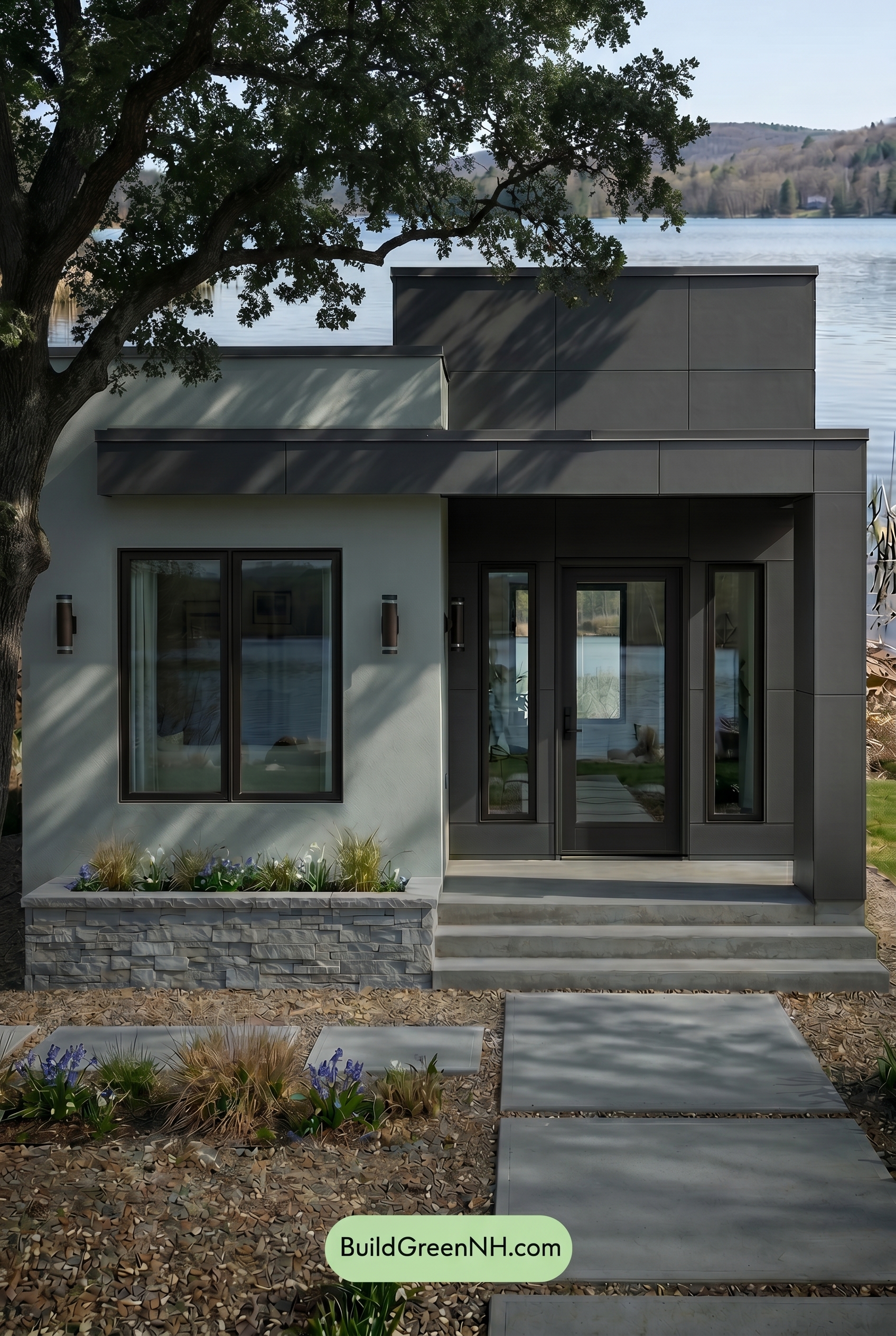
In Shade, the gray family on this exterior reads cooler, deeper, and more muted than it would in neutral daylight. The lighter gray walls lose some warmth and saturation, while the darker gray upper panels and trim feel richer and more grounded.
The tree shadows add strong movement and contrast, making the flat modern surfaces feel more layered and dramatic. Compared to neutral daylight, the overall mood shifts from crisp and balanced to calm, shaded, and quietly sophisticated.
Nighttime
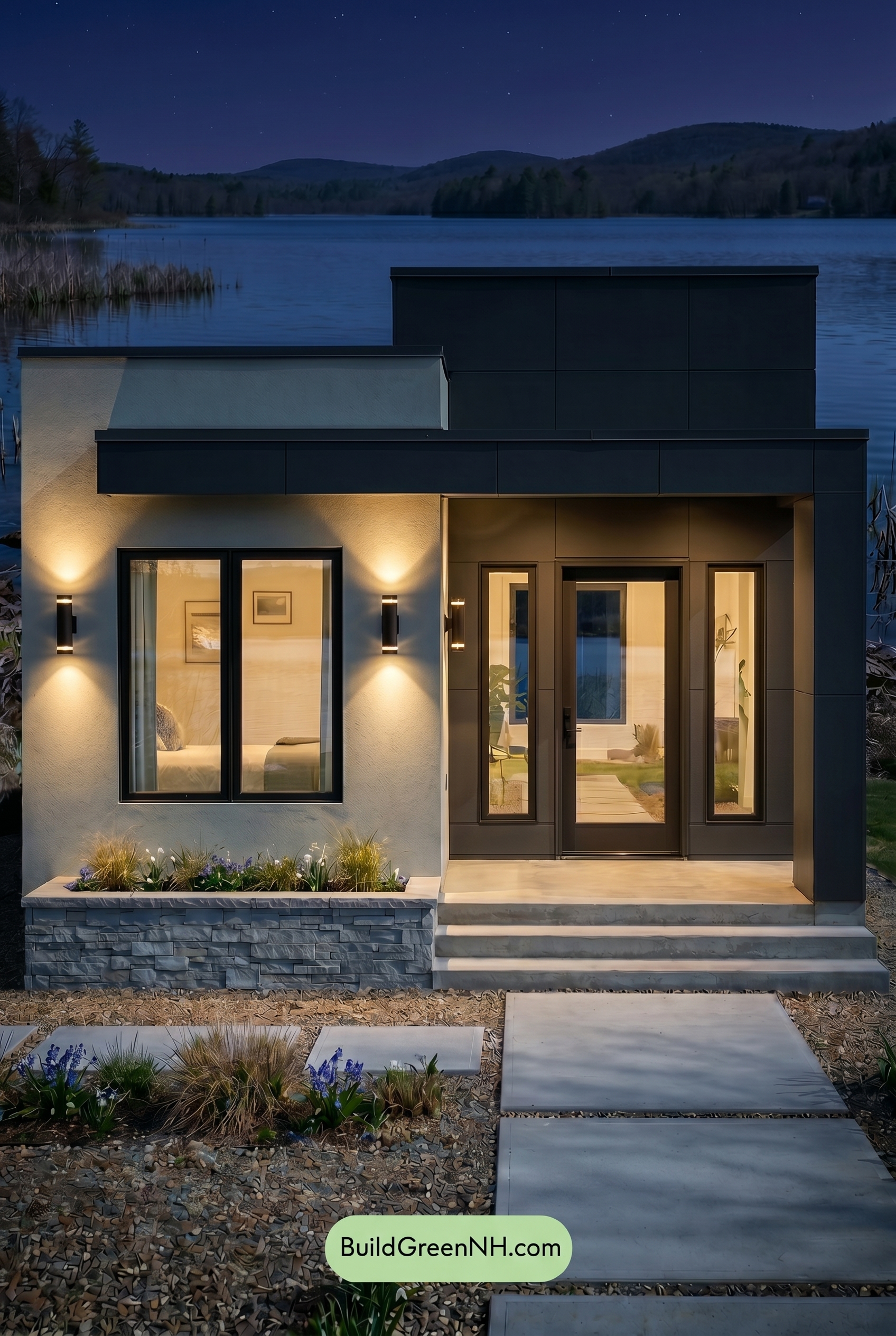
At nighttime, the gray family on this exterior gains depth and drama compared to neutral daylight. The lighter gray wall reads warmer and softer where the exterior lights wash over it, while the deeper gray panels and trim become more saturated, shifting toward a rich charcoal effect.
Shadows sharpen the contrast between the smooth gray surfaces, window frames, and recessed entry, making the architecture feel more sculptural. The overall mood changes from clean and balanced in daylight to cozy, modern, and quietly dramatic after dark.
Pin these for later
Want More?
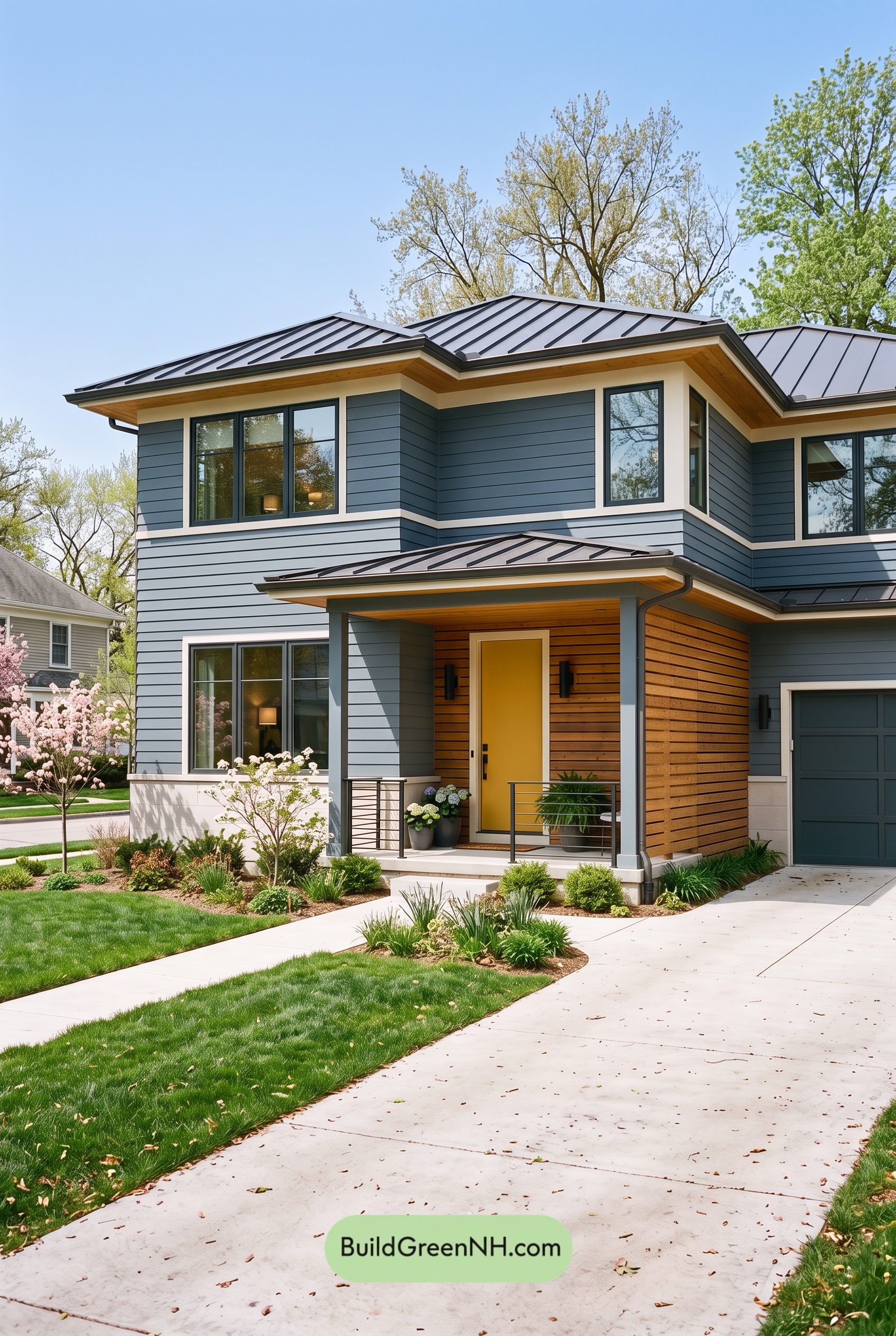 Blue House Front Door Color Scheme: Harbor Saffron
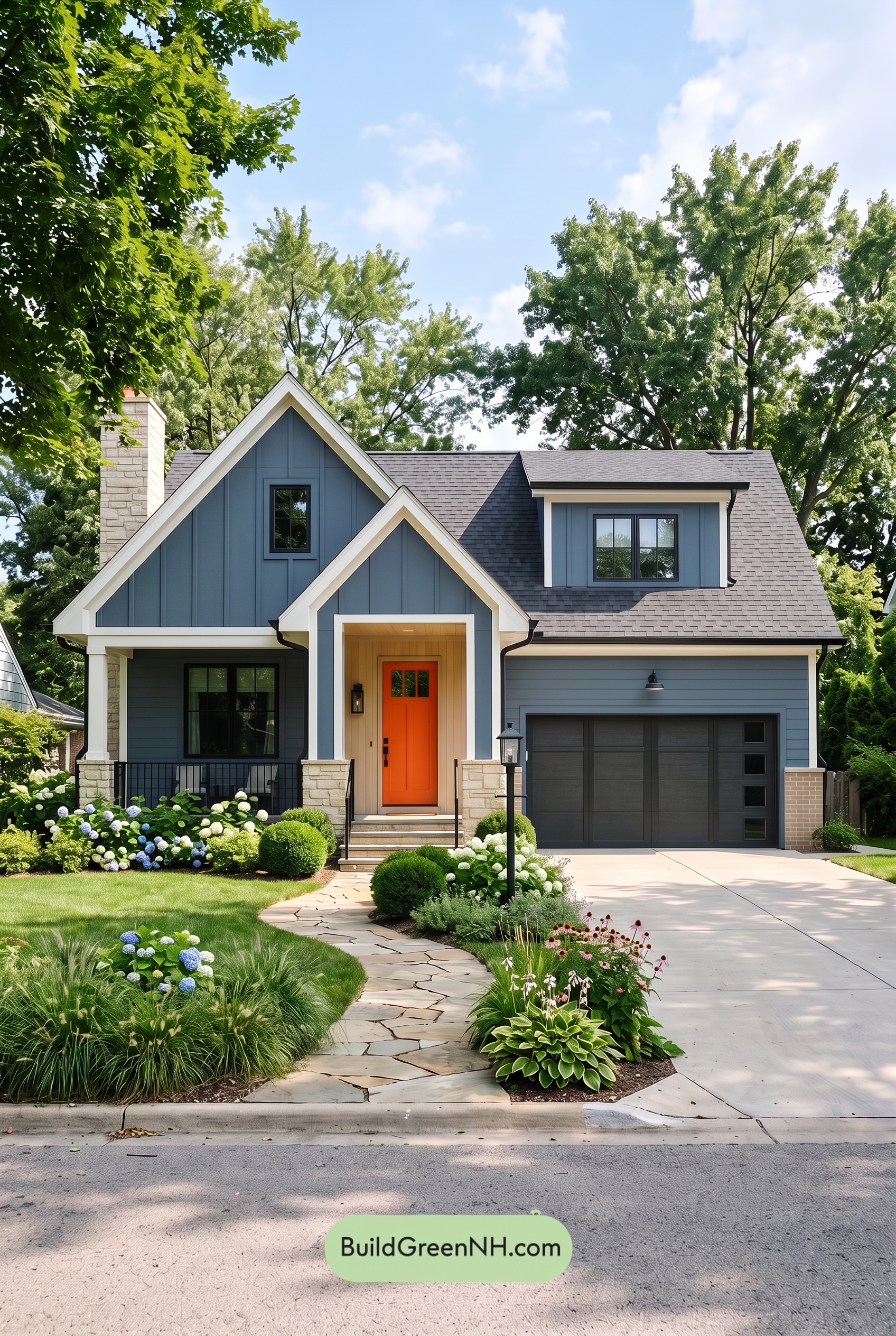 Blue House Front Door Color Scheme: Cobalt Persimmon
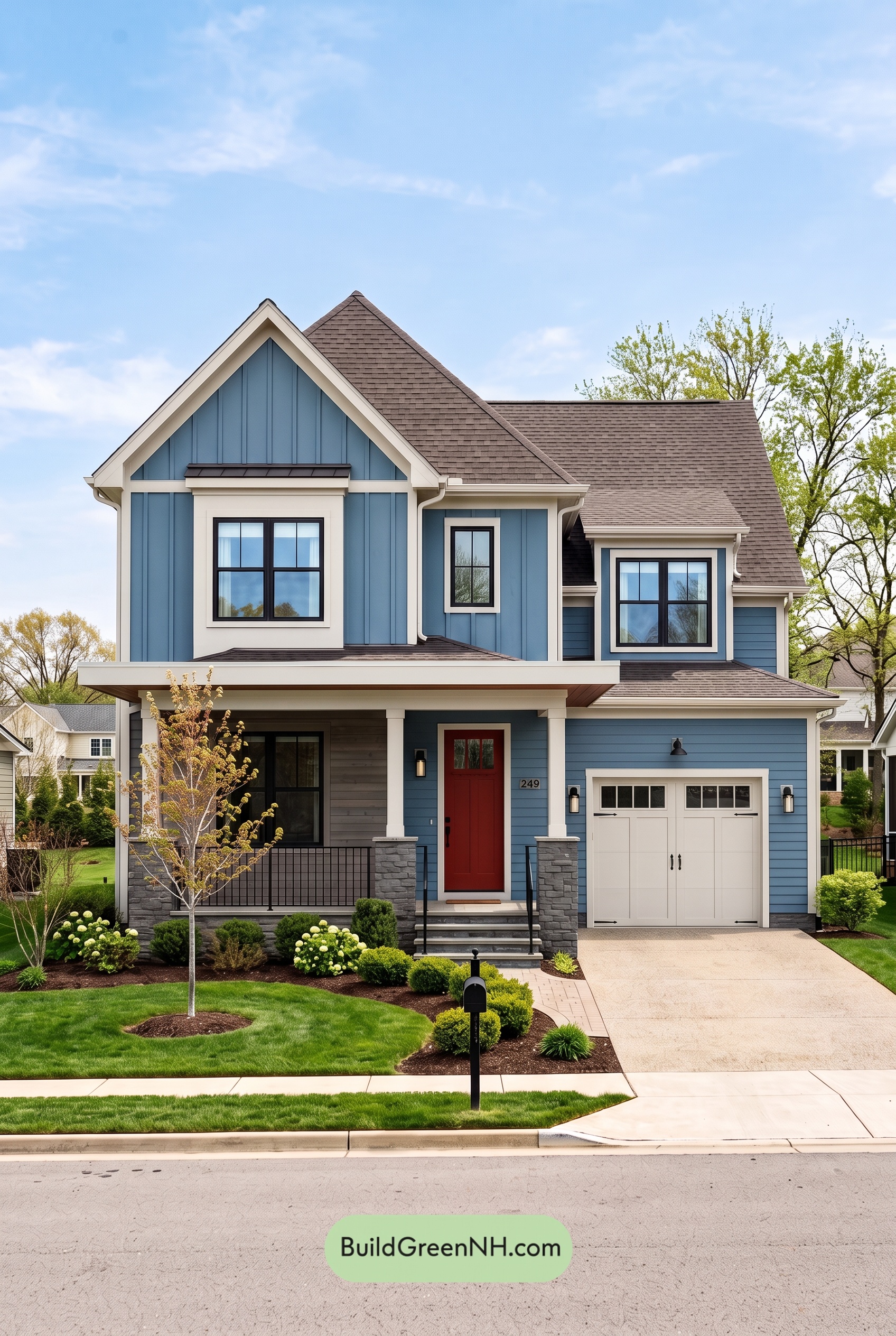 Blue House Front Door Color Scheme: Denim Poppy
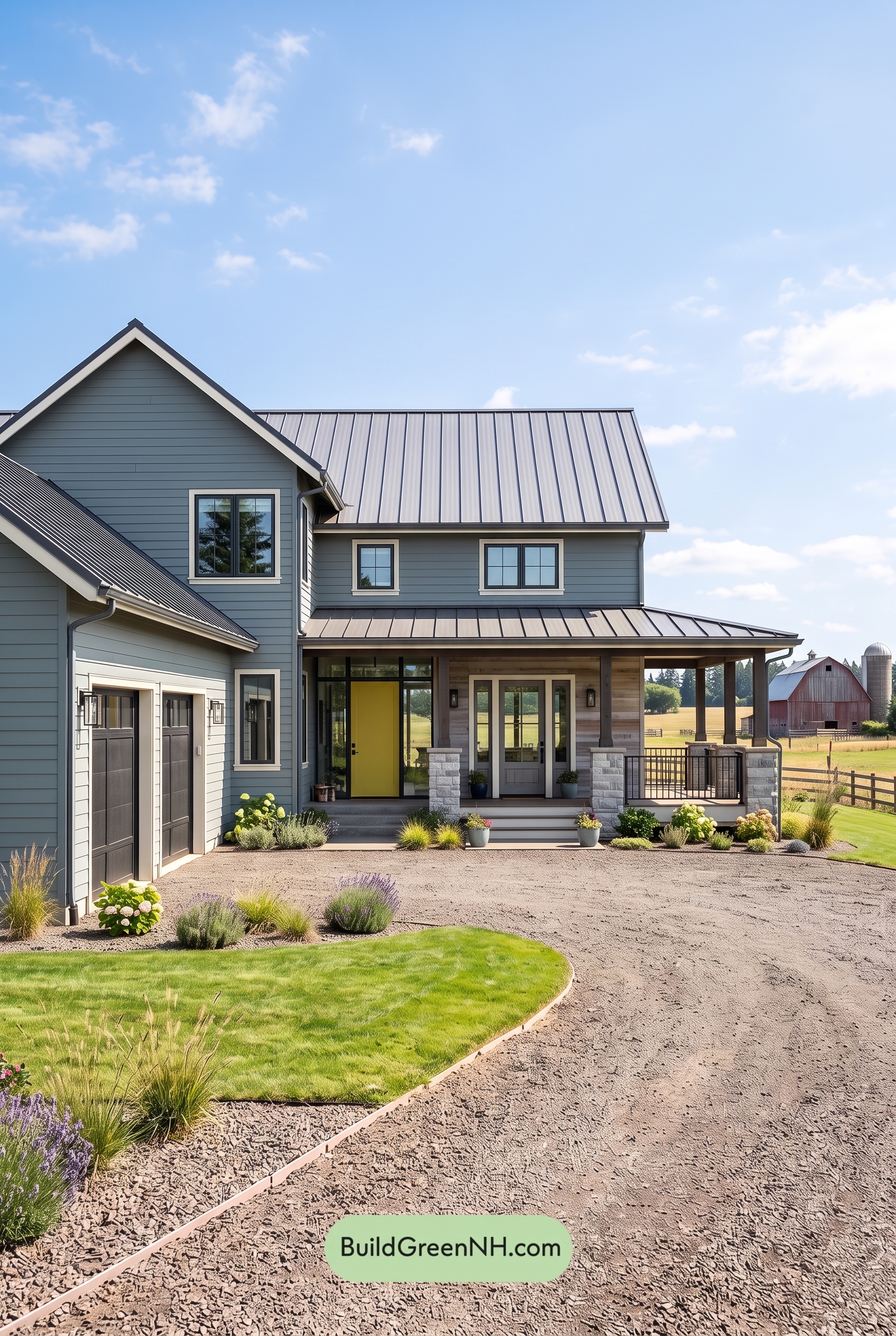 Blue House Front Door Color Scheme: Slate Citron
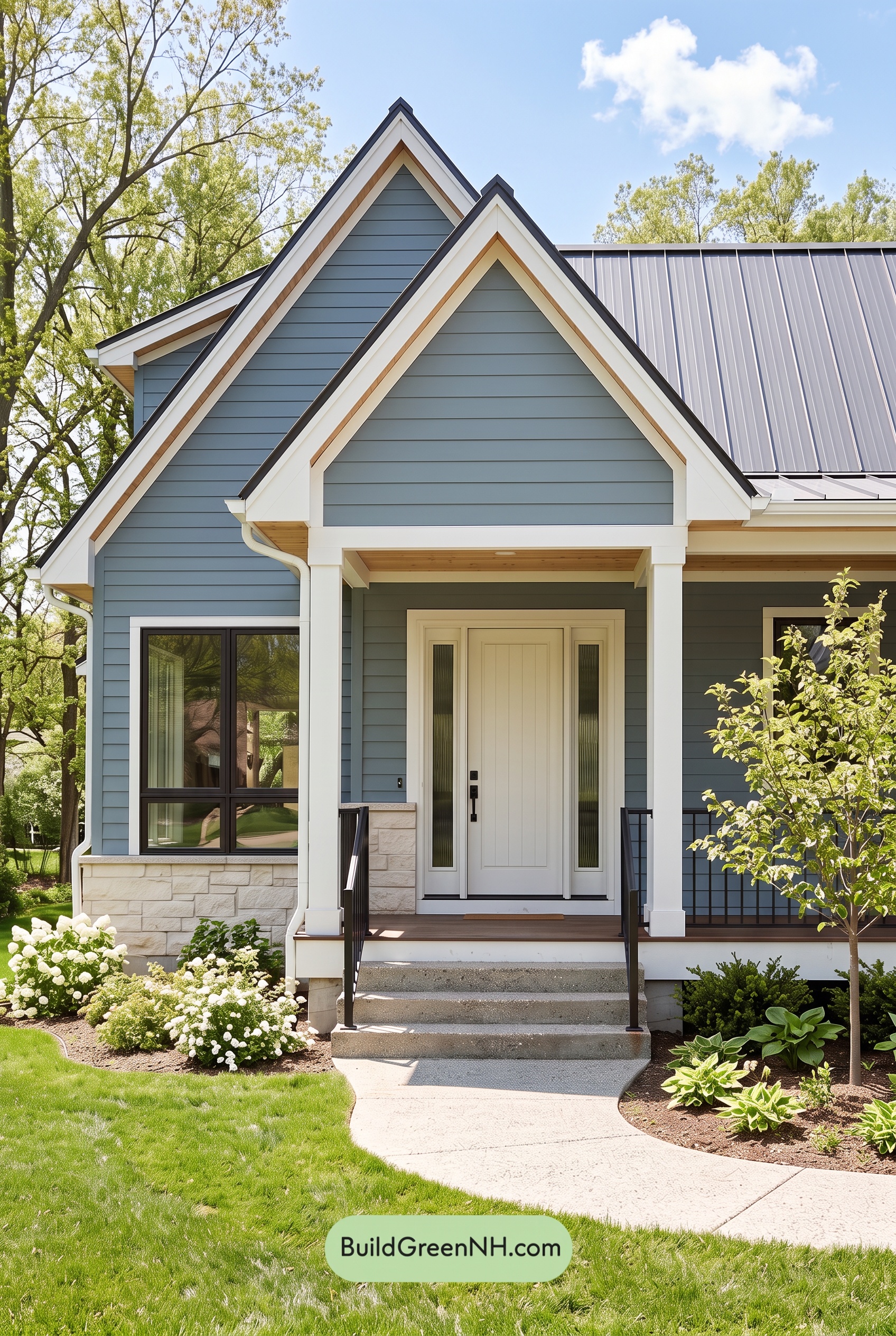 Blue House Front Door Color Scheme: Mist Blue Haven
Table of Contents