Last updated on
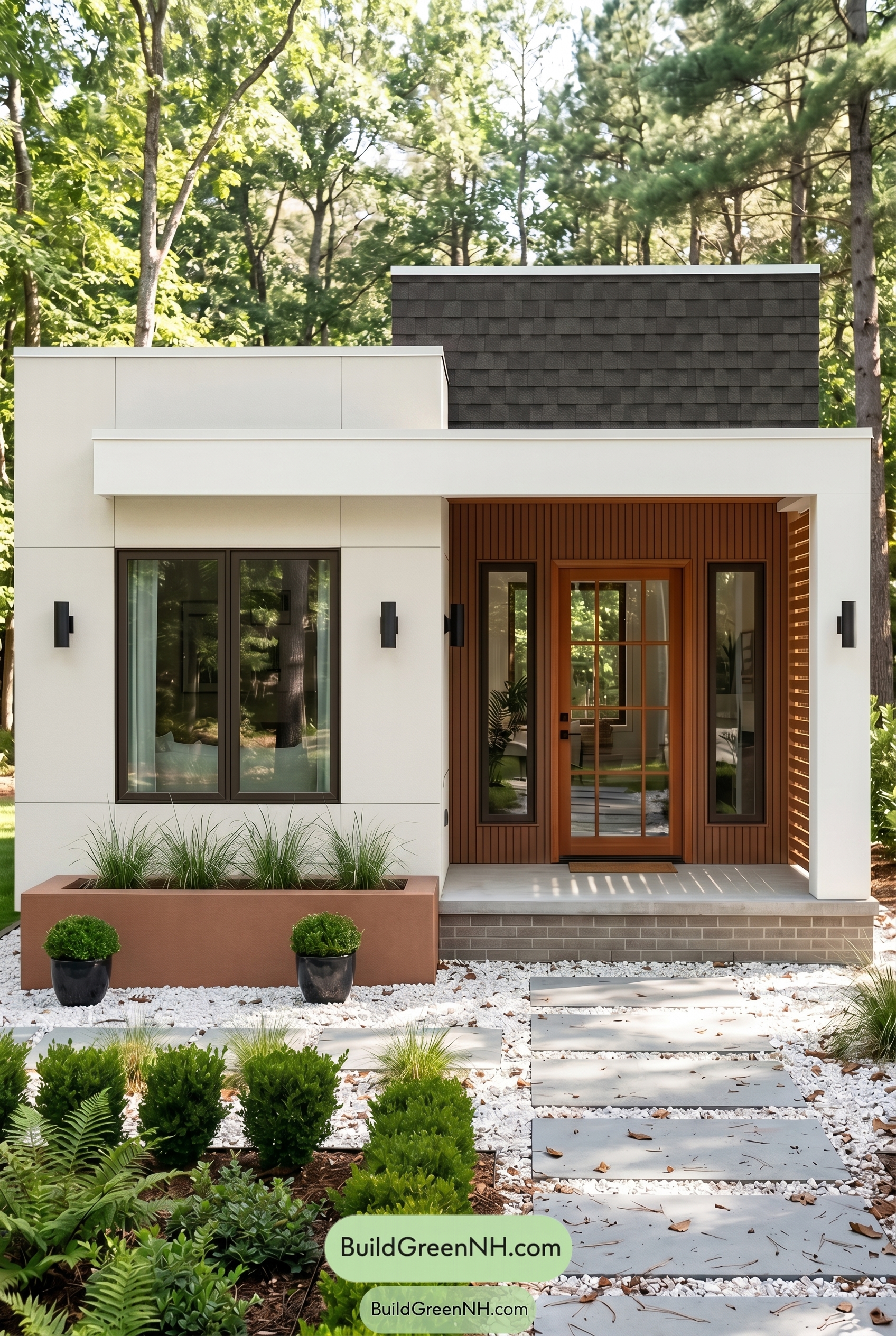

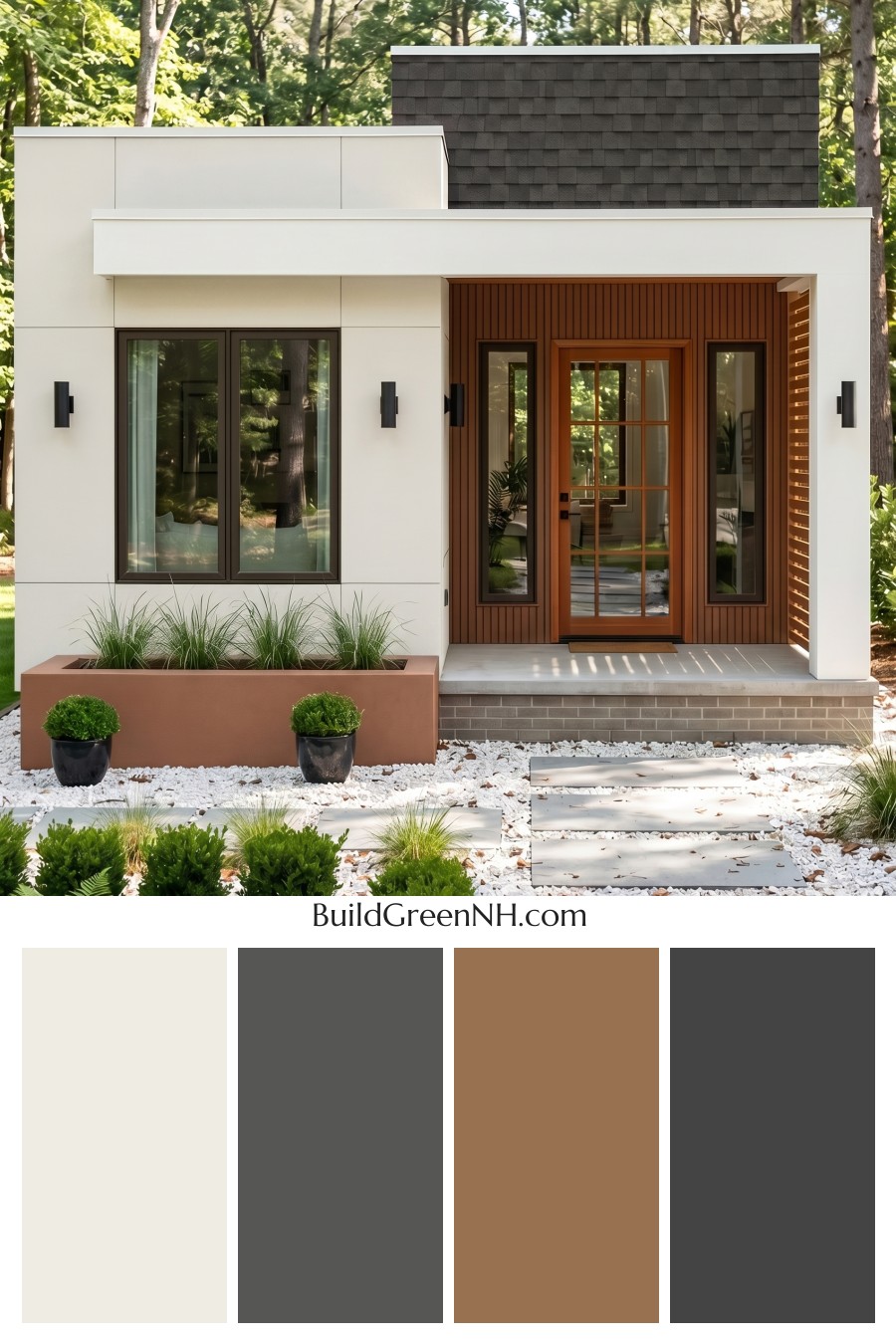
This exterior works beautifully because crisp whites, grounded grays, and warm browns create a modern home that still feels connected to the trees around it.
A Clean White Foundation
The main exterior walls are wrapped in a fresh shade from the white family, giving the house its bright, architectural presence. This light siding keeps the modern lines feeling sharp and uncluttered, while also reflecting the natural light that filters through the surrounding trees.
White trim and matching white columns reinforce that clean framework. They outline the porch, roofline, and wall planes with a crisp finish, making the home feel polished without becoming fussy. The result is simple, airy, and very contemporary.
Warm Brown Accents at the Entry
The recessed entry is where the palette becomes especially inviting. A warm brown accent wall, used in vertical siding, adds texture and depth against the smooth white surfaces. This earthy shade brings a natural, wood-inspired feeling that softens the home’s modern geometry.
The front door continues the brown family, but in a slightly richer shade that gives the entrance a welcoming focal point. Because the door and surrounding accent wall share a similar warmth, the entry feels intentional and cozy rather than overly busy.
Gray for Contrast and Definition
The upper portion of the house introduces a deep gray shade that adds weight and balance. Its darker tone grounds the light facade and gives the home a strong visual anchor. It also helps the upper volume stand out without competing with the warmer entry feature.
Gray window frames echo this contrast on the lower level. Their muted shade outlines the glass cleanly and ties back to the darker upper section, creating a cohesive rhythm across the front elevation.
Why the Palette Works So Well
This scheme succeeds because it balances cool and warm tones with confidence. The white siding feels fresh and minimal, the gray elements add sophistication, and the brown accents bring warmth and a natural connection to the wooded setting.
Nothing feels accidental. The white areas create breathing room, the brown entry draws you in, and the gray details sharpen the overall look. Together, these shades create a home that feels modern, calm, and welcoming all at once.
The Overall Mood
The finished effect is clean but not cold. It has the quiet confidence of a modern retreat, with enough warmth to feel lived-in and approachable. Surrounded by greenery, the white, gray, and brown palette feels especially fitting—fresh against the landscape, yet grounded in natural tones.
Next, see how this color scheme looks under different lighting simulations throughout the day.
Overcast
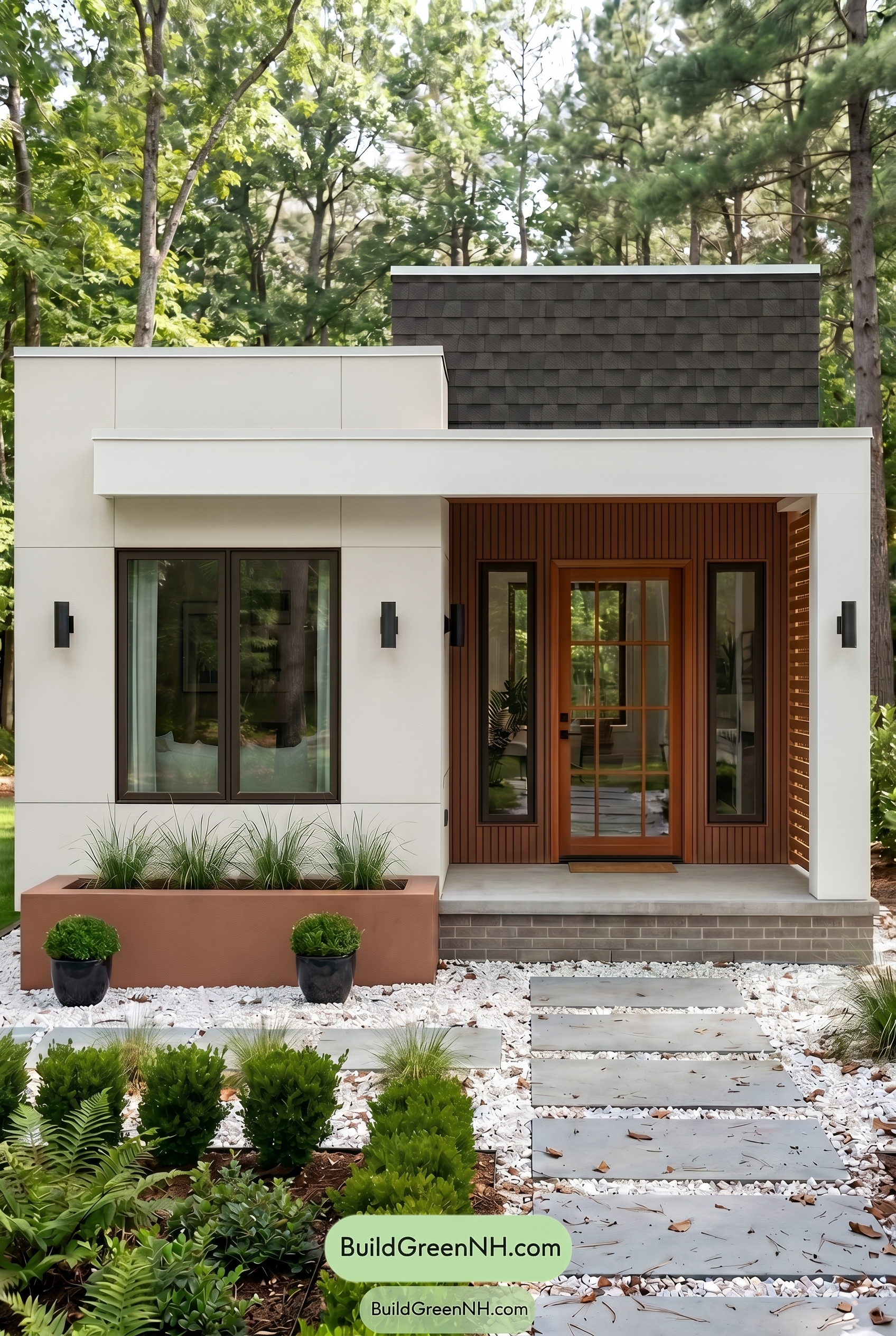
Under overcast lighting, the white family on the main walls, trim, and columns appears softer and slightly cooler than it would in neutral daylight. Saturation is gently reduced across the exterior, so the gray upper wall and gray window frames feel more muted and even, with fewer bright highlights and less sharp contrast.
The brown accent wall and front door lose a bit of sunlit warmth, shifting into a deeper, calmer shade that feels more grounded. Shadows become broader and softer, which lowers contrast between the white, gray, and brown families and gives the whole facade a quieter, more relaxed mood.
Golden Hour
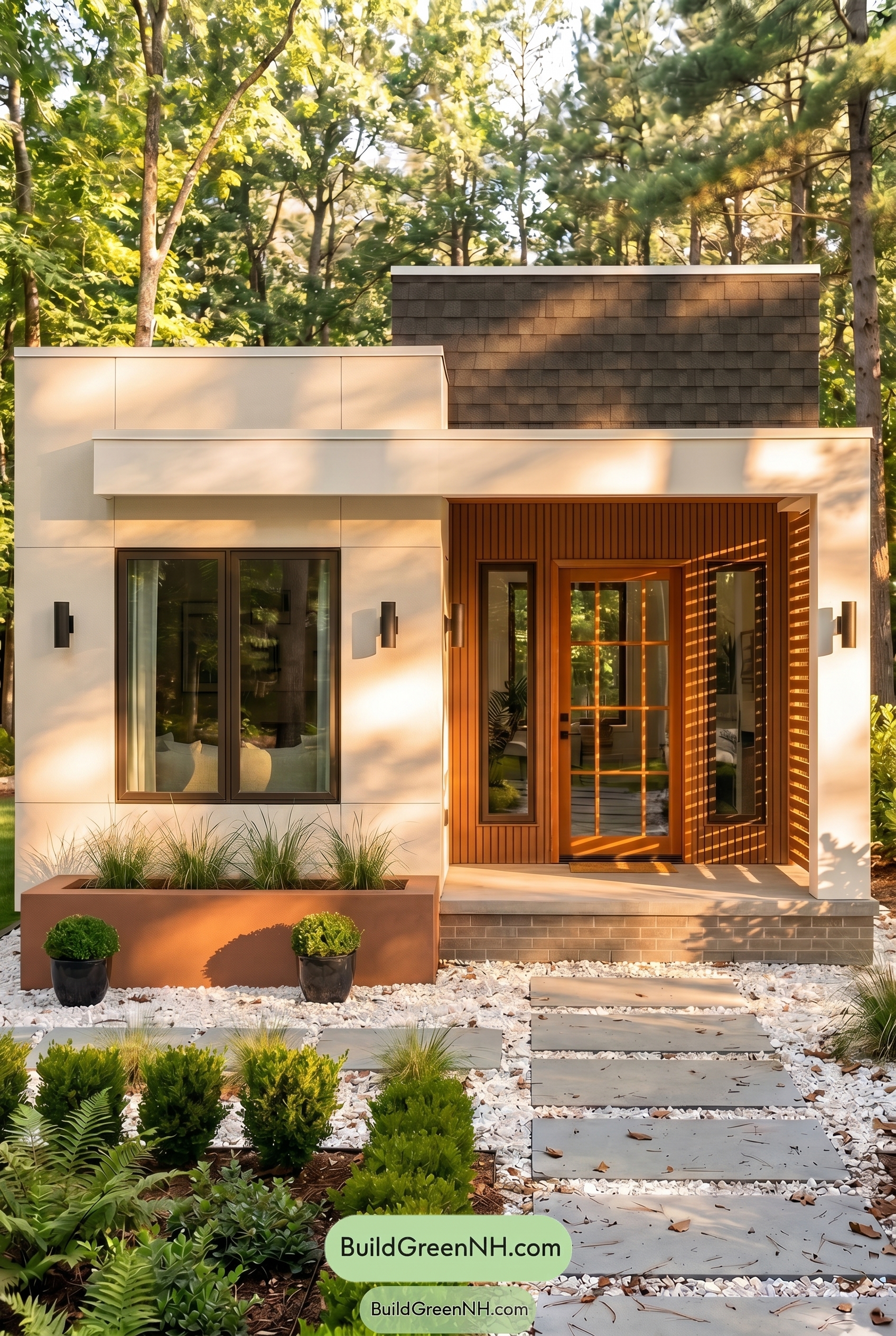
Under Golden Hour light, the white family on the main walls and trim shifts from crisp and neutral to softly creamy, with a gentle warmth that makes the facade feel more inviting. The brown family around the entry becomes richer and more saturated, taking on a deeper, cozier glow than it would in neutral daylight.
The gray family on the upper wall and window frames appears warmer and slightly softer, while the long tree shadows add layered contrast across the flat surfaces. Compared to even daylight, the overall mood feels more dramatic, relaxed, and dimensional, with warm highlights and cooler shaded areas giving the exterior extra depth.
Shade
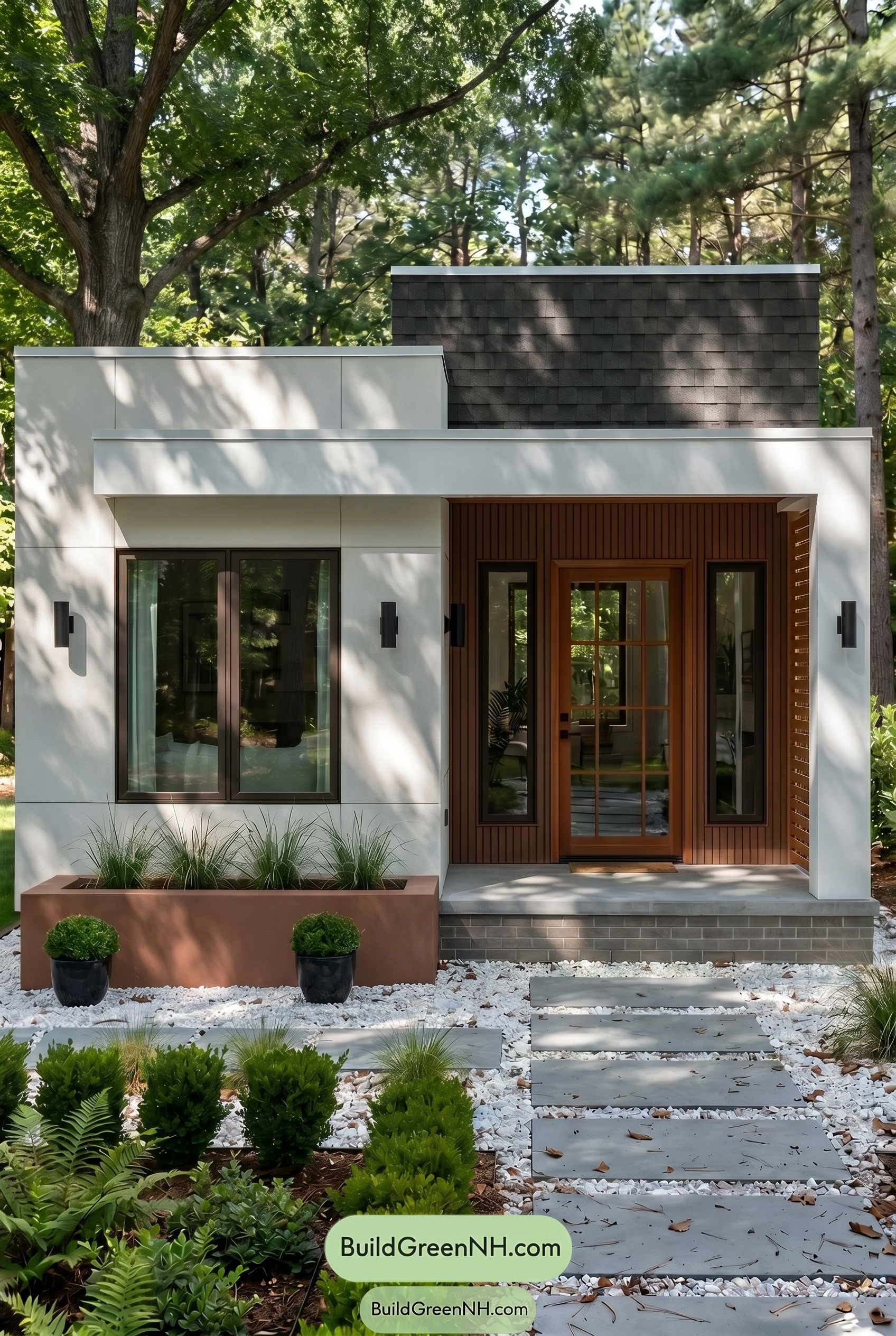
In Shade, the white family on the main walls and trim feels cooler and more muted than it would in neutral daylight, taking on a soft gray cast that lowers its brightness. The upper gray shade deepens, gaining a steadier, more grounded presence, while the brown family on the accent wall and door feels richer but less sun-warmed.
The dappled shadows add movement across the exterior, increasing contrast between the light white surfaces and the deeper gray and brown areas. Overall, the palette shifts from crisp and bright to calm, layered, and slightly more intimate, with reduced saturation and a cooler, woodland mood.
Nighttime
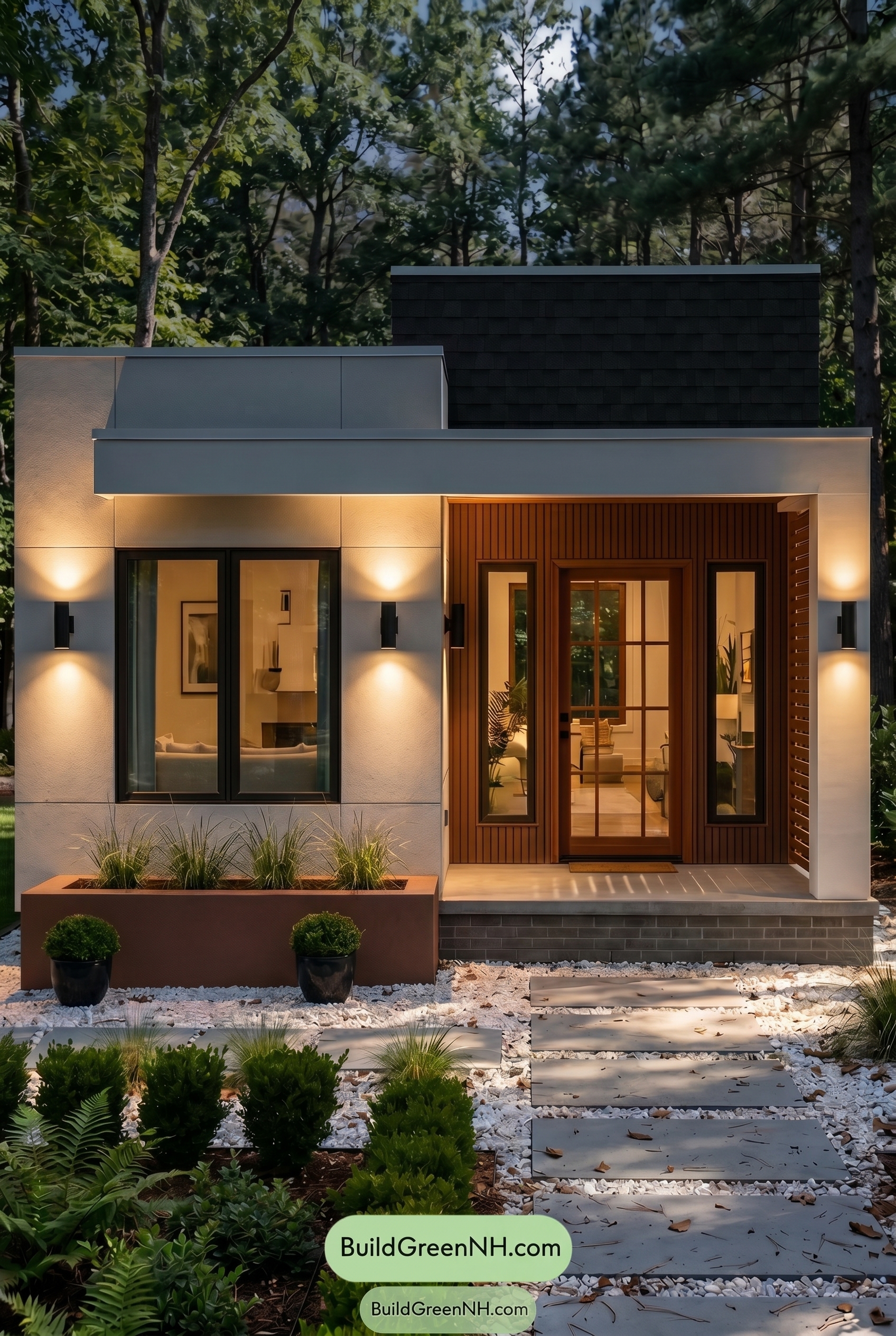
At nighttime, the white family on the main walls and trim shifts from crisp and neutral to softer and warmer, especially where the exterior lights wash across the surface. Shadows deepen along the roofline and recesses, making the gray shades feel more saturated and giving the façade stronger contrast than it would have in neutral daylight.
The brown family on the accent wall and front door becomes richer and cozier under the warm glow, with the vertical texture casting darker lines that add depth. Overall, the palette feels less bright and more intimate at night, trading daylight clarity for a layered, welcoming mood.
Pin these for later
Want More?
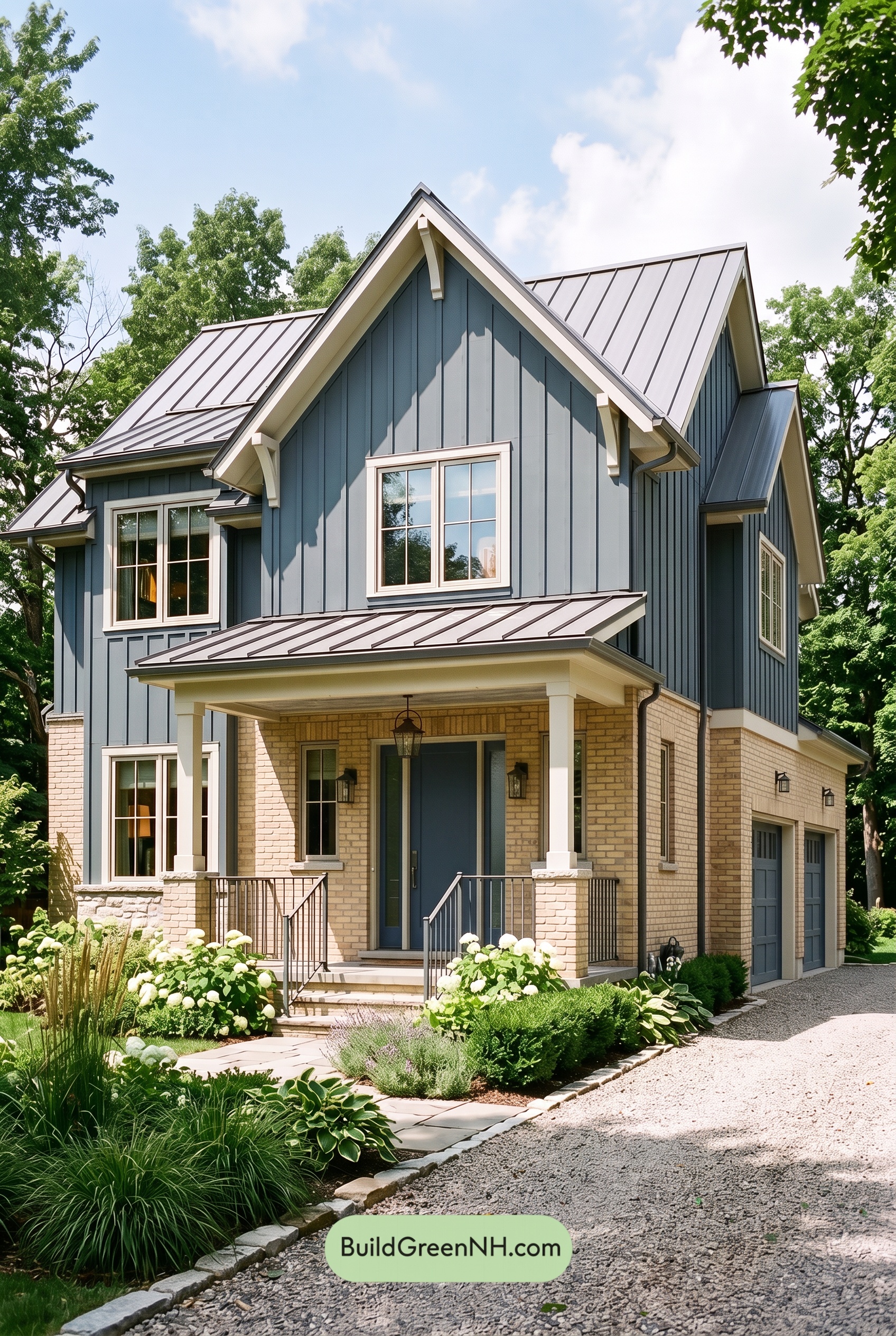
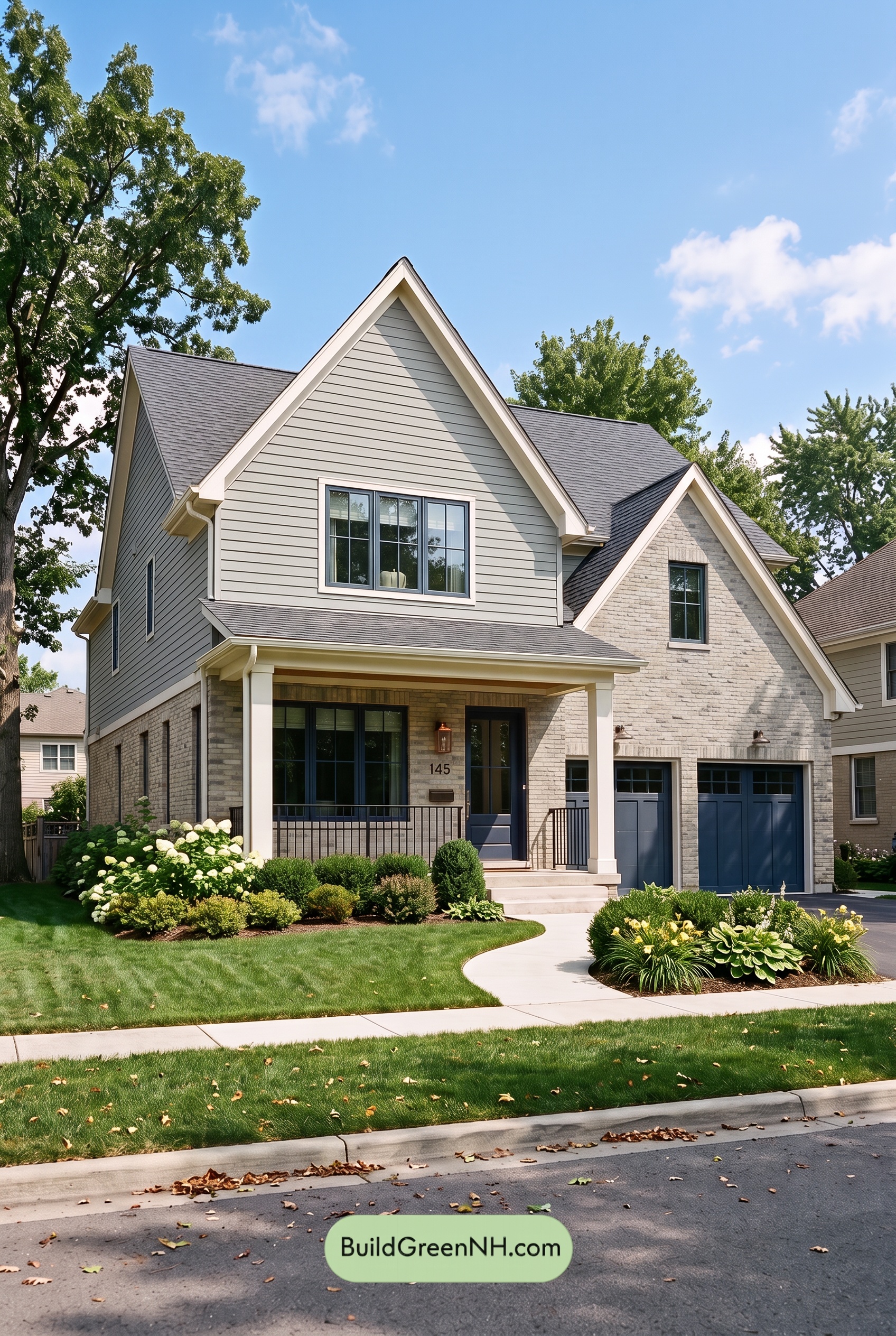 Yellow Brick House Exterior Color Scheme: Harbor Linen Crest
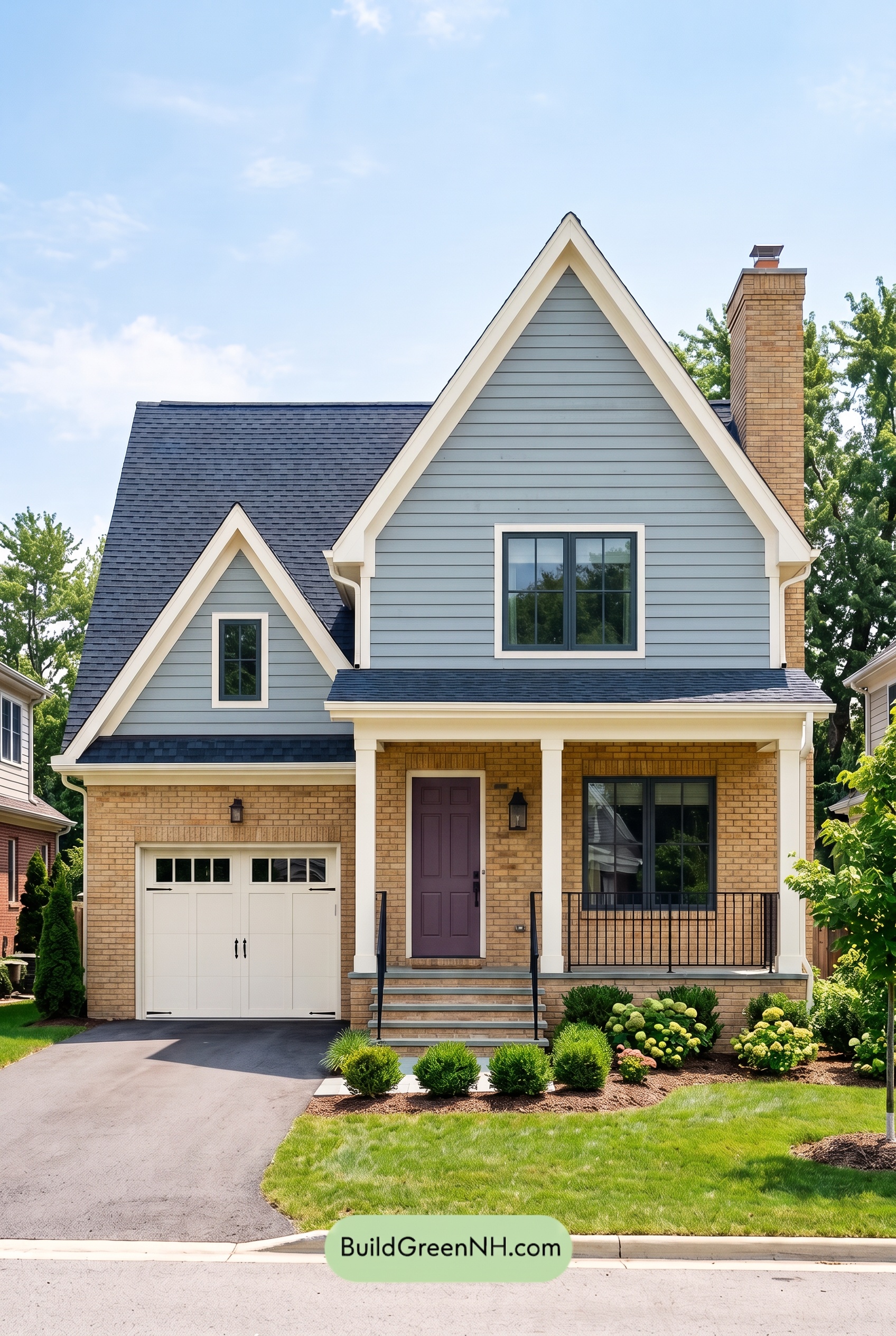
 Yellow Brick House Exterior Color Scheme: Bluebell Masonry Quiet
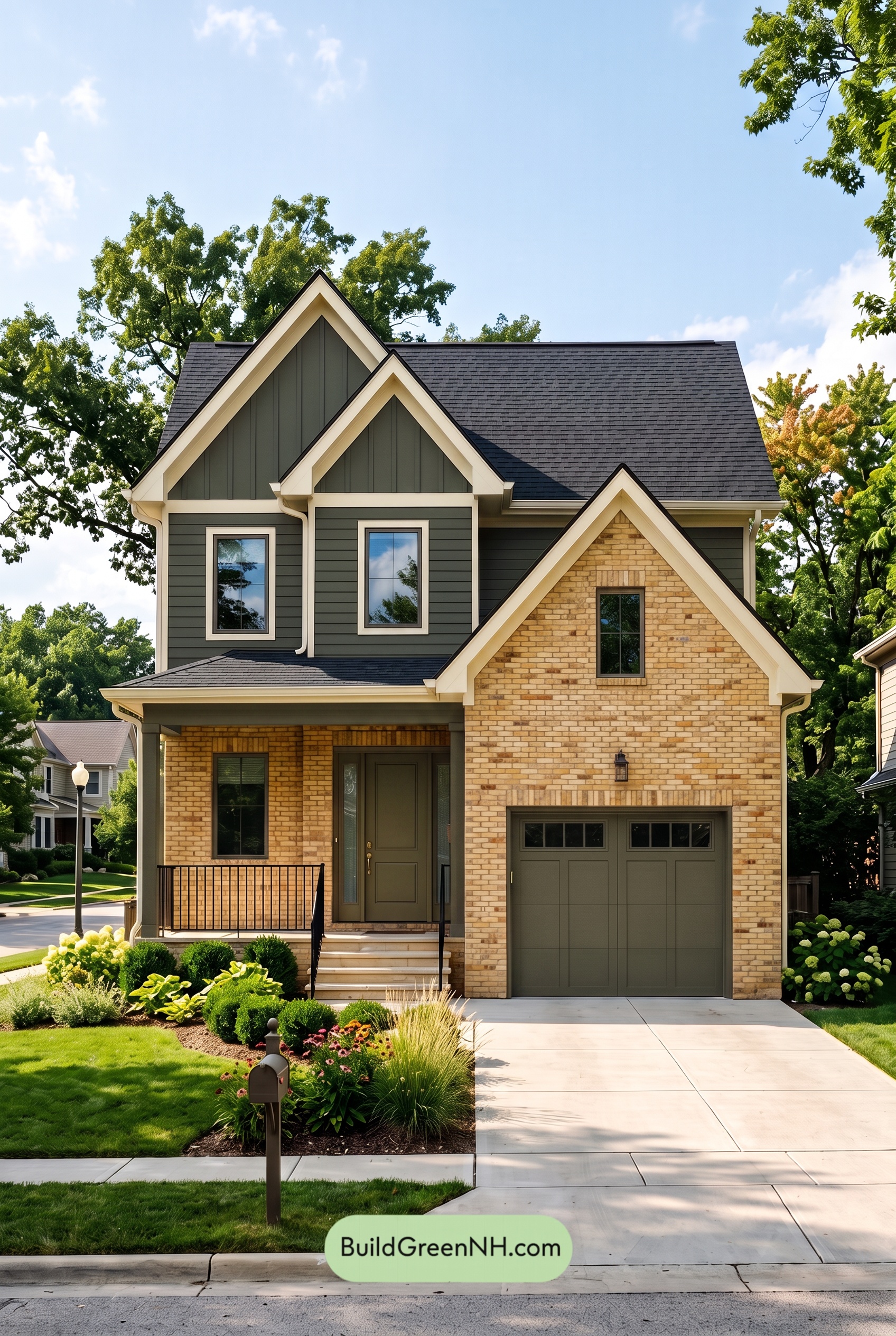
 Yellow Brick House Exterior Color Scheme: Porcelain Gable Drift
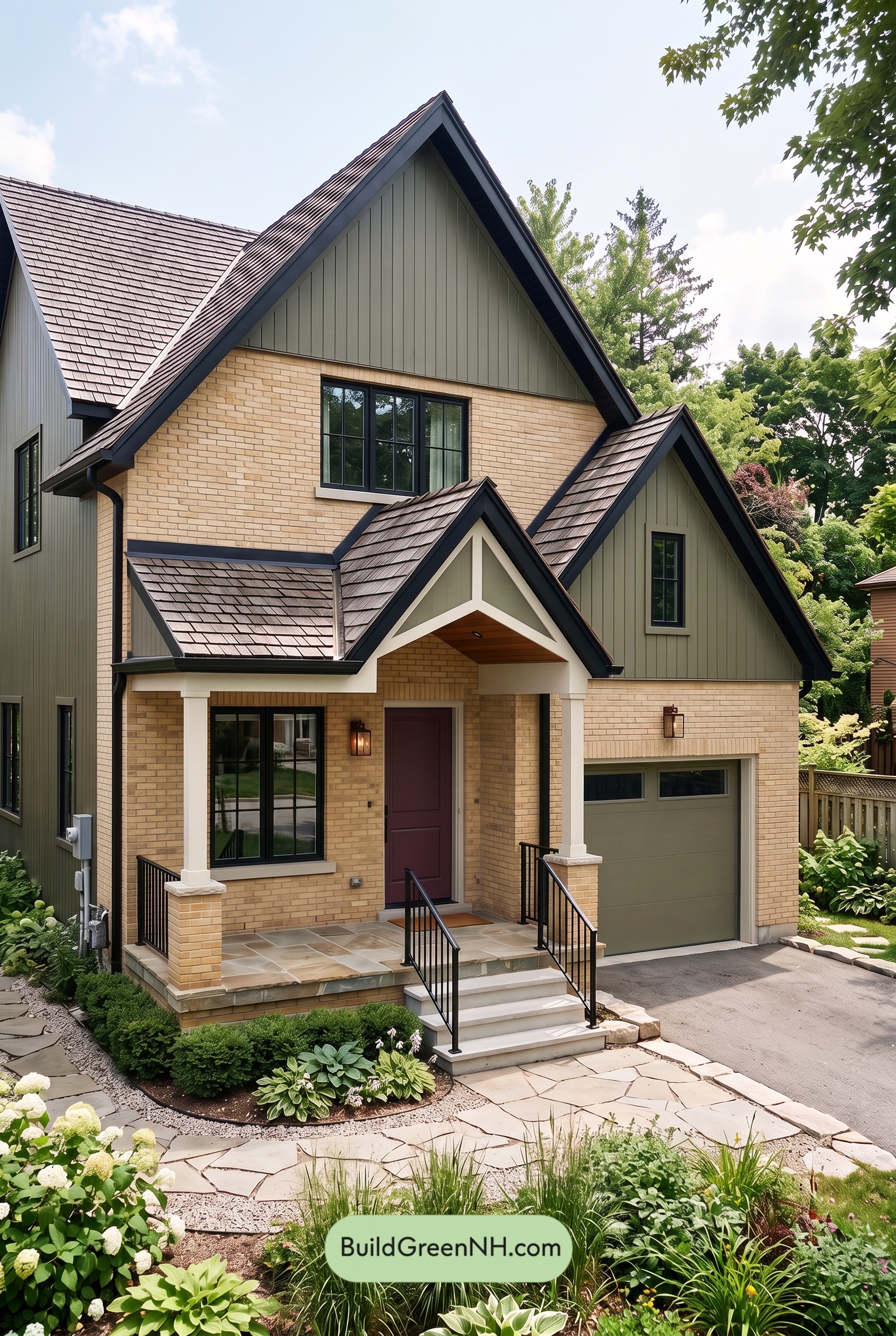
 Yellow Brick House Exterior Color Scheme: Verdant Hearthline
 Yellow Brick House Exterior Color Scheme: Mosslight Parlor
Table of Contents