Last updated on
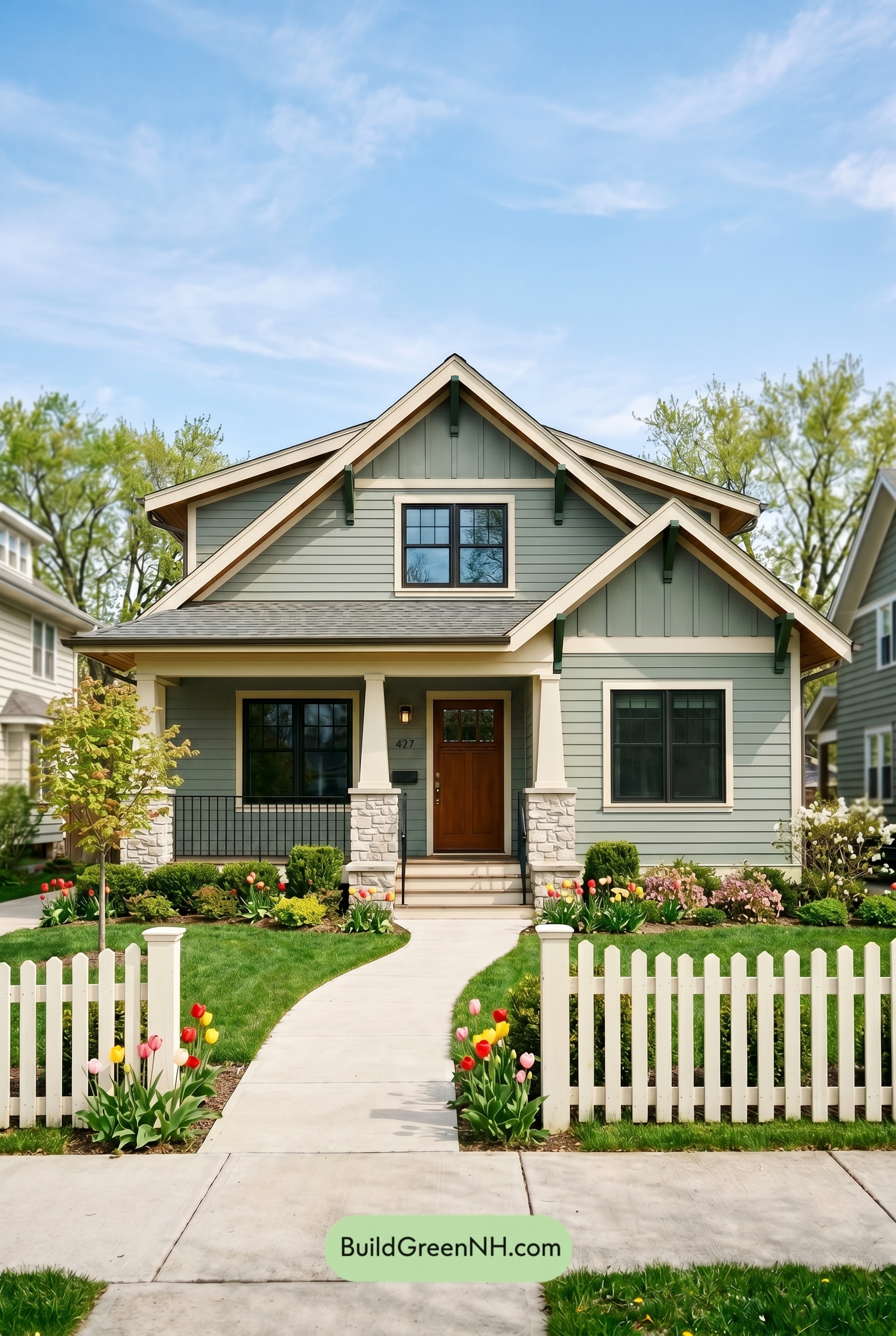

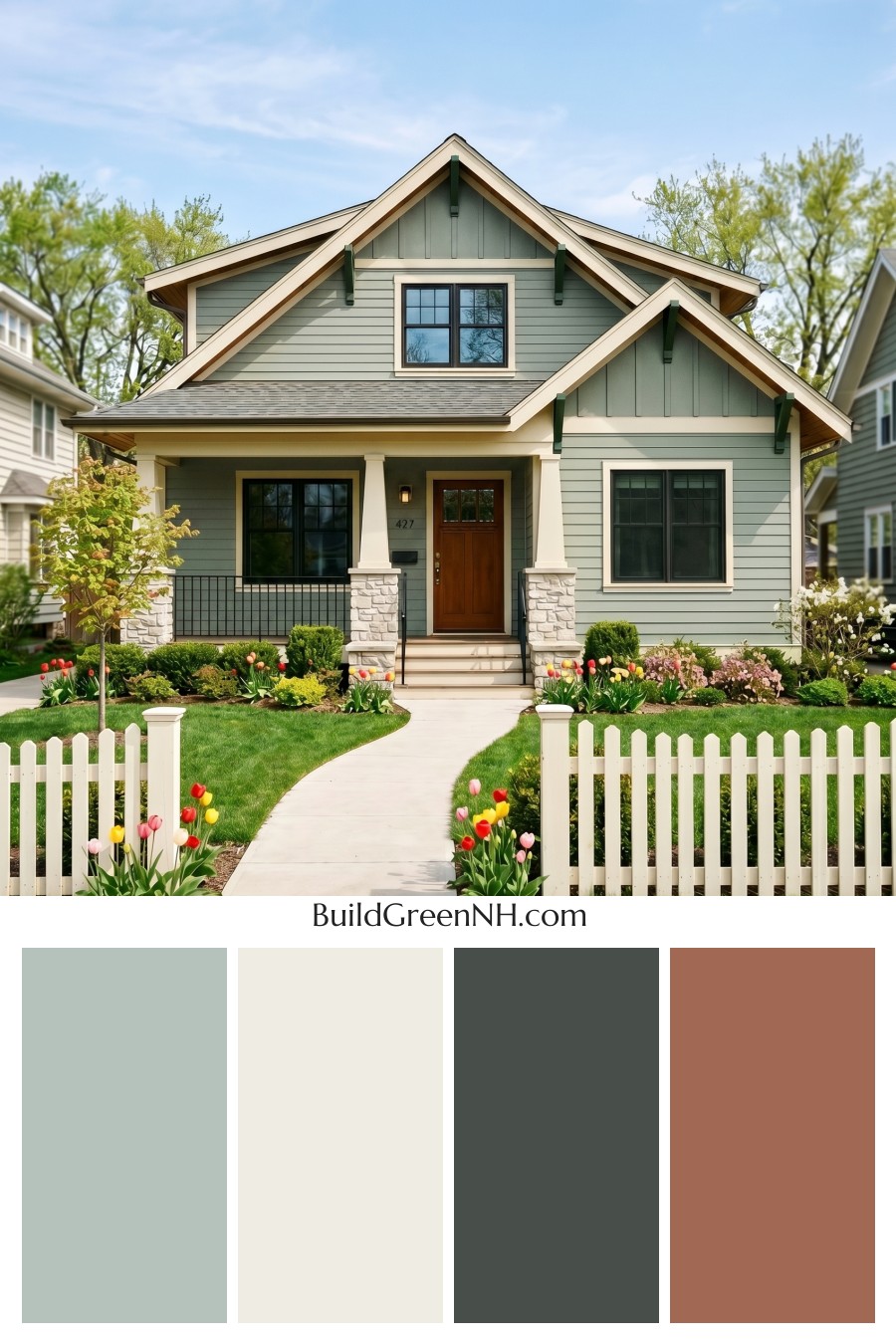
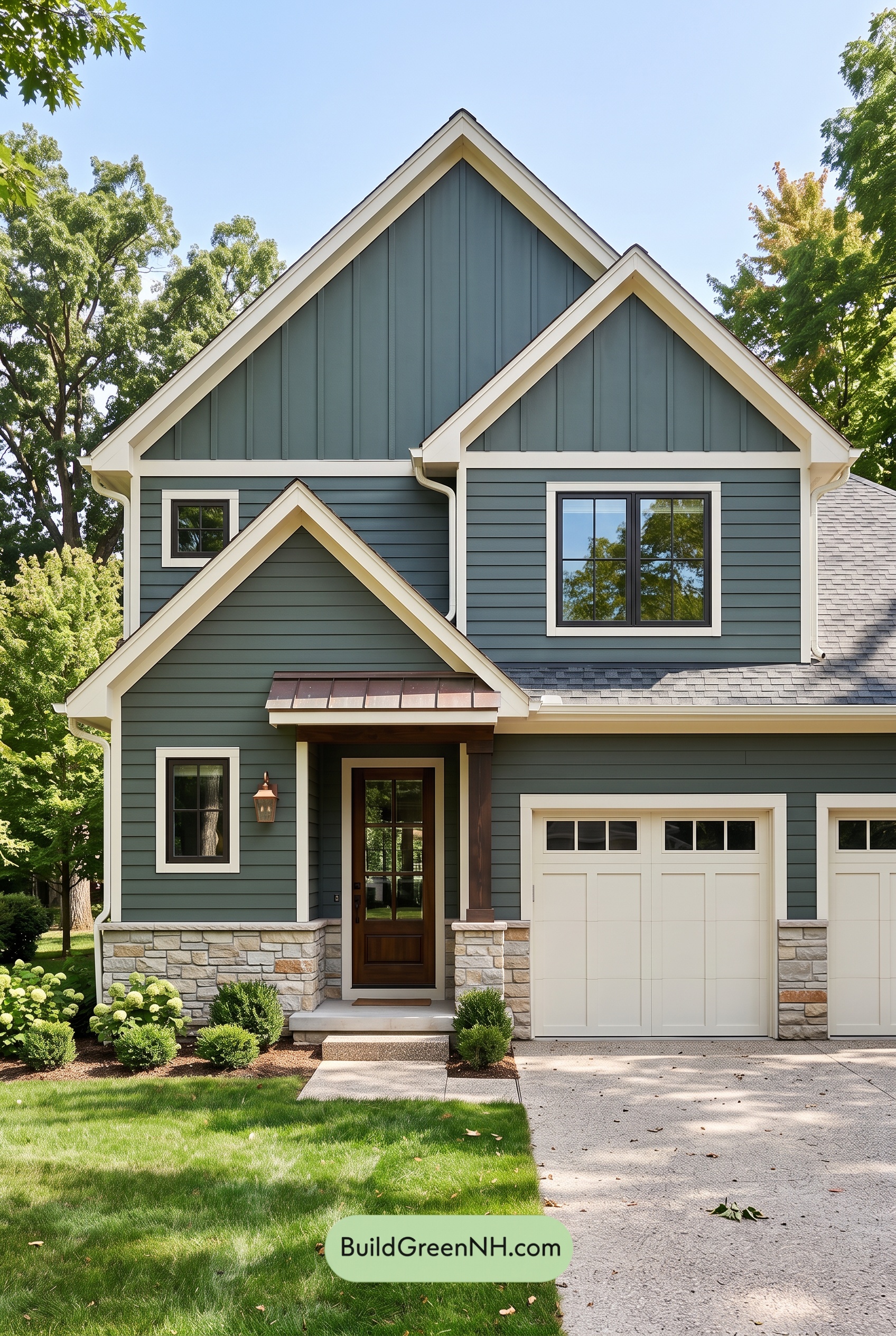
This soft green exterior shines because crisp white detailing, smoky gray accents, and a warm brown door create a look that feels fresh, grounded, and instantly welcoming.
A Calm Green Foundation
The main siding is a gentle, muted shade of green that gives the home an easy, natural presence. It feels connected to the surrounding lawn, trees, and garden beds without blending in too much. The horizontal siding and upper gable panels both use this green family, which keeps the exterior cohesive while still allowing the architecture to stand out.
Crisp White Trim for Structure
Bright white trim outlines the rooflines, windows, porch, and gables with clean definition. The white columns add a classic, polished touch, making the front porch feel open and welcoming. This light trim also lifts the deeper roof shadows, giving the whole facade a fresh and cheerful quality.
Gray Accents Add Balance
The window frames and railings lean into a deep gray family, adding just enough contrast to sharpen the design. These darker gray details keep the palette from feeling too soft, especially against the pale green siding and white trim. The gray roof ties in beautifully, creating a quiet bridge between the crisp trim and the darker accents.
A Warm Brown Front Door
The front door brings in a rich brown shade that instantly warms up the color scheme. Against the cool green siding and gray accents, this brown feels inviting and grounded. It gives the entry a clear focal point without overwhelming the calm, nature-inspired palette.
The Overall Mood
This exterior feels friendly, fresh, and timeless. The soft green creates a relaxed cottage-inspired mood, while the white trim adds brightness and charm. Gray accents bring a tailored edge, and the warm brown door adds just the right amount of coziness.
Together, these shades create a balanced exterior that feels both polished and approachable. It is a great example of how a nature-based palette can look refined, cheerful, and full of curb appeal.
Next, see how this color scheme looks under different lighting simulations throughout the day.
Overcast
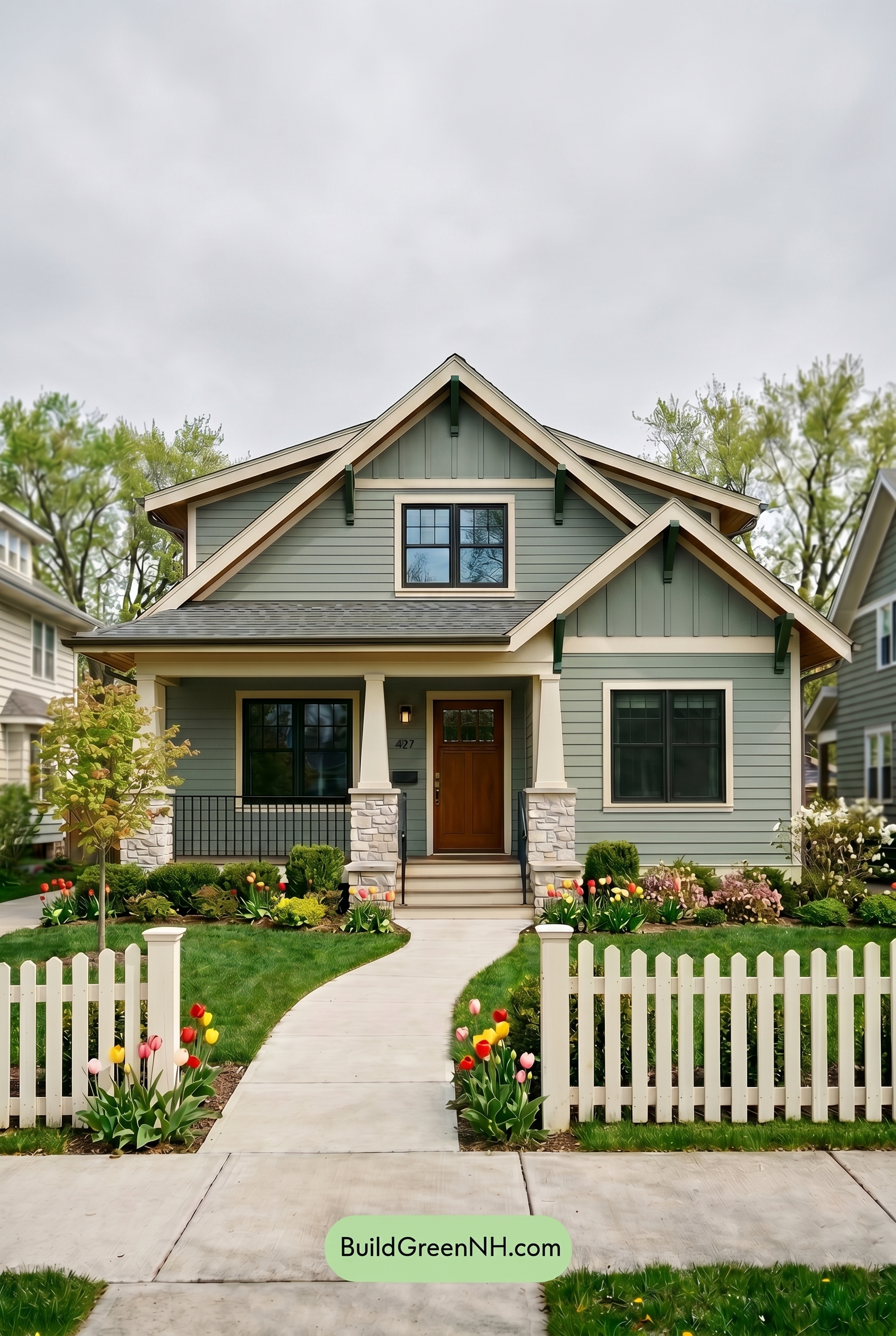
Under overcast light, the green siding appears more muted and cooler than it would in neutral daylight, with its saturation softened by the gray sky. The white trim and columns lose a bit of crisp brightness, feeling gentler and less warm, while the gray window frames and railings blend more quietly into the overall palette.
Shadows become broader and softer, reducing sharp contrast along the rooflines, porch, and trim details. The brown front door feels deeper and less golden, adding a grounded note to the calmer, more subdued mood of the exterior.
Golden Hour
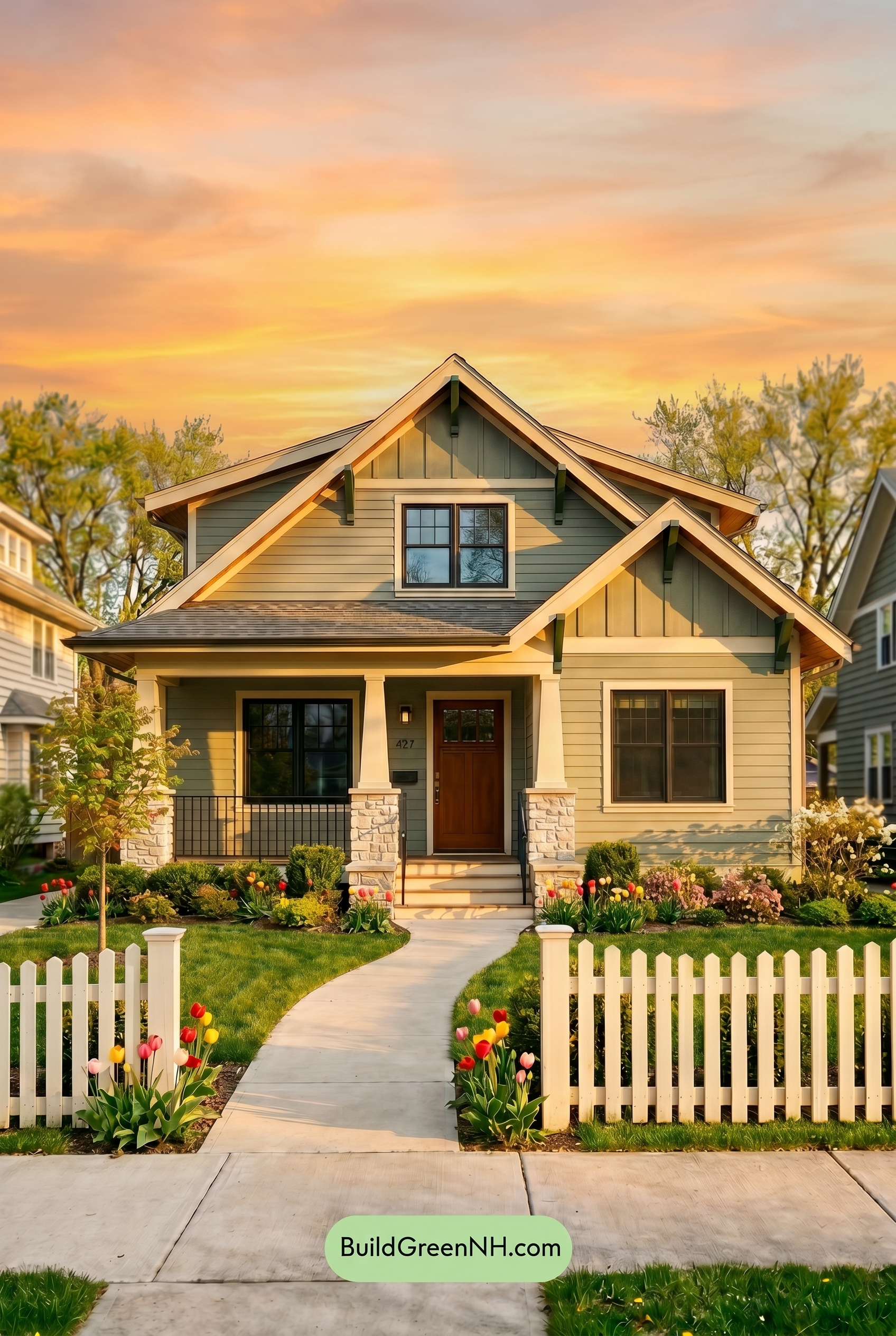
Under Golden Hour light, the green family on the main walls looks warmer and more saturated than it would in neutral daylight, shifting from a calm, muted shade into something richer and more inviting. The white family on the trim and columns takes on a creamy glow, softening the edges of the architecture instead of reading as crisp and bright.
The longer shadows deepen the gray family on the window frames and railings, creating stronger contrast against the glowing trim, while the brown family on the front door feels warmer and more dimensional. Compared with neutral daylight, the whole palette becomes cozier, softer, and more dramatic, with a welcoming evening mood.
Nighttime
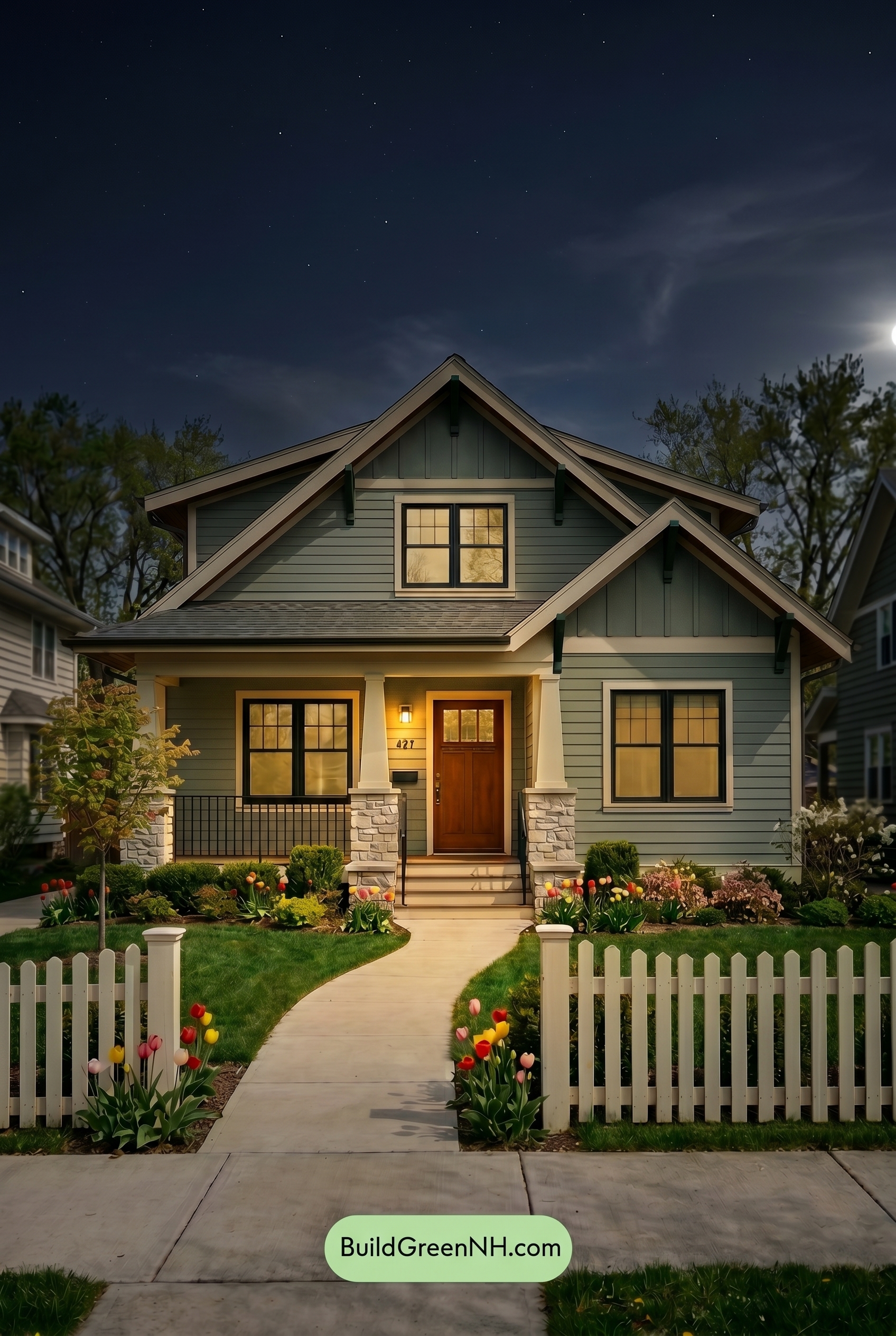
Under nighttime lighting, the green siding appears deeper and more muted than it would in neutral daylight, with shadows adding a richer, softer saturation. The white trim and columns pick up a gentle warmth from the house lights, shifting from crisp and bright to creamy and inviting.
The gray window frames and railings become stronger contrast points against the darker walls, while the brown front door feels warmer and more saturated near the entry glow. Overall, the palette moves from fresh and balanced in daylight to cozy, dramatic, and warmly layered after dark.
Shade
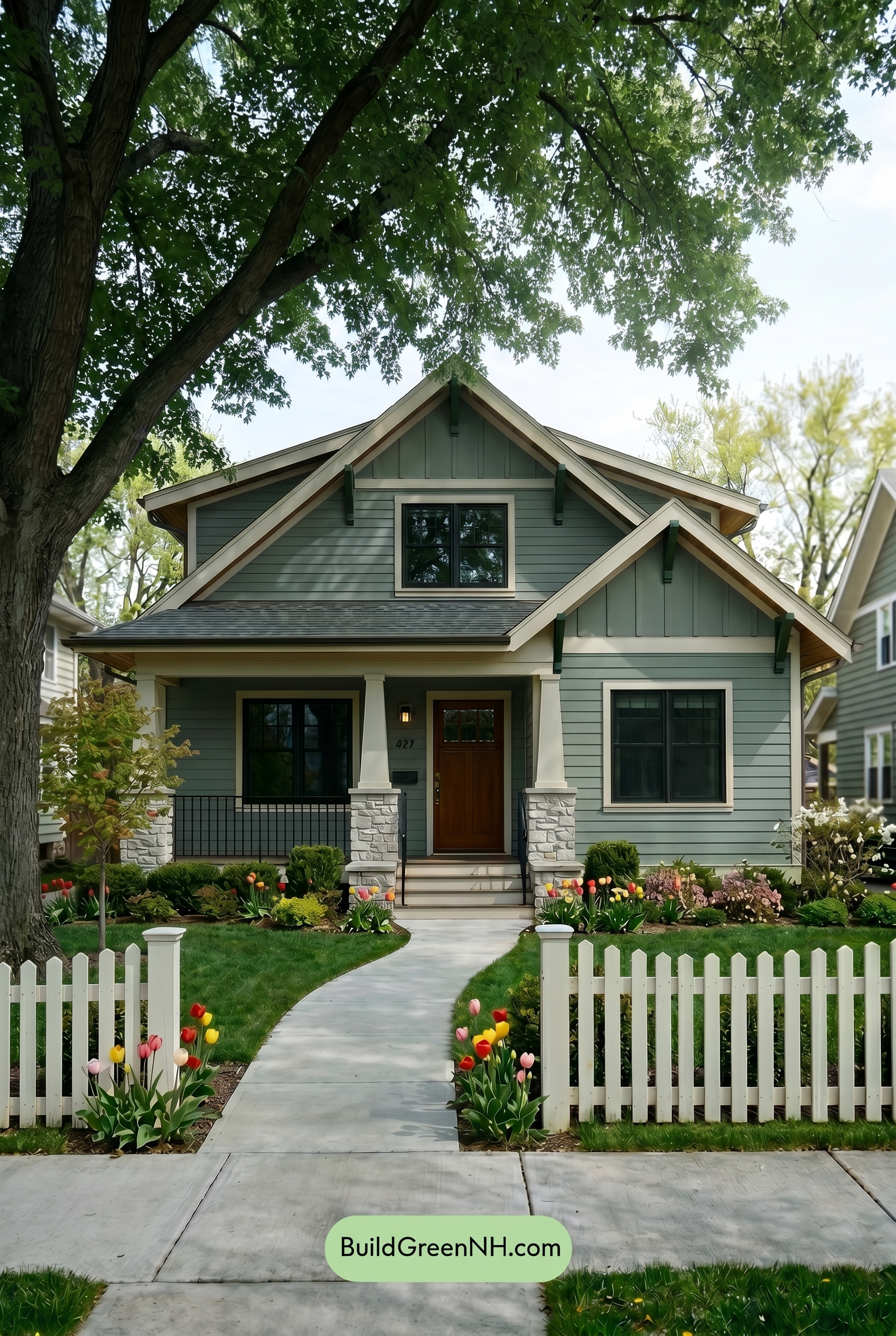
In shade, the green siding deepens and feels more muted than it would in neutral daylight, with less obvious warmth and a softer level of saturation. The white trim and columns lose some crisp brightness, picking up a gentler, slightly cooled look that makes the overall contrast feel calmer.
Shadows from the tree canopy add depth across the gray window frames and railings, making those darker shades read more defined against the softened walls. The brown front door feels richer and quieter, shifting the mood from fresh and bright to shaded, cozy, and grounded.
Pin these for later
Want More?
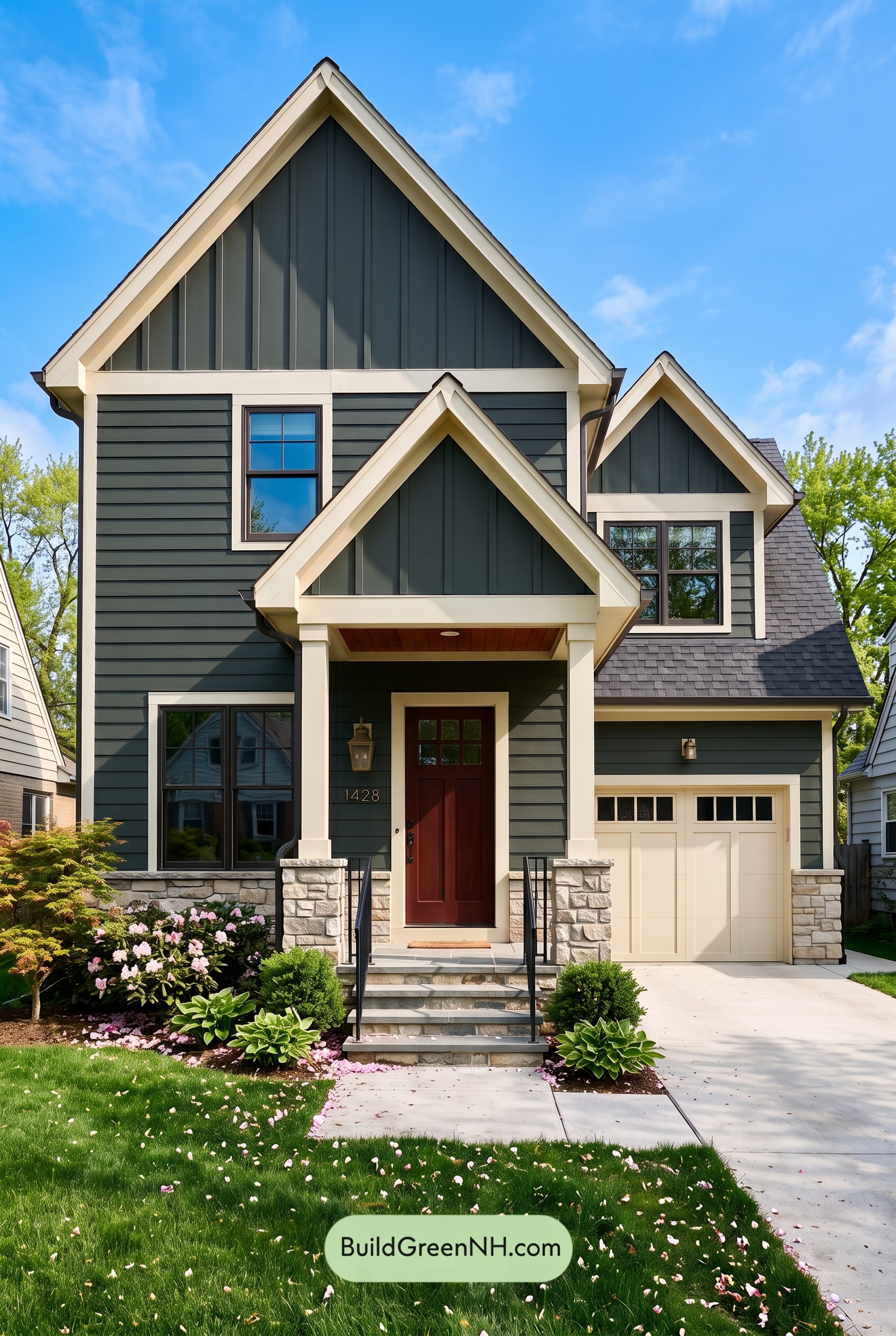 Exterior Color Scheme with Stone Accents: Pine Brass Threshold
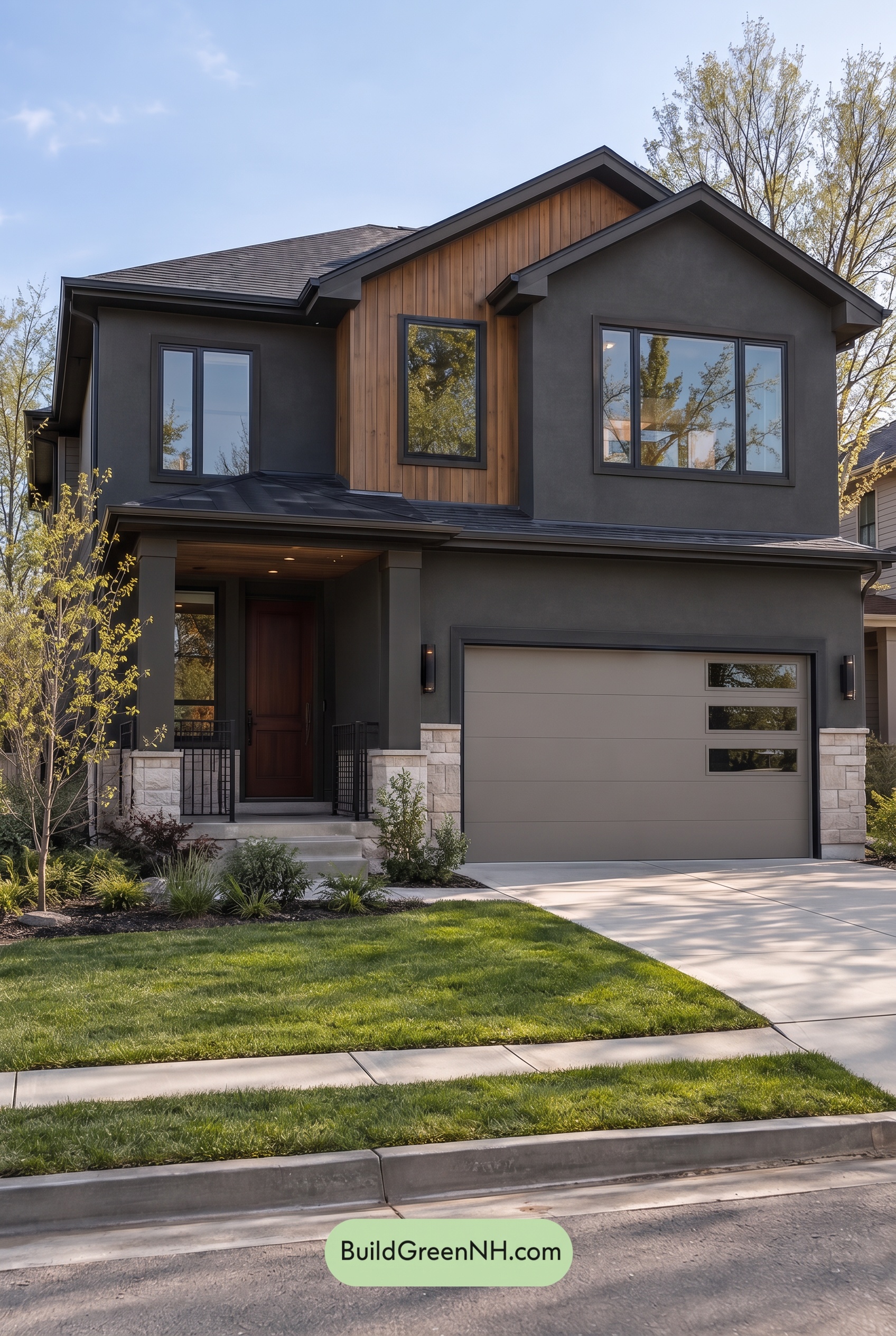
 Exterior Color Scheme with Stone Accents: Evergreen Copper Welcome
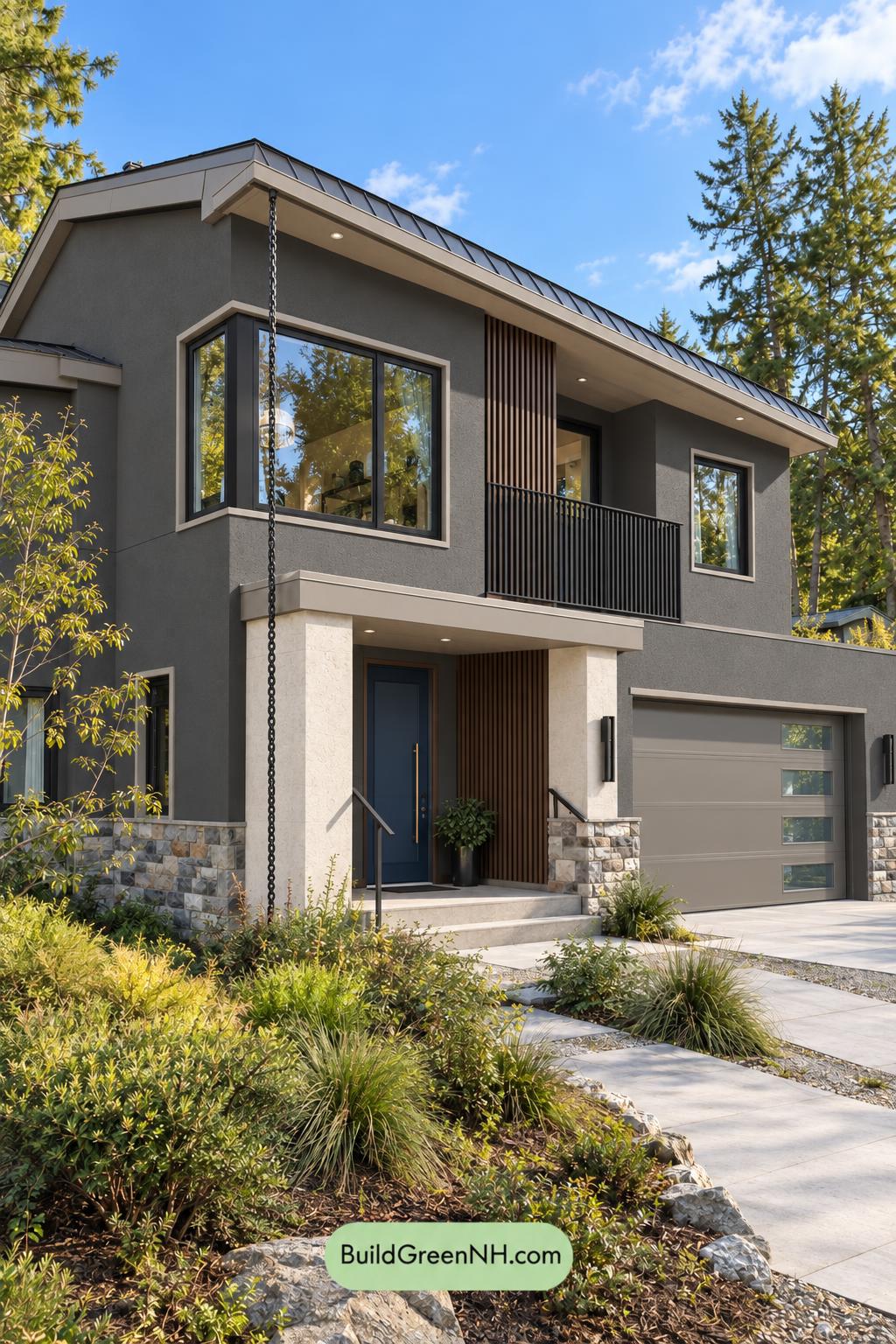
 Dark Stucco House Exterior Color Scheme: Cedar Ember Calm
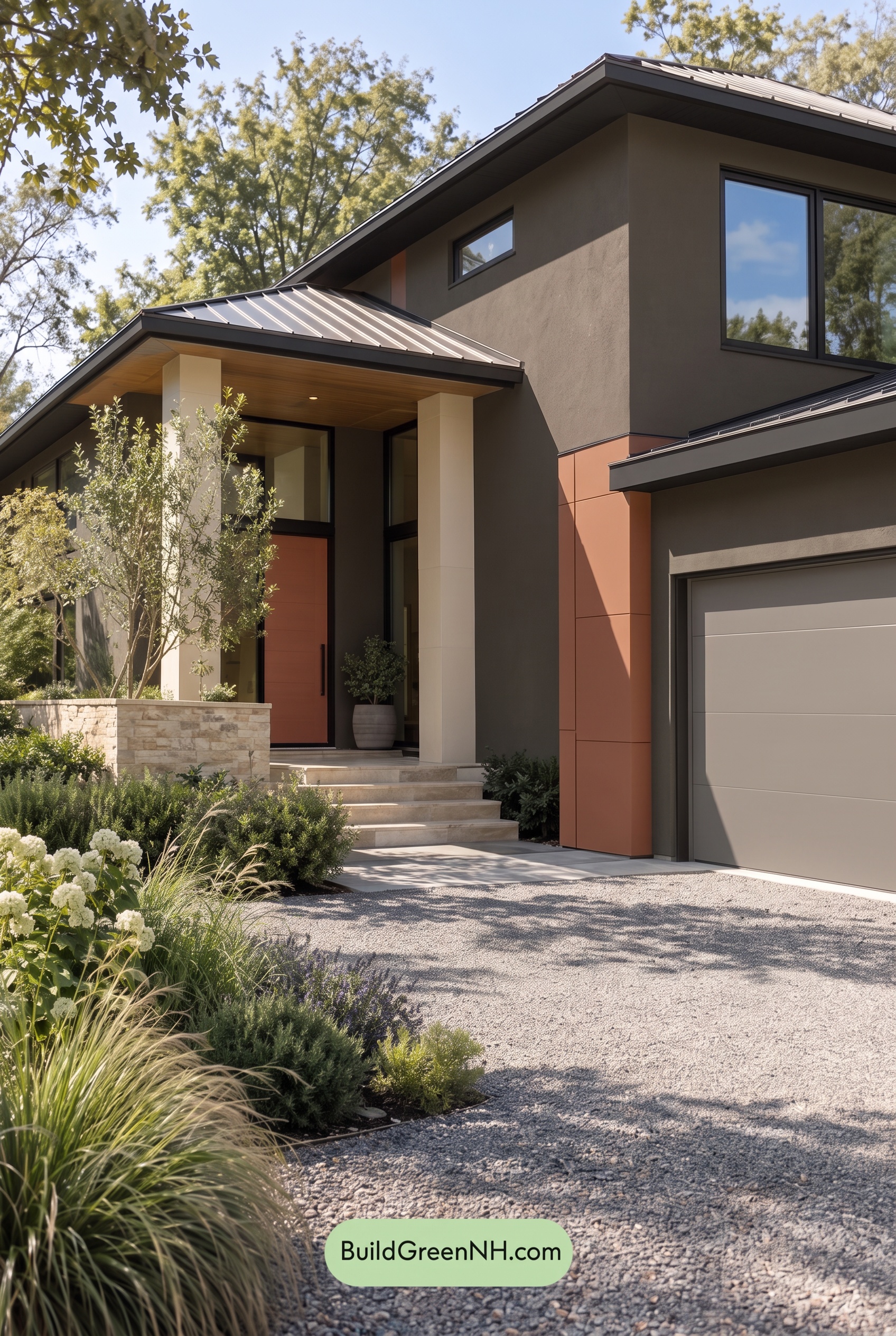
 Dark Stucco House Exterior Color Scheme: Silver Pine Shelter
 Dark Stucco House Exterior Color Scheme: Copper Orchard House
Table of Contents