Last updated on · ⓘ How we make our designs
Our idea is to build luxury mansions on old ruins. See homes where bold, ancient ruin walls meet sleek, calm glass, creating a unique blend of old and new architecture never seen before.
There’s something oddly satisfying about a ruin refusing to retire, and these houses lean right into that. We took cues from forts, abbeys, farmsteads, cloisters, and all sorts of stubborn old walls, then slipped in glass, calm volumes, and just enough polish to keep things from feeling dusty.
What makes these designs matter is the balance. The past stays visible, the new parts stay sharp, and nobody has to pretend a castle kitchen should still work like its 1432.
As you move through the collection, watch the glass links, the planted courtyards and roofs, the long pools, and how each home settles into cliffs, vineyards, lakes, deserts, and sea edges. Thats where the good stuff is, because old stone can be a bit bossy and we rather enjoy seeing it meet its match.
Fortress Courtyard Retreat
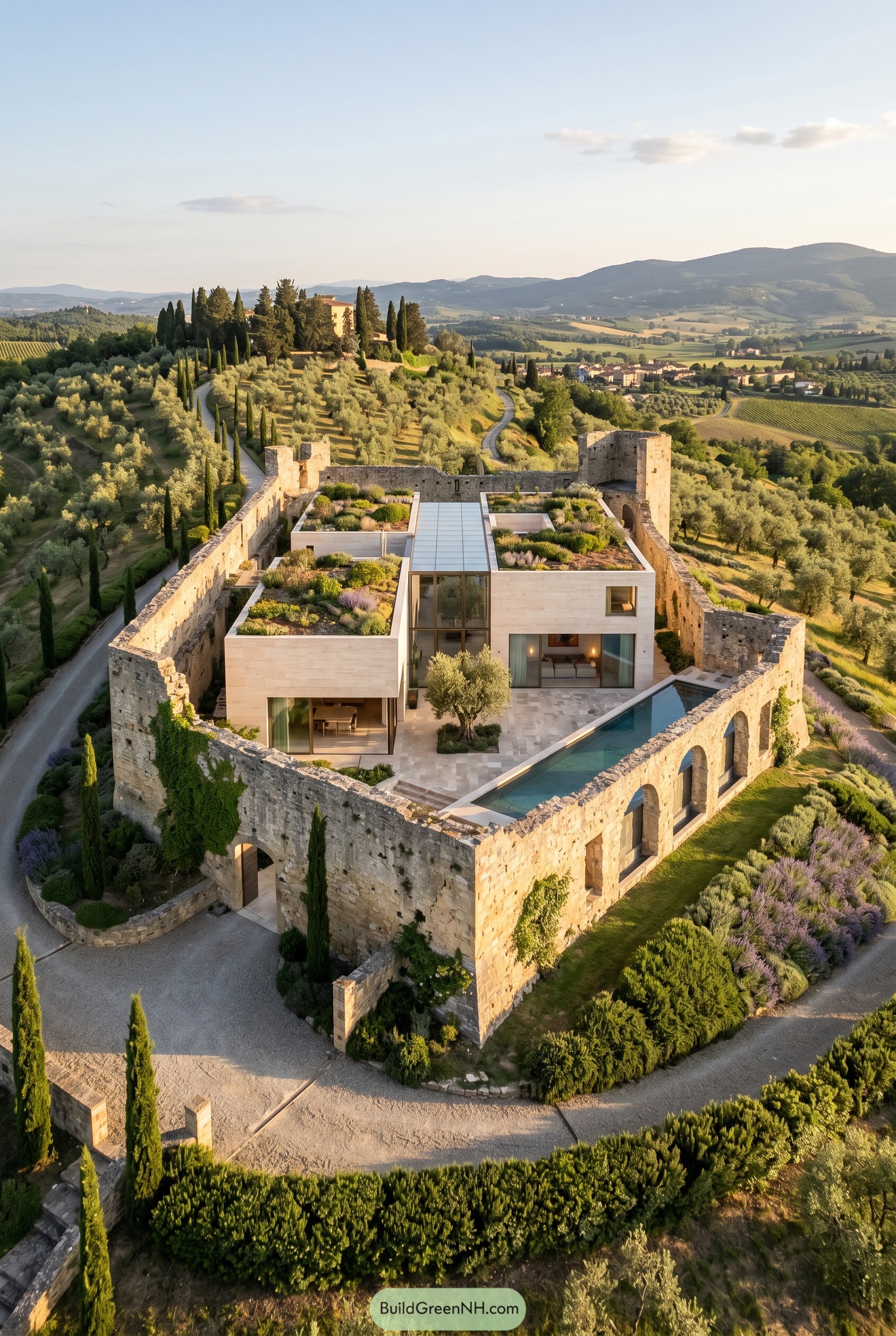



This residence slips a clean lined villa inside a weathered stone fortress, taking cues from Tuscan hill towns and old monastic courtyards. The preserved walls keep the memory of the ruin intact while the pale stone volumes and glass links bring in a calm modern order.
Planted roofs with herbs and grasses soften the geometry, help the house settle into the hillside, and make the courtyard feel wonderfully private. A long pool runs along the inner wall, wide openings keep the rooms connected to the terrace, and the whole place feels like a castle that finally learned how to relax.
Vineyard Abbey Glasshouse
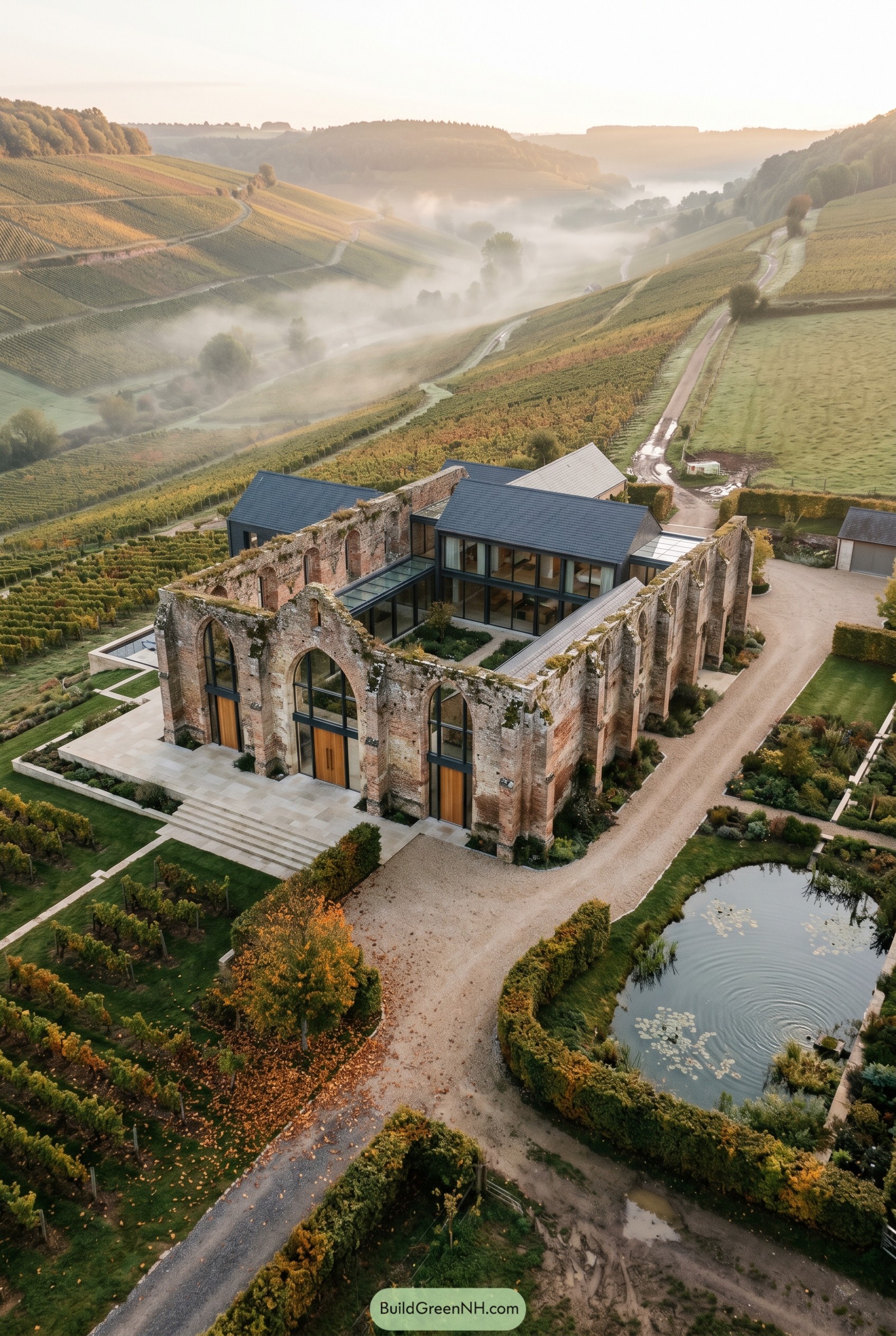

This residence keeps the weathered abbey walls intact and tucks sleek glass living volumes inside them, so the tall arches still frame everything beautifully. We loved that contrast from the start, because it lets the ruin stay soulful while giving it the calm precision of a contemporary retreat.
Dark pitched roofs and slim black frames sharpen the silhouette, and the planted courtyard in the middle stops the whole place from feeling too museum like. The broad stone terraces, oversized arched glazing, and clean inner walkways make it feel open and effortless, which is nice because old ruins can be a bit moody.
Alpine Lake Citadel Loft
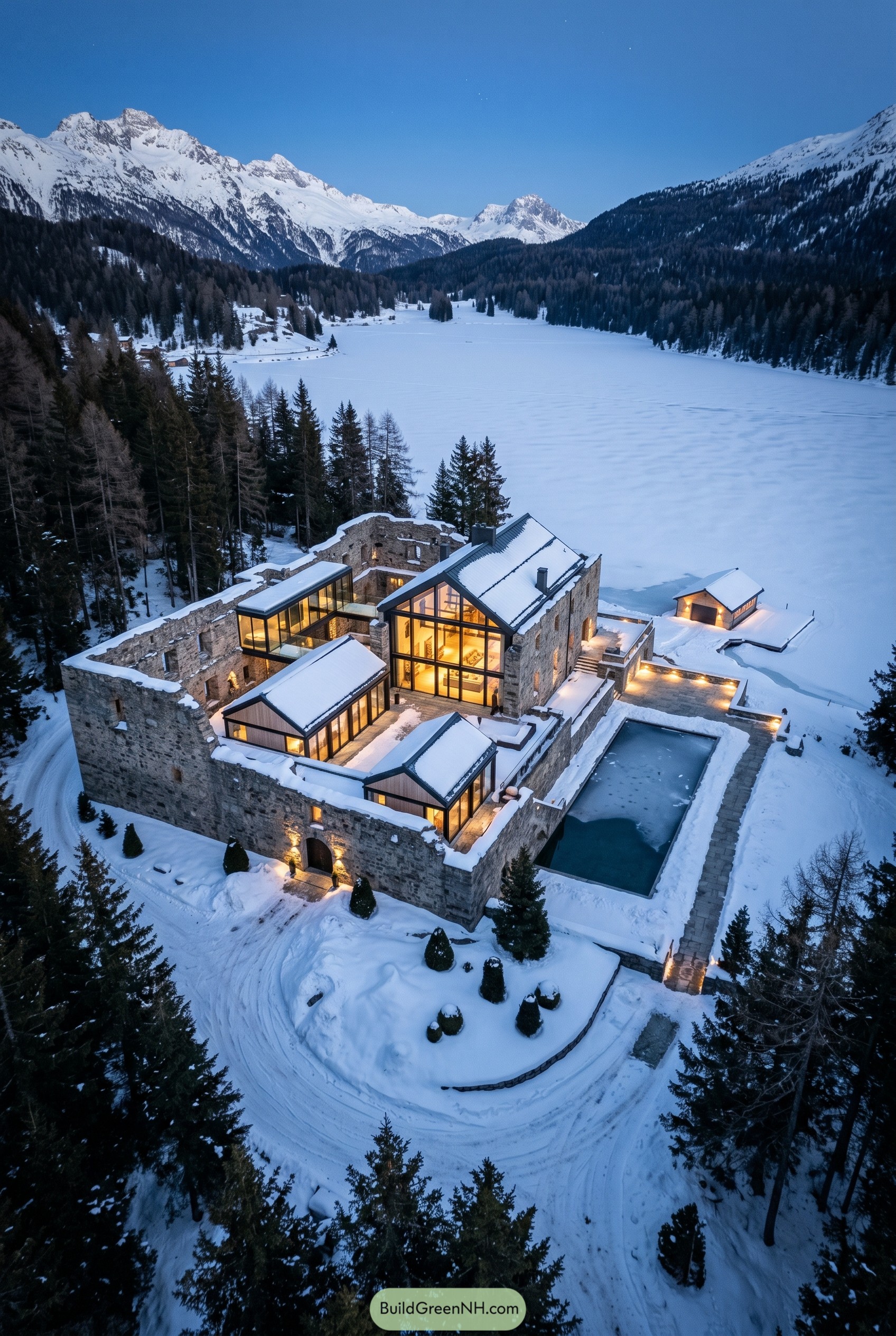

We tucked crisp glass gables inside the weathered stone shell so the place keeps its mountain soul without feeling stuck in a museum. Set beside the frozen lake, the house leans into the view from every angle, and winter looks a little smug here.
The preserved perimeter walls carve out sheltered terraces while the new black framed volumes sharpen the roofline against all that snow. A long pool and a tiny lakeside pavilion pull the whole retreat toward the water, which gives it that rare mix of ruin romance and chalet comfort.
Seabound Bastion Pavilion
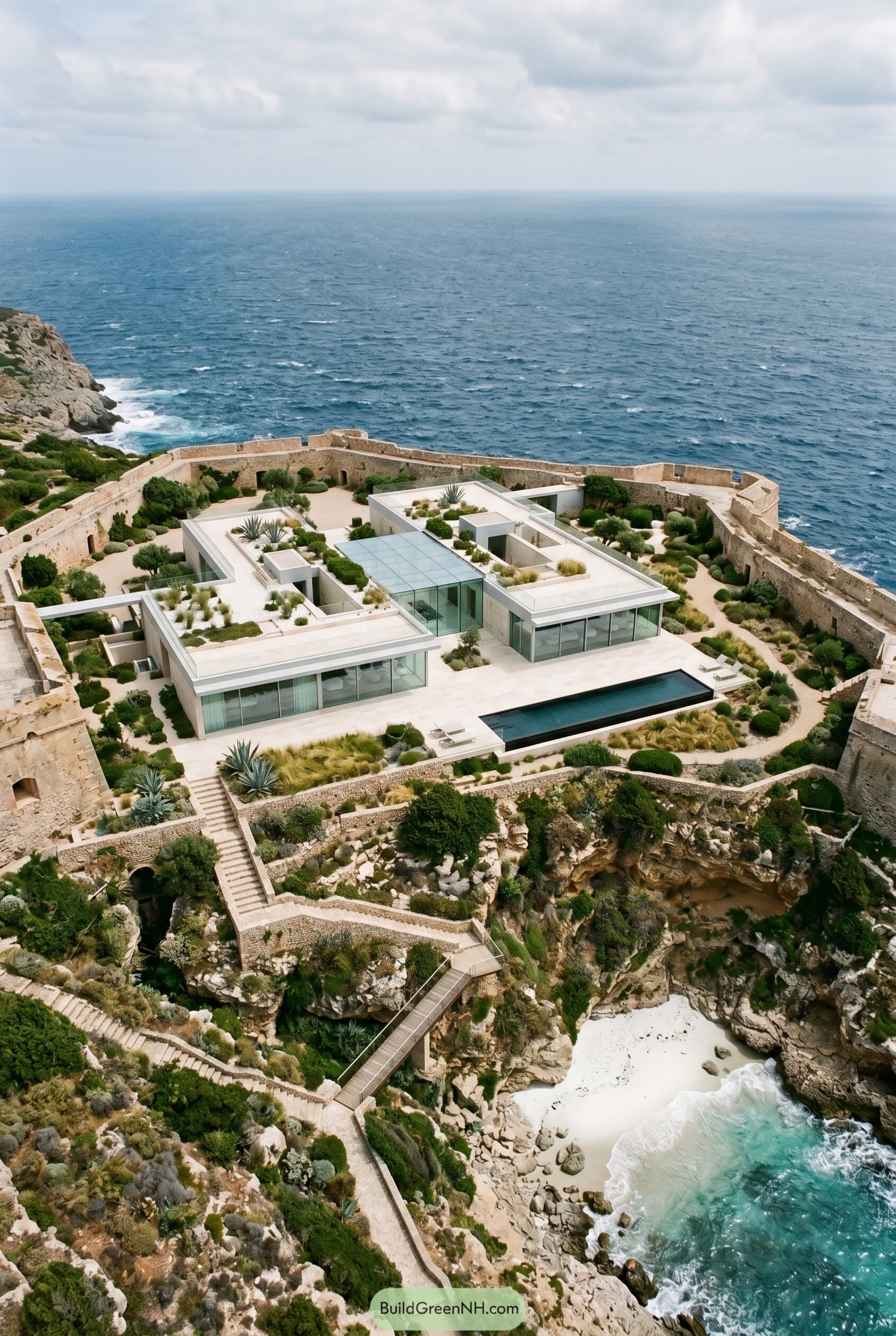

Set inside weathered coastal ramparts, this villa keeps a low profile with clean white volumes, wide glazing, and planted roof terraces that almost read as part of the stone ground. The idea came from the cliff and the fort itself, so the new pieces stay calm and horizontal while the old walls frame the whole place like a very protective grandparent.
A long dark pool pulls the eye toward the sea, and the glass link at the center lets the plan feel open without breaking the courtyard logic of the ruins. Paths, native planting, and the stair down to the tiny cove make every edge usable, which matters on a site this wild because you want the house to feel stitched in, not just parked there.
Desert Kasbah Mirror House
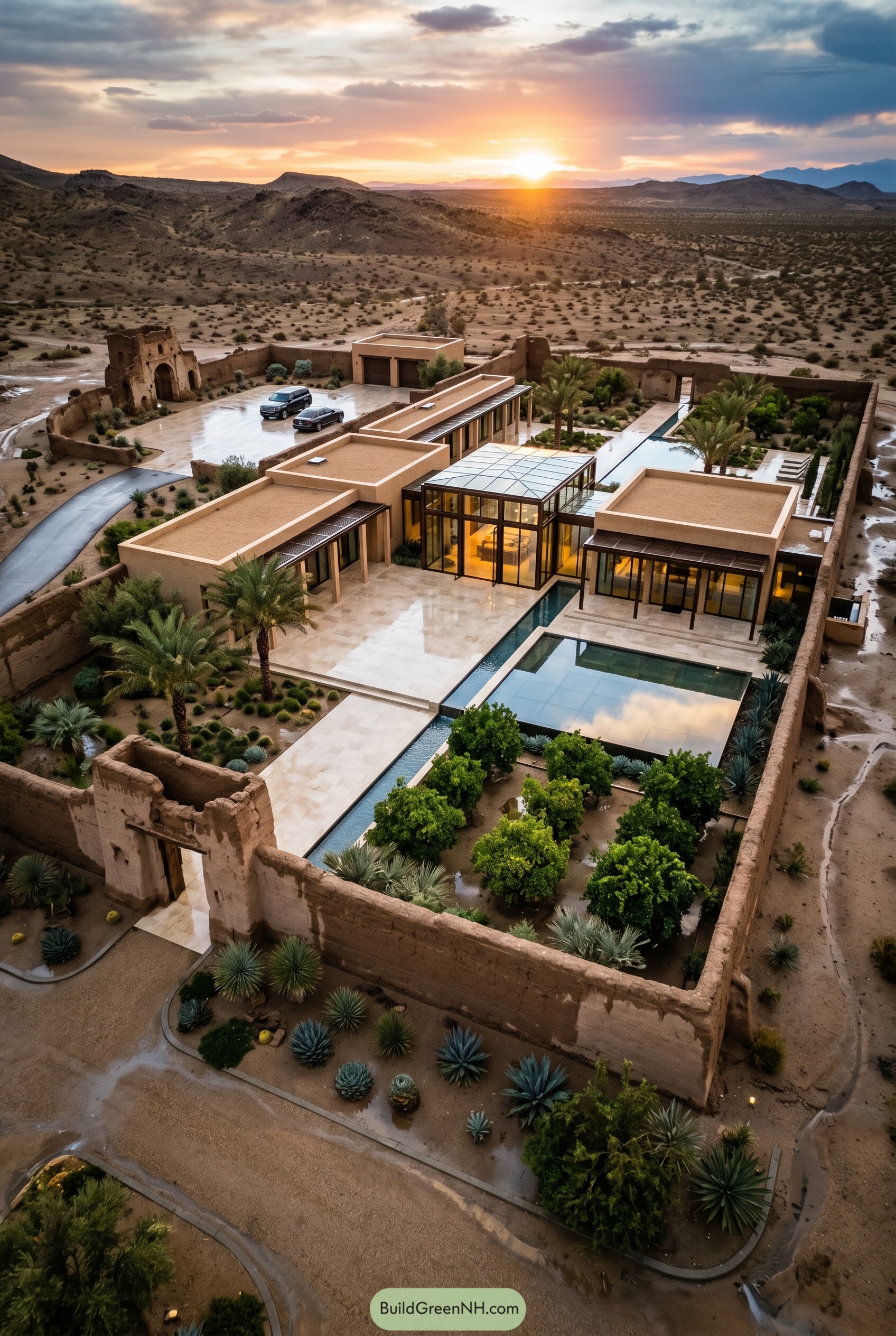

Set inside old earthen ramparts, this residence keeps a low profile with flat roofed wings and a glass heart at the center. We loved pairing the weathered enclosure with these clean lines, because it feels serene and a little bit cinematic without getting fussy.
The design borrows from desert courtyards and garden compounds, so every room opens toward water, palms, and sheltered terraces. That long reflecting pool is basically a sky catcher, and in a place this dry, thats a smart move and a pretty charming one too.
Rose Court Ruin Manor
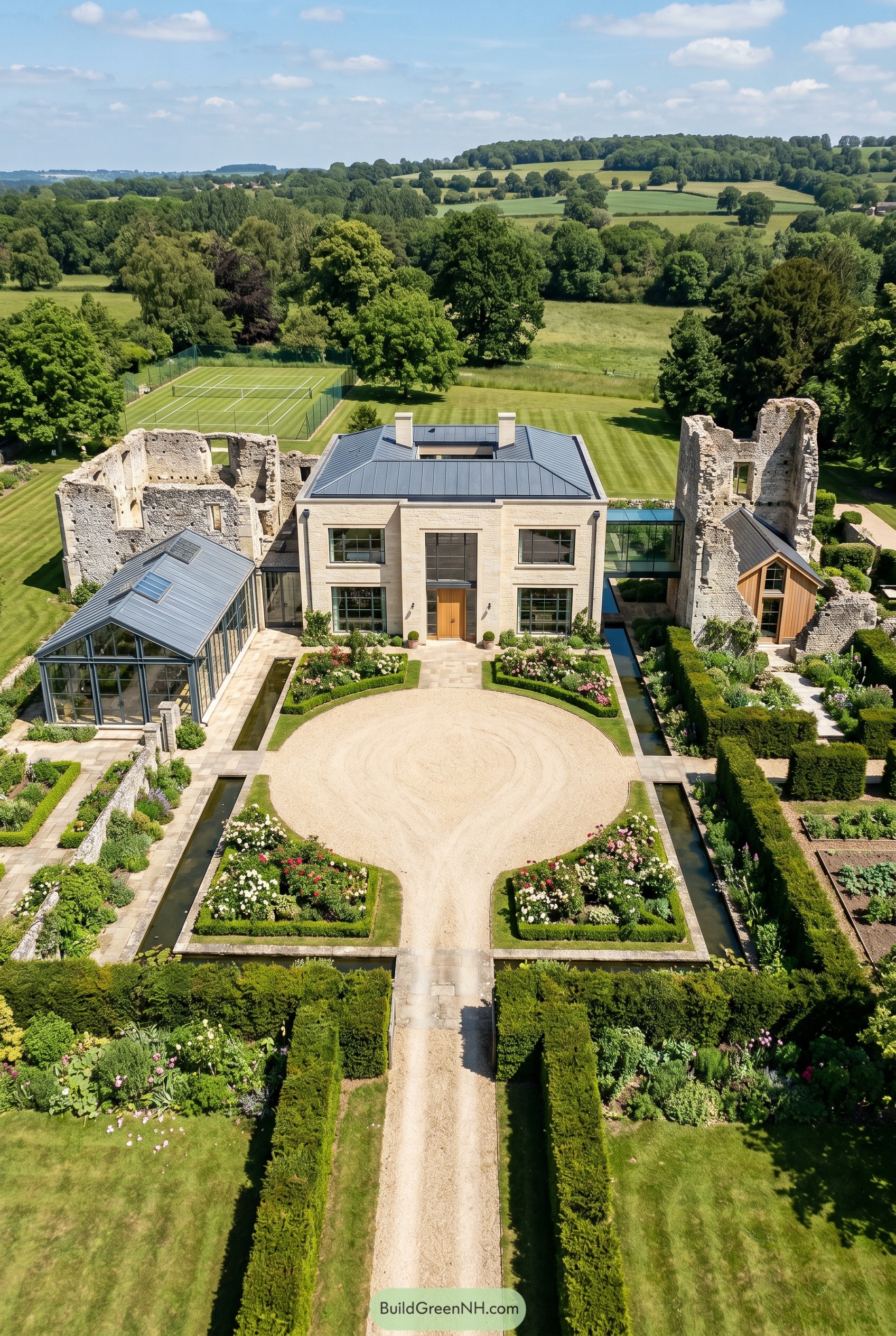

Set between weathered stone remnants, this manor uses a calm, symmetrical plan to make the old walls feel treasured instead of precious. The pale brick volume sits confidently at the center, while glazed links and a greenhouse wing keep the whole composition open and a bit less castle-ish.
The design feels inspired by classic English estates, especially the clipped hedges, water channels, and that sweeping gravel court that gives the approach real ceremony. Those details matter because they soften the contrast between ruin and new build, so everything lands as one polished home rather than a history lesson with fancy windows.
Fjord Watchtower Residence
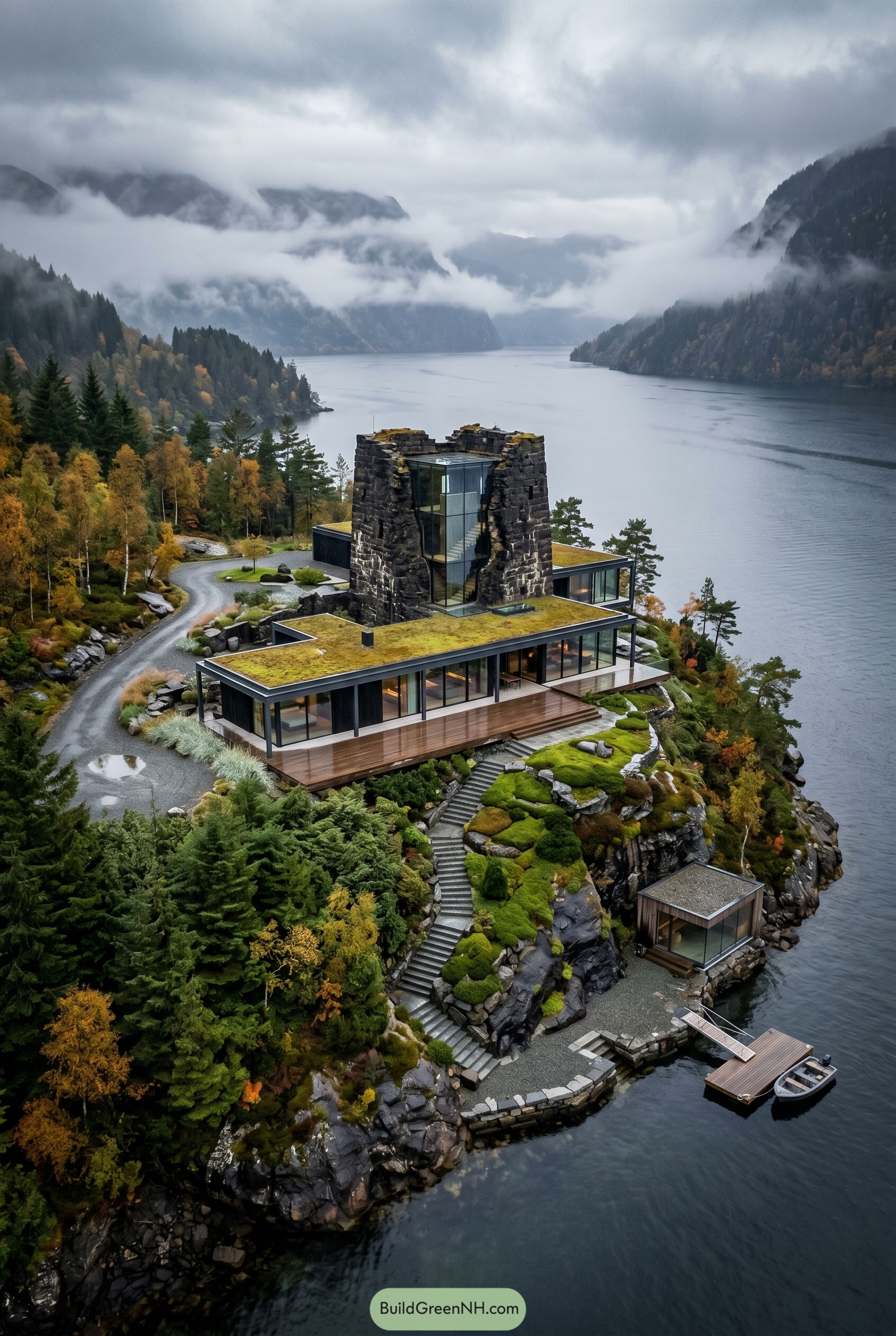

The whole composition grows from a weathered stone keep, with a glass stair hall slipped right through its center like a very stylish secret. Low modern wings stretch along the cliff in dark metal and full height glazing, keeping the old tower as the anchor and the sweeping water view front and center.
The design borrows its cues from the rugged fjord edge, so the green roofs, timber terraces, and stepped garden paths help it settle into the rock instead of perching there like a nervous guest. A small waterside pavilion and private dock complete the retreat beautifully, because arriving by boat is still a pretty great flex.
Canopy Ruin Skybridge Villa
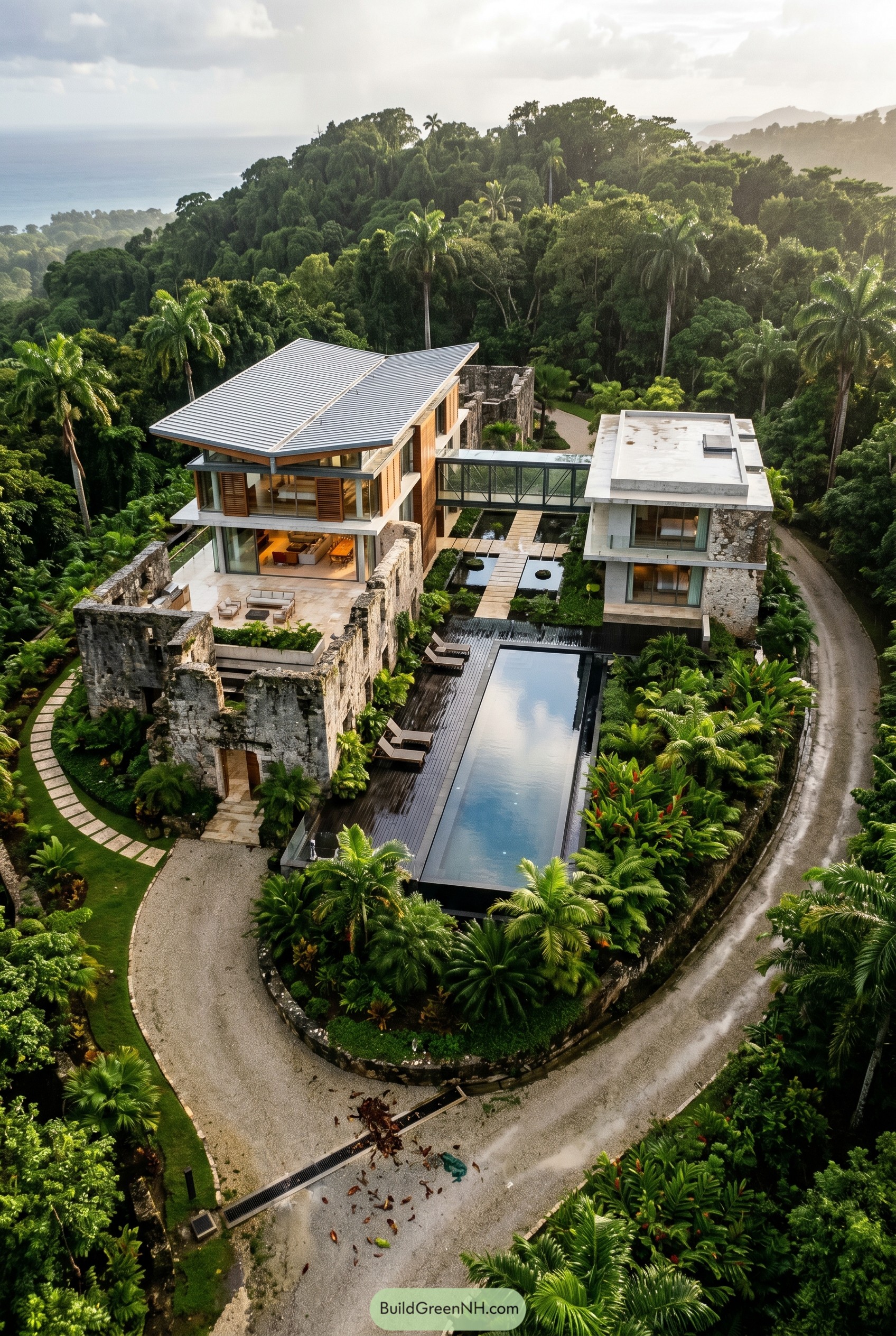

Old stone walls are kept right where they belong, then fresh glass volumes and warm timber rooms slide neatly inside them, with a glazed bridge stitching the whole place together over still water. It was inspired by the idea that a ruin should not be tidied into boredom, so the design lets the weathered shell keep its scars and a bit of swagger.
Wide roof planes, shaded terraces, and louvered openings make the house feel easy in the tropical setting, while the long lap pool pulls the plan into one calm line. Those moves matter because they cool the rooms, frame the garden at every turn, and stop the mansion from feeling too precious, which is handy since old stone can be a little bossy.
Lavender Cloister Horizon House
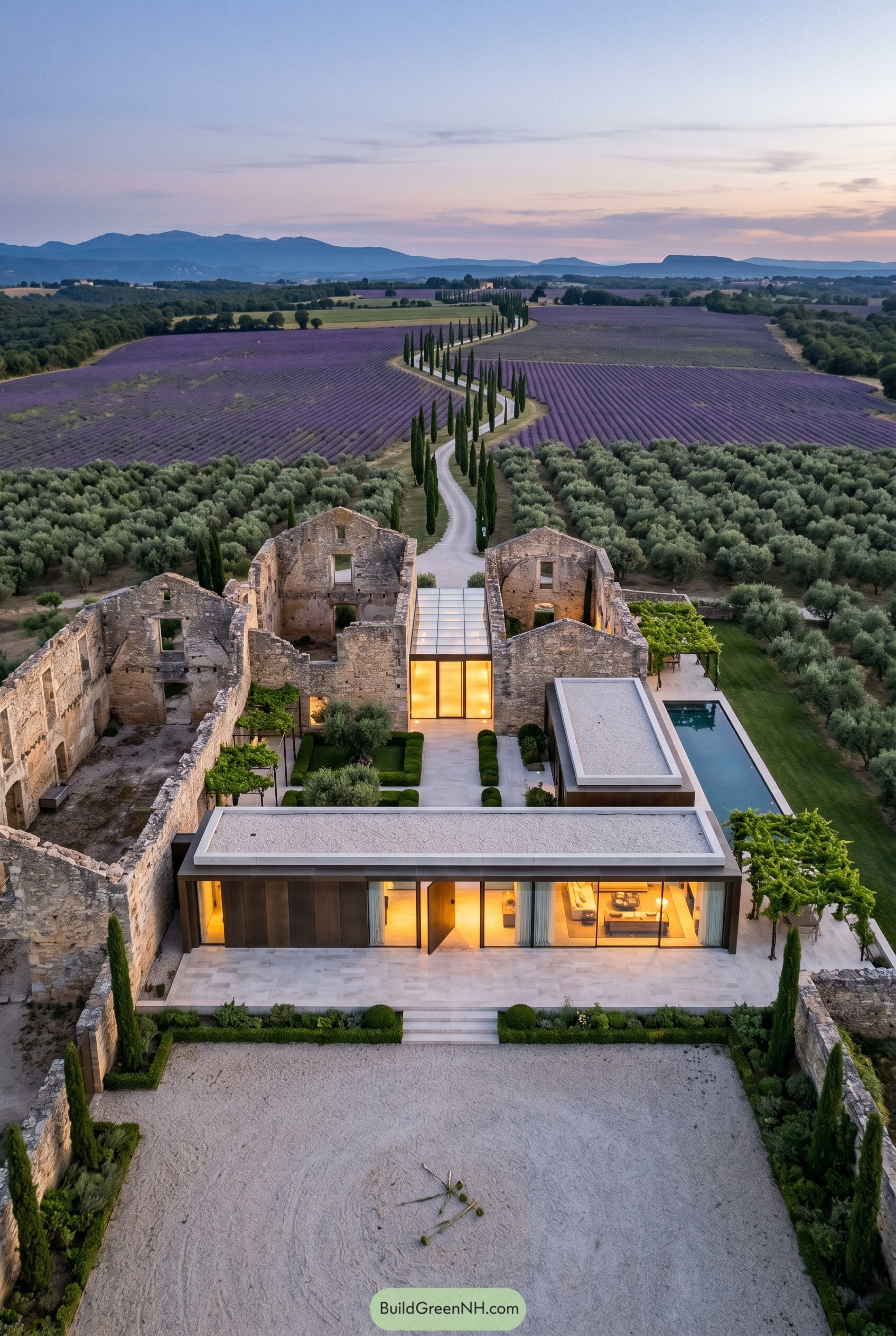

Set inside weathered stone walls, the new living wing stays low and calm, with broad glass fronts that open the courtyard to the fields beyond. We shaped it to feel like the landscape had a very polished second thought, which sounds fancy but really means we knew when to stop.
The glazed link at the center neatly stitches the ruined volumes together, while the pool and clipped gardens bring order without scrubbing away the romance. Flat roofs, warm bronze cladding, and long horizontal lines keep the addition quietly modern, so the old masonry still gets its moment and nothing feels showy.
Meadow Chapel Creek Lodge
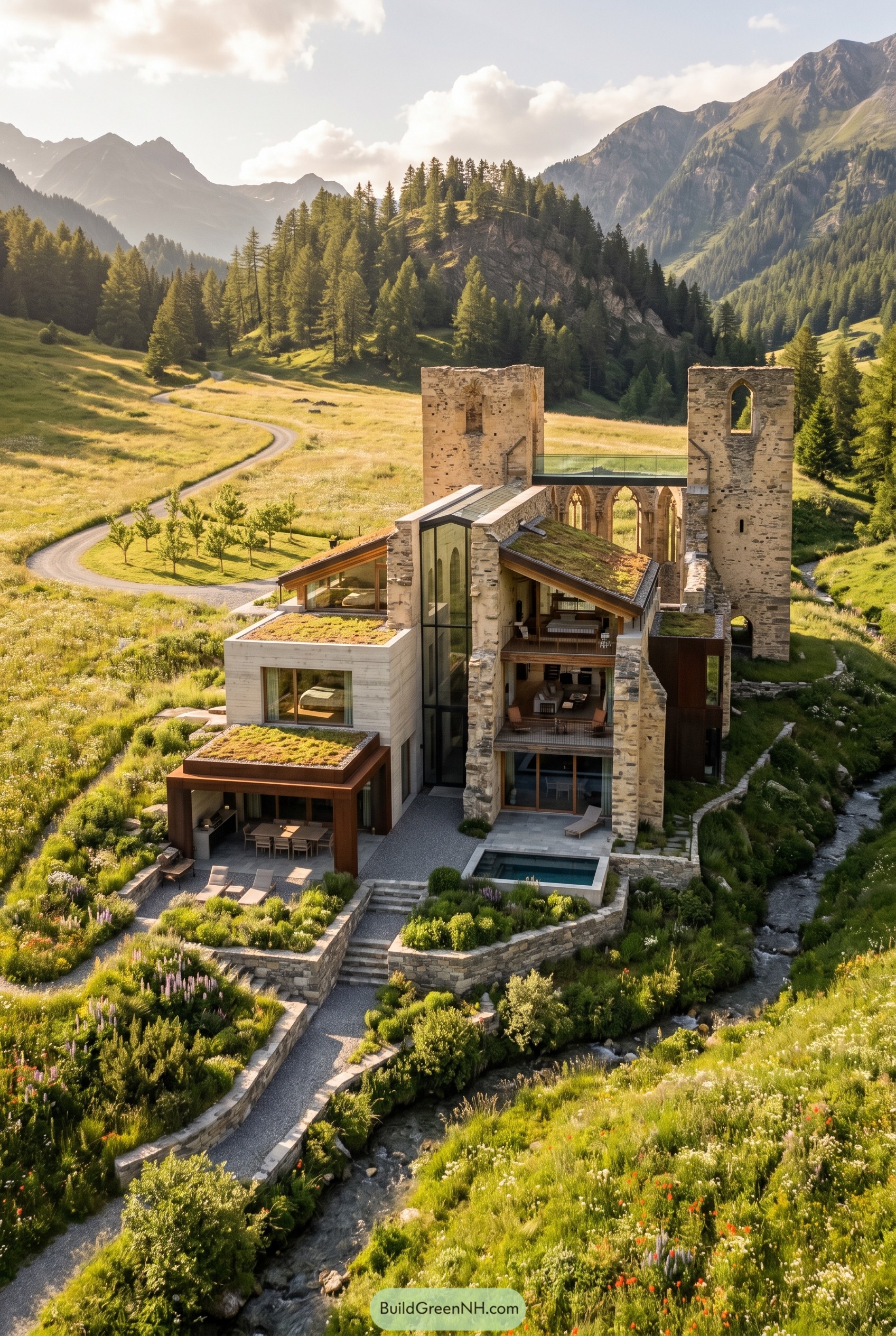

Set into a wildflower meadow beside a narrow stream, this residence folds crisp concrete, warm timber, and tall glass into the weathered shell of a ruined chapel. The old towers and pointed arches stay proudly in place, which gives the whole home that rare feeling of being both tucked in and a little heroic.
We shaped the newer volumes low and layered so the historic walls still lead the show, because they’ve waited long enough for good lighting and a second act. Green roofs, deep terraces, and a glazed stair core soften the transition between ruin and home, while the bridge-like walkway and pool edge pull your eye straight through the stone bones to the valley beyond.
Loch Ringwall Wintergarden
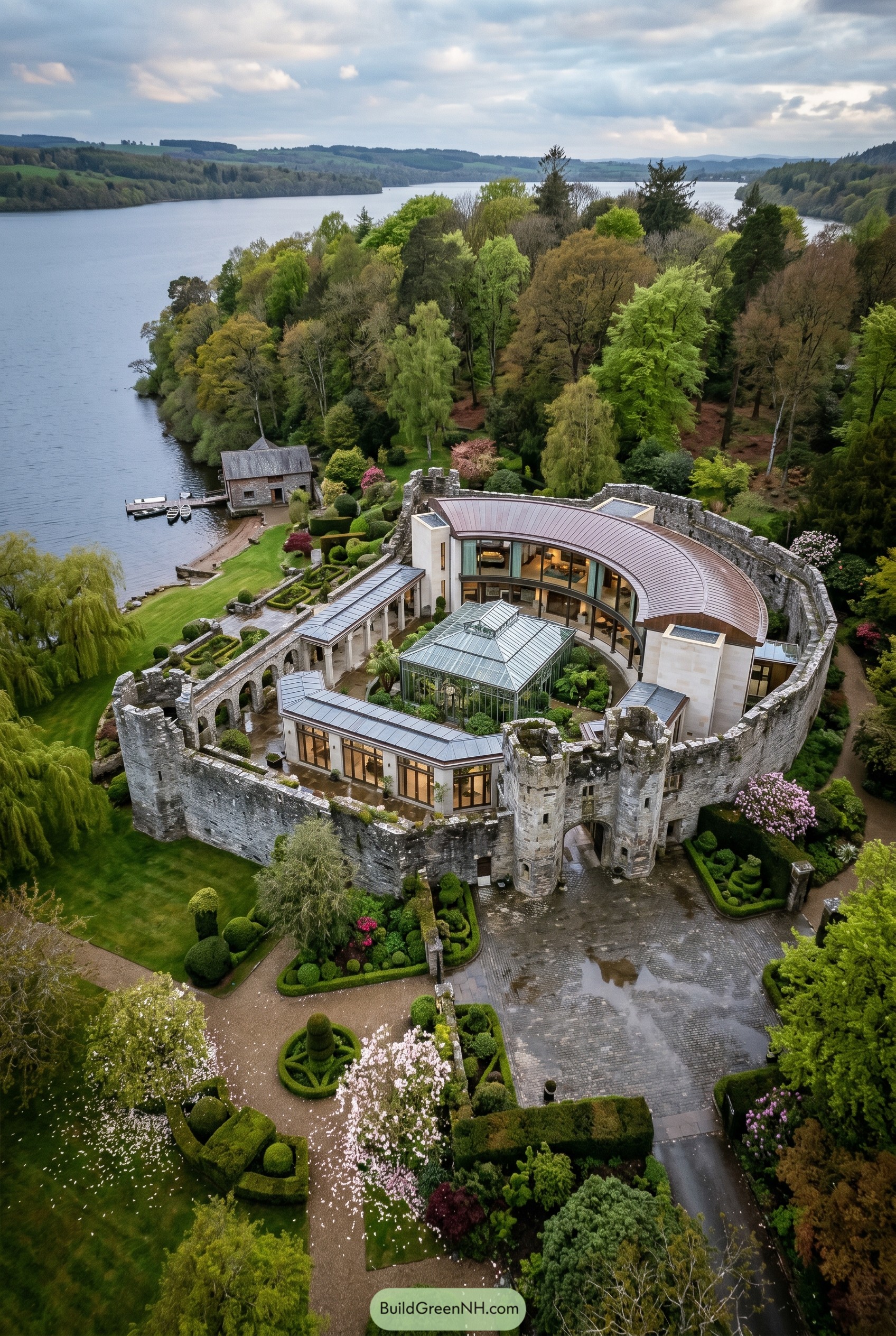

Set inside a weathered ring of stone, this lakeside residence curls a sleek living wing around a lush glass wintergarden. We liked keeping the battlements a bit stubborn while the big glazed walls open the rooms straight to the water.
The plan turns the old courtyard into a sheltered garden retreat, with arcades, low pavilions, and a copper roof that follows the ruin instead of picking a fight with it. That choice keeps the history easy to read and gives the whole place a quietly lavish feel, like a castle learned some new tricks.
Mossbound Tea Court Estate
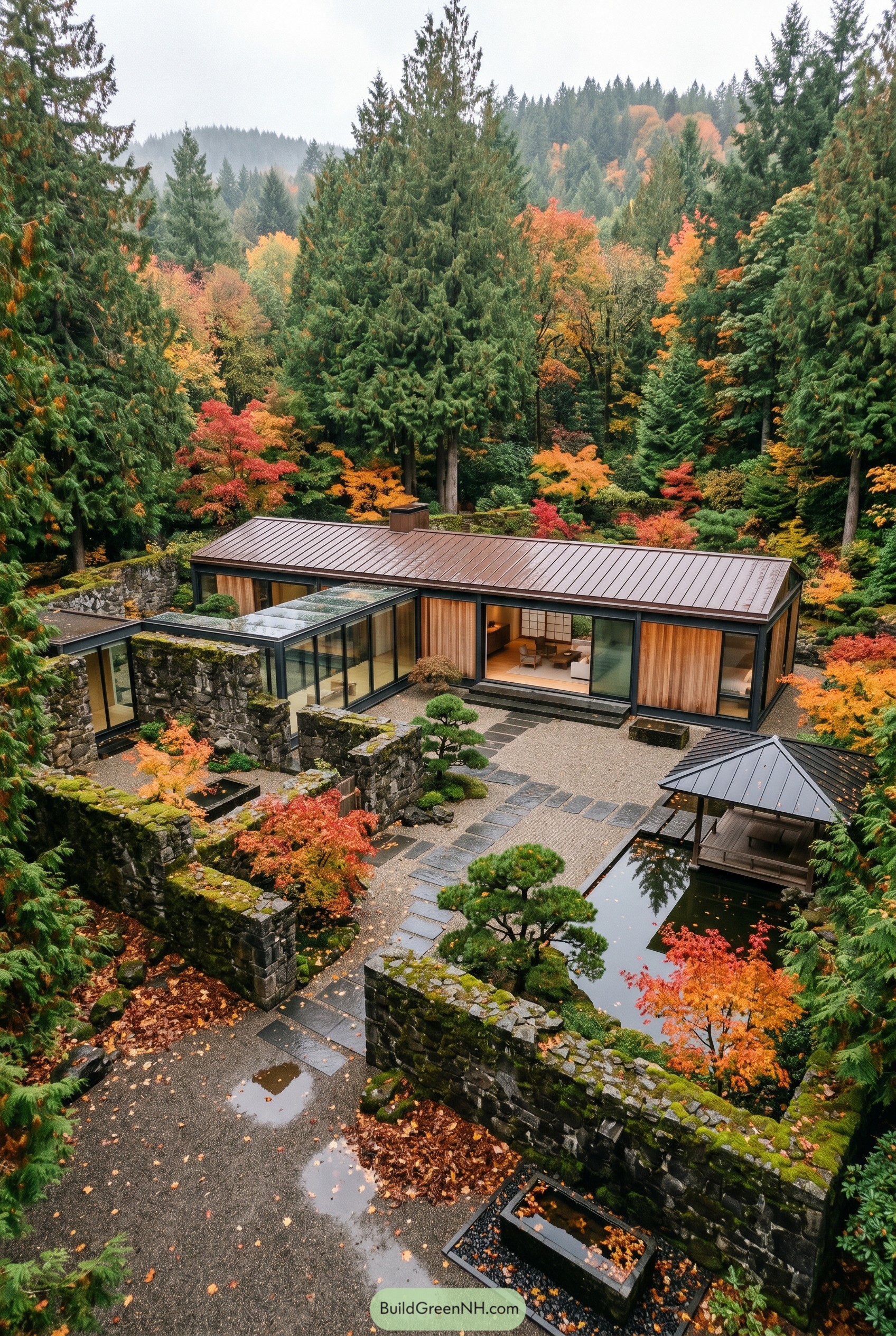

Set inside weathered stone remains, this cedar and glass home borrows a calm tea garden mood and gives it a very grown up upgrade. The long low roof keeps the new volume quiet in the trees, while the glazed connector lets the old walls stay front and center, which feels right and a bit smug in the best way.
The courtyard is shaped with gravel, stepping stones, clipped pines, and a still pond that slows everything down on purpose. Those mossy ruin walls frame the arrival and the views, so every room gets a sense of shelter without feeling boxed in, and yes, the little pavilion by the water is absolutely showing off.
Cypress Vale Walled Farmstead
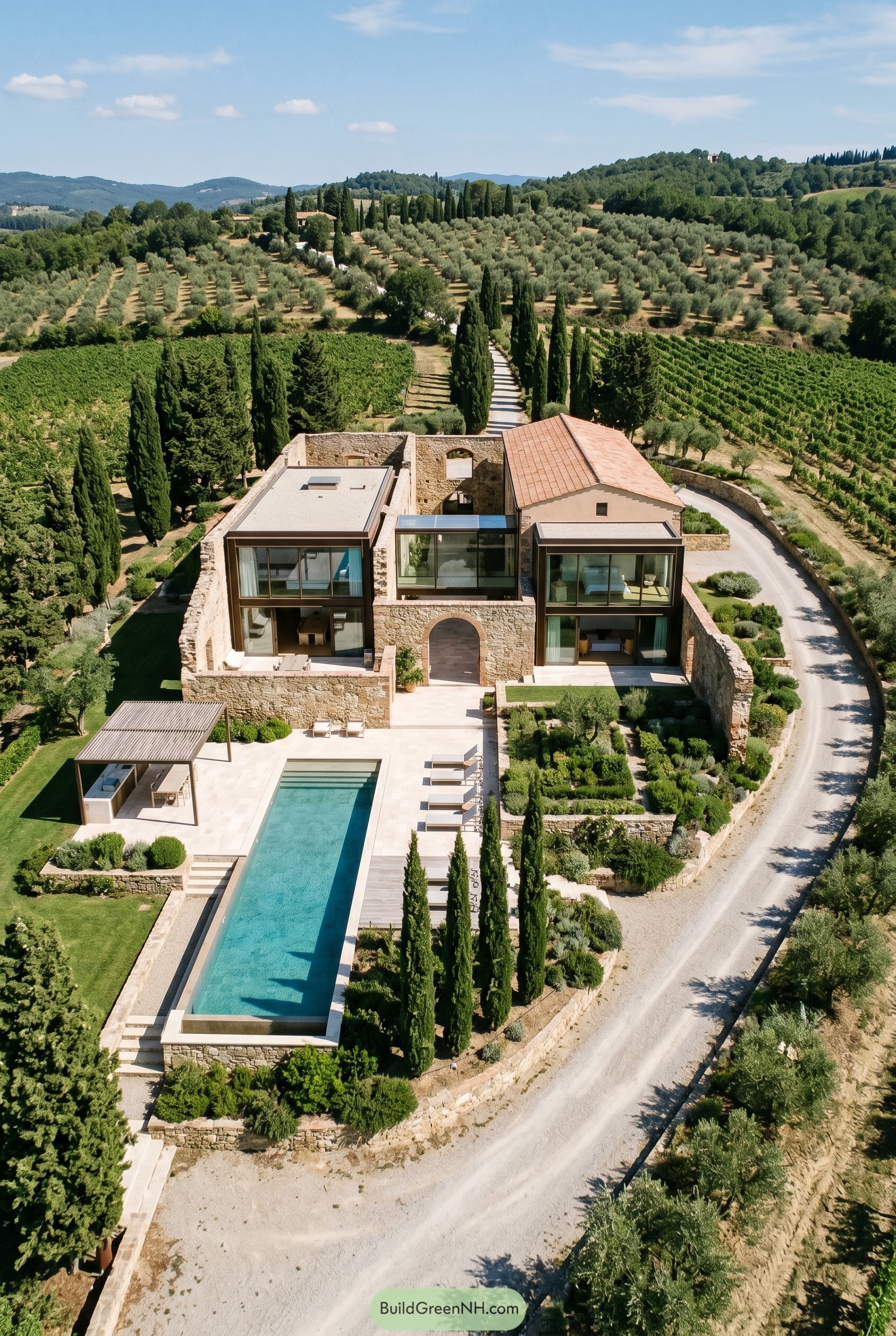

Set inside weathered stone walls this countryside residence slips sleek glass volumes into the old footprint and lets the ruin keep its swagger. We shaped it to feel rooted in the olive hills around it so the new additions stay crisp and quiet while the original masonry still gets top billing.
The long pool and shaded outdoor kitchen stretch the plan toward the landscape which makes the whole place read like a private little hamlet with very good taste. Big framed openings pull vineyard views deep into the rooms and the mix of rough stone with slim metal edges just works, kind of like hiking boots with a cashmere coat.
Pasture Keep Glass Courtyard
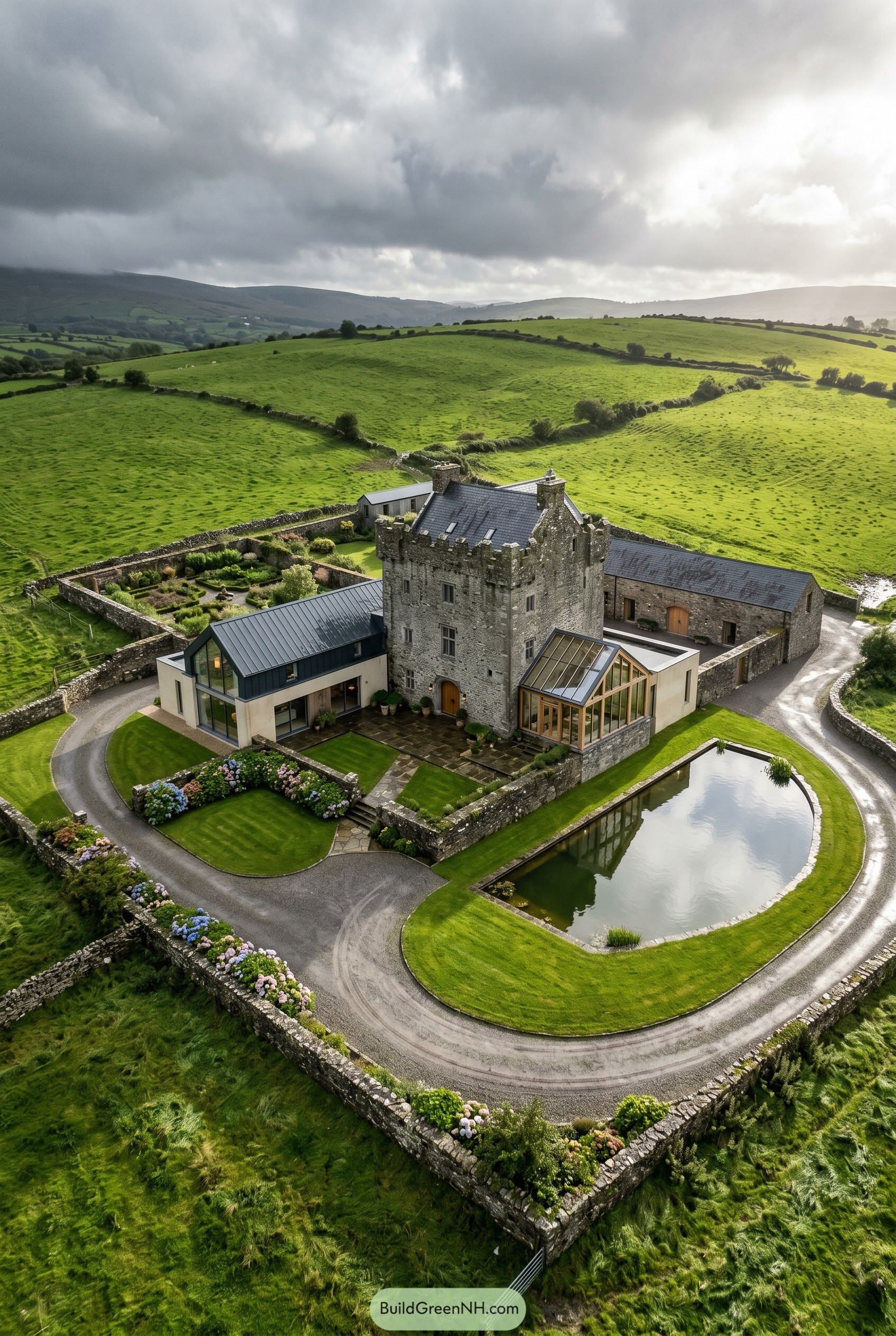

This one wraps a weathered stone keep with two crisp new wings, one tucked under a dark pitched roof and the other shaped like a glass garden room. We kept the old tower squarely in charge while the new pieces sit low and calm around it, like polite guests who know whose castle it is.
The design borrows from walled farmsteads and the soft green hills beyond, which is why the courtyard, clipped lawns, and curved reflecting pond feel so settled here. That contrast matters because the rough masonry carries the story, while the generous glazing opens the rooms to the landscape and keeps the whole place from feeling stiff.
Tidewall Oasis Residence
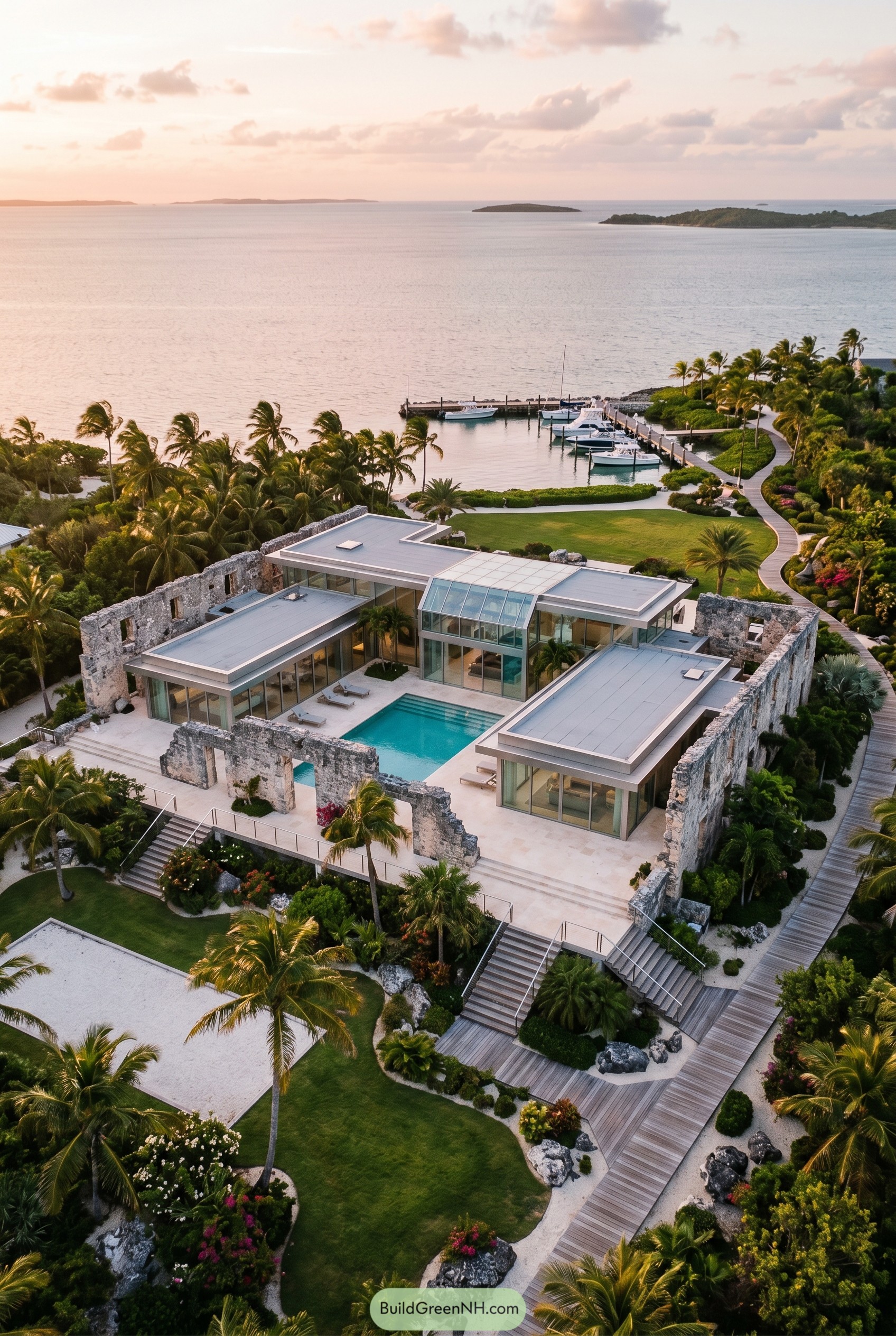

Set inside weathered coastal walls, this residence pairs a crisp low glass plan with the rough old shell in a way that feels oddly easy and very elegant. The layout wraps a central pool, so every room stays close to water, garden, and that nice feeling of being tucked inside history without living like a pirate.
We kept the rooflines flat and quiet to preserve the long sea view, while the glazed middle pavilion links the wings and pulls the courtyard right into daily life. Broad terraces and generous stairs soften the ruin edges, which really matters because the whole place should feel like a tropical hideaway, not an old fort that suddenly discovered skincare.
Canyon Eyrie Relic House
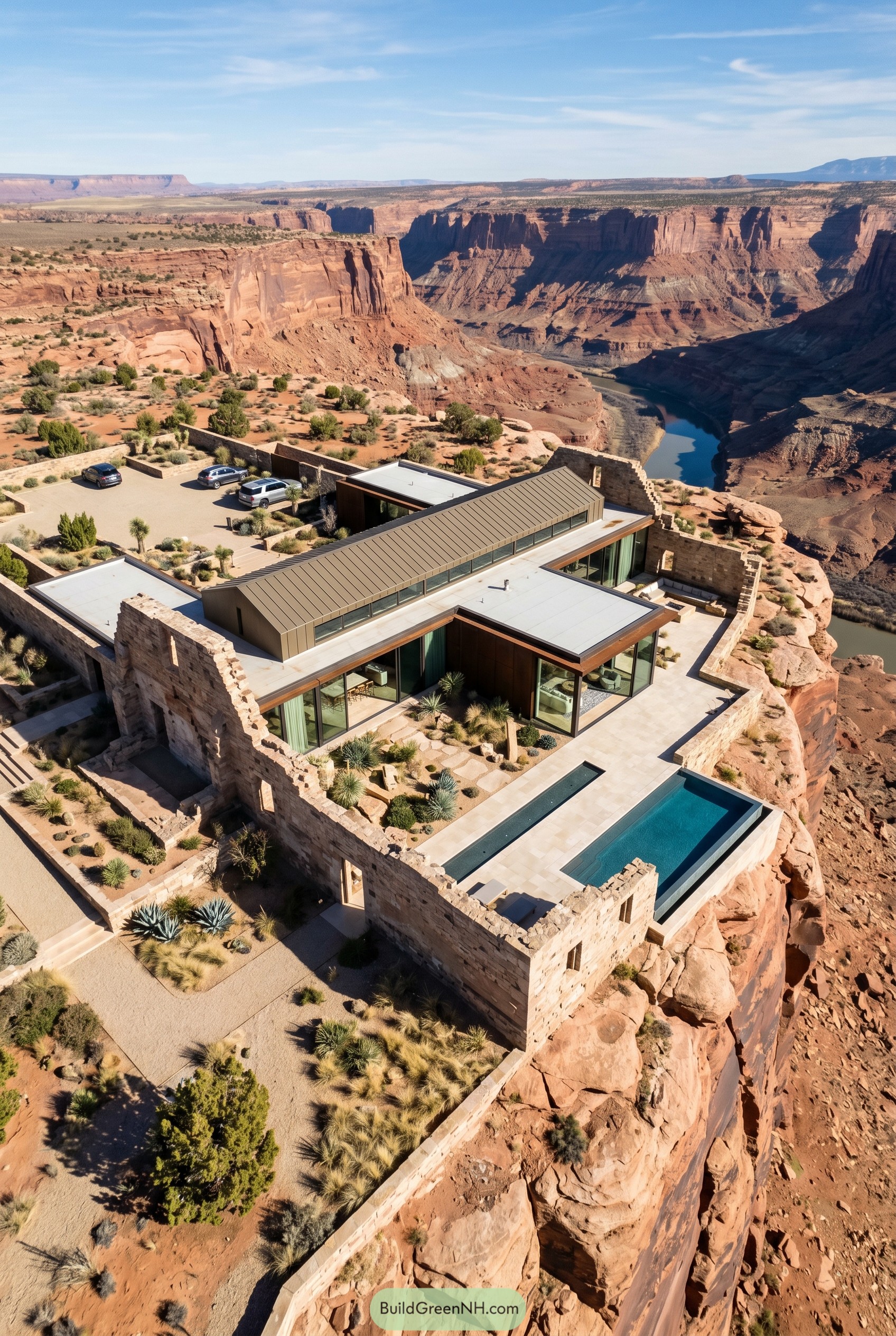

Set into a weathered stone shell on the canyon rim, this residence slips a crisp glass and metal volume through the old walls without trying to outshout them. The idea came from the mesa itself, so the roof stays low, the lines stay long, and every room leans toward that enormous bend in the river.
A courtyard of gravel, native planting, and broad terraces softens the hard edge of the cliff and gives the house places to pause before the view steals the show again. The lap pool is tucked right against the ruin wall like a very confident ribbon of blue, which makes the whole place feel calm, a little wild, and just fancy enough to grin about it.
Snowpine Chimney Court
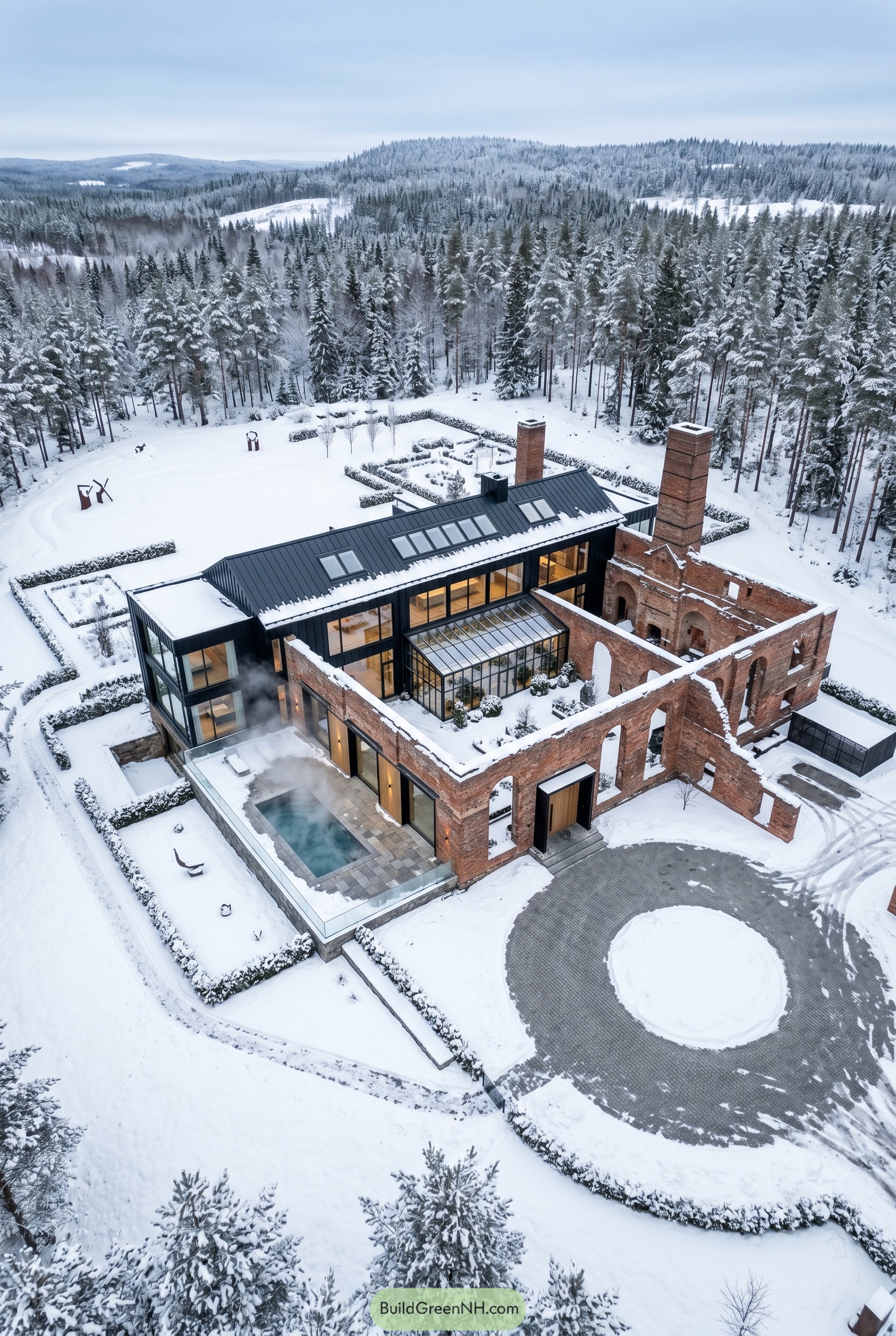

Wrapped by roofless brick walls and twin chimneys, this winter estate slips a crisp black volume into the old footprint so neatly it feels almost cheeky. The preserved arches keep the ruin’s memory in view, while the long glazed rooms and central conservatory turn what could have been a relic into somewhere you’d happily hide out all January.
We drew on the rough character of an old industrial shell and the hush of the surrounding pine forest, so the palette stays restrained and the geometry stays clean. That contrast matters, because the warm glasshouse, sheltered courtyard, and steaming pool need those rugged brick edges around them or the whole thing gets a little too polite.
Heather Moor Redoubt House
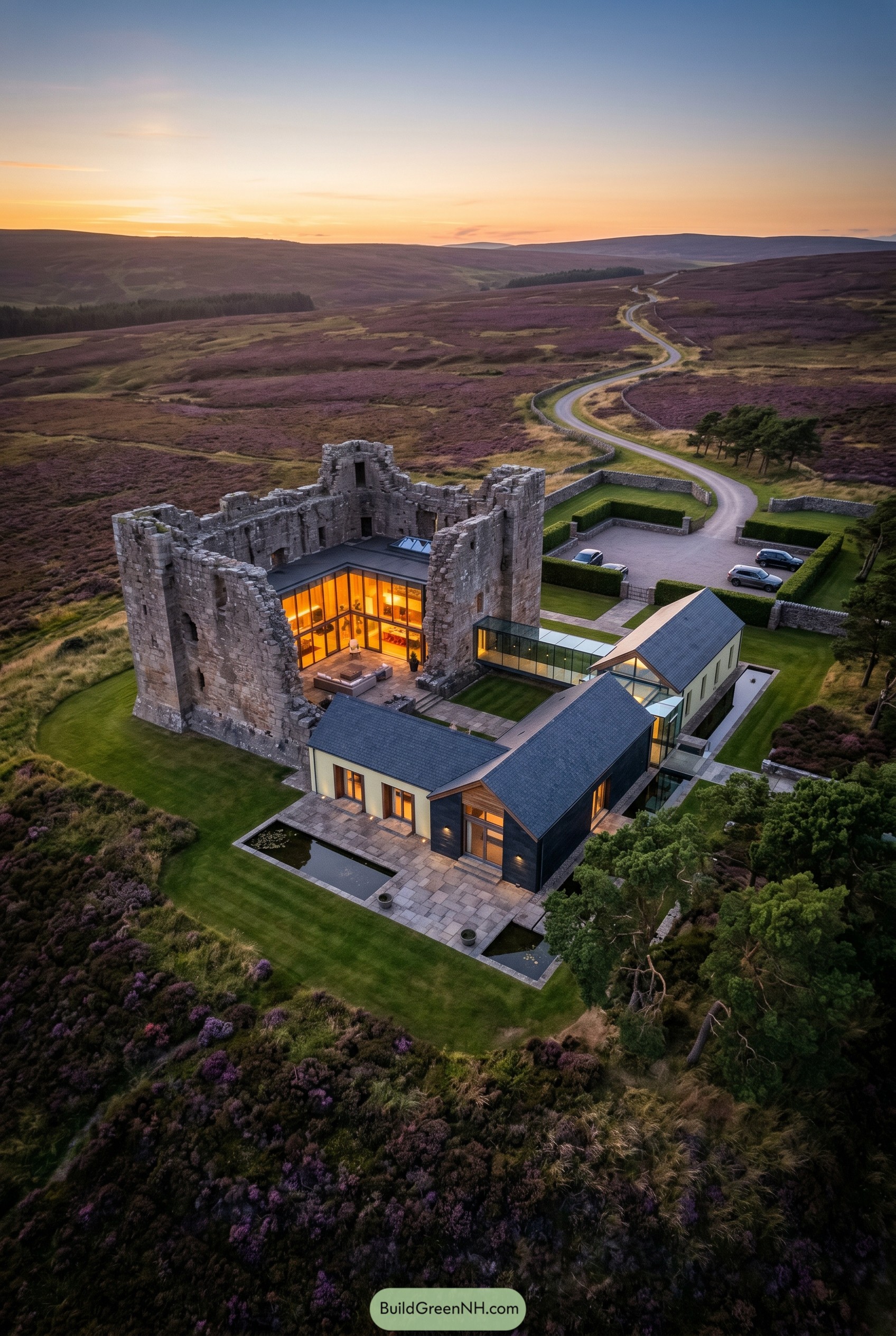

Set deep in the heather, this residence folds crisp glass corners and low gabled wings into a weathered stone shell, turning the old ruin into the heart of daily life. We loved the contrast here because the thick walls bring texture and shelter, while the glowing courtyard makes the whole place feel less stern and a bit more ready for a very good dinner party.
The new volumes stay deliberately lean, with dark roofs, pale walls, and slim glazed links that touch the ruins lightly instead of barging in like an uninvited cousin. Reflecting pools, clipped lawns, and that long winding approach give the whole scheme a calm, cinematic sweep, which is a fancy way of saying it looks ridiculously good at sunset.
Vintner Ruin Glass Gable
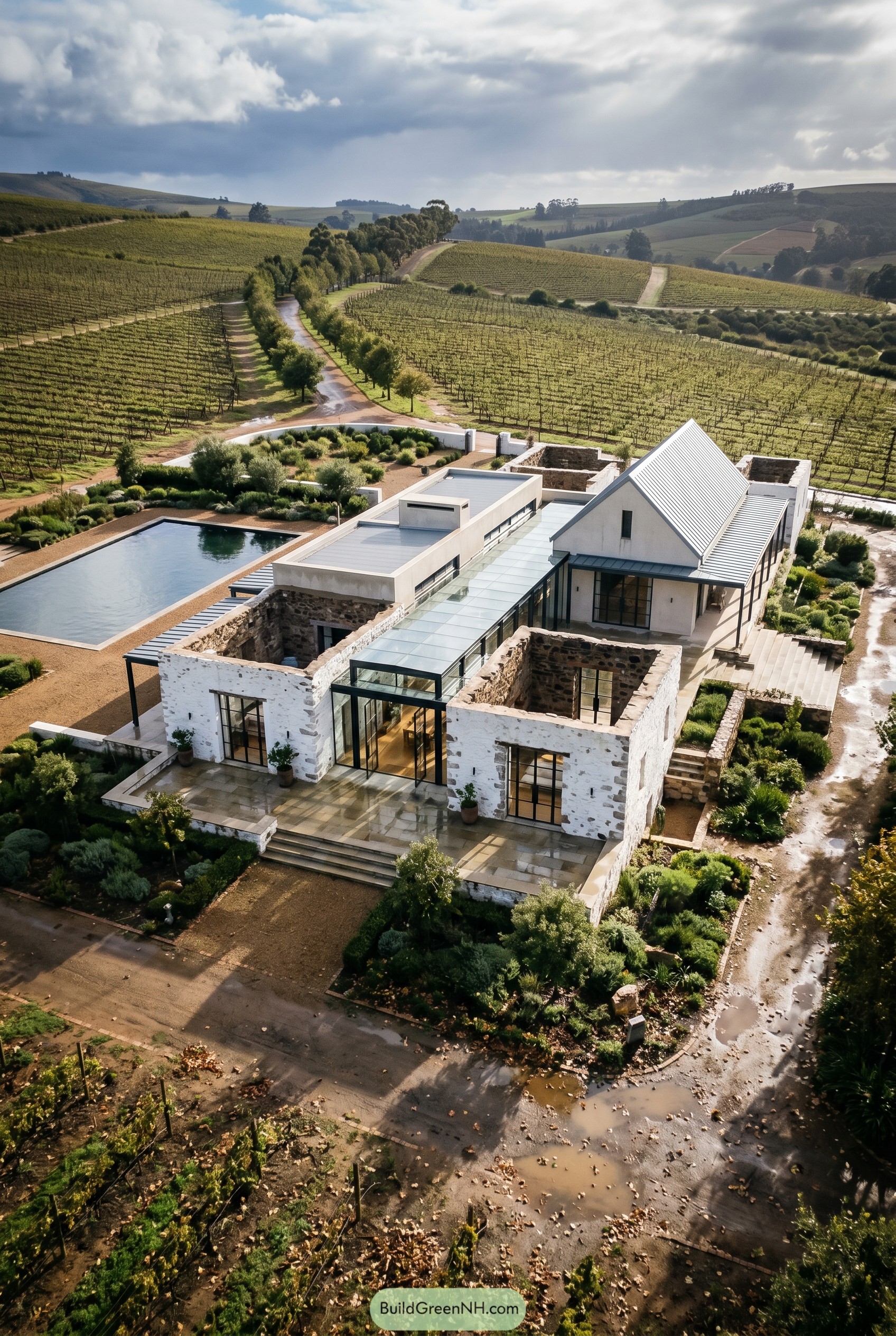

This vineyard retreat stitches a crisp gabled volume to weathered stone ruins, with a glazed passage that feels almost like a quiet greenhouse slipped between centuries. We loved leaning into the old wall lines instead of tidying them away, because those roofless courts give the plan its memory and a bit of swagger too.
The low modern wing keeps the profile calm, while black framed openings sharpen the white masonry and make the whole composition feel grounded rather than precious. Out by the long pool and clipped planting beds, the house settles into the rows of vines so naturally it seems the estate had this idea first and we just caught up.
Pin this for later:

Want More?
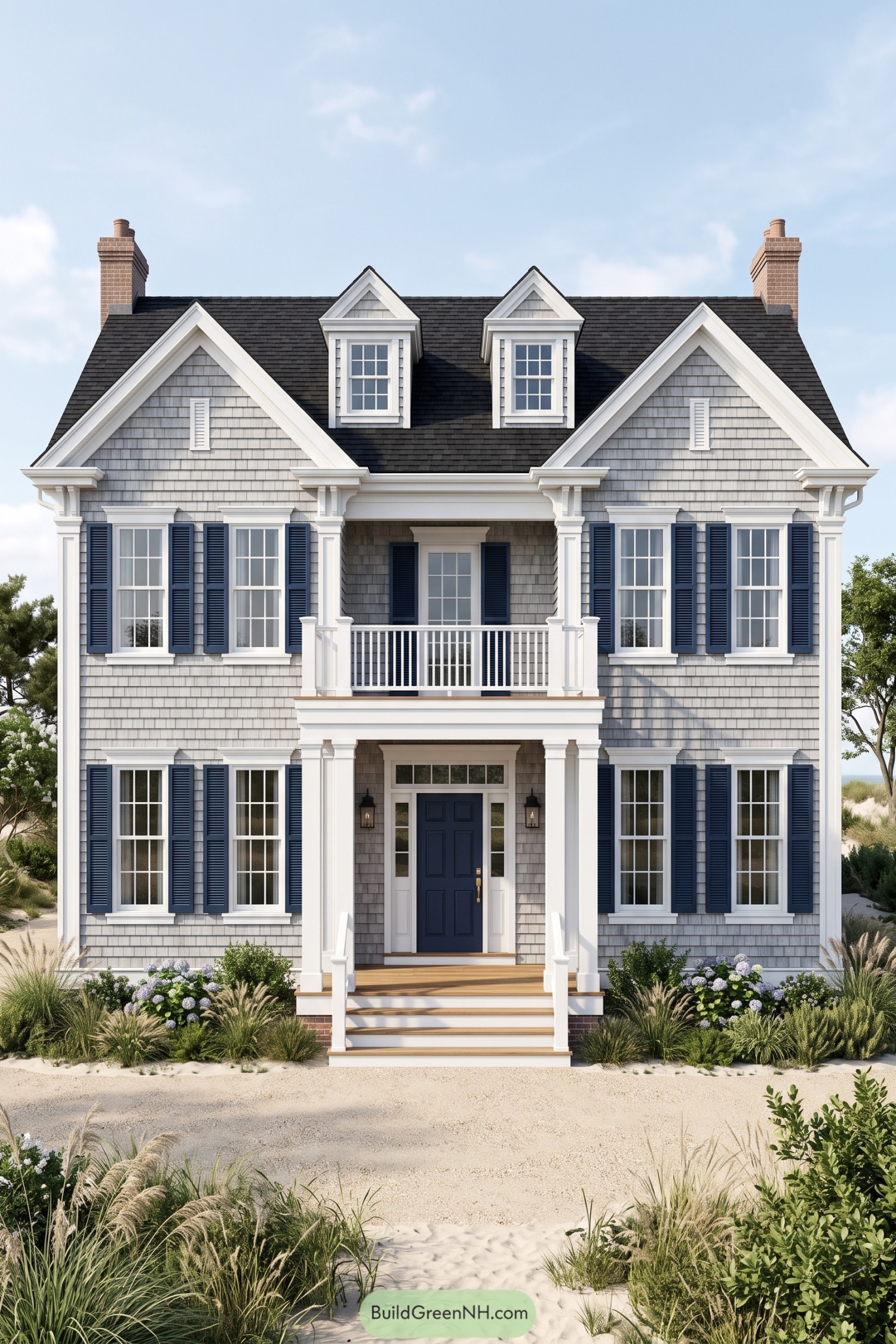 20 Coastal House Front Elevations To Make Your Home The Star Of The Shore
 20 Cape Cod House Front Elevations to Bring Storybook Magic to Your Street
 20 Stunning Colonial House Front Elevations to Turn Your Home Into a Neighborhood Legend
 20 Stunning Modern Facade Elevation Designs That Turn Everyday Homes Into Living Art
 20 Daring Folded Roof Houses That Turn Rain Into Art
Table of Contents